Category Archives: History

Proposed Bridges Of New York City In 1911

In 1911 The Proposed McCarren Bridge Was To Replace The “Old” Brooklyn Bridge So It Could Be Reconstructed

Existing and Proposed Bridges New York City 1911

Existing & proposed bridges New York City 1911 – note the four lower Manhattan bridges instead of three (click to enlarge)

From the New York Tribune of January 1, 1911 comes this illustration showing New York City with its existing bridges and some proposed new ones.

Sandwiched very tightly between the Brooklyn Bridge and the Manhattan Bridge  connecting lower Manhattan with Brooklyn, is a proposed new bridge which was to be called the McCarren Bridge named after “Long Pat” McCarren (1847-1909) a state senator who was Brooklyn’s Democratic political boss during the late 1800’s.

Once the proposed McCarren Bridge became a reality, city engineers planned to close and rebuild the Brooklyn Bridge.  The engineers feared that the increase in heavy traffic on the Brooklyn Bridge would necessitate additional strength being added, otherwise a support or cable might give way causing a horrible catastrophe.  Borings were even made at the site, but the McCarren Bridge was never built.

Other proposed bridges in the illustration show the Hell Gate Bridge which was begun in 1912 and completed in 1916.

Further north on the Harlem River connecting upper Manhattan with the Bronx is another proposed bridge that was never built nestled between the University Heights/West 207th Street Bridge and Washington Bridge. This bridge would have been located at 177th Street in the Bronx and was to be called The Morris Heights Bridge. Continue reading →

Scorecard. Who Needs A Scorecard?

The Death Of The Scorecard At The Ballgame

Scorecard vendor at the Polo Grounds 1949 - photo William C. Greene

Scorecard vendor at the Polo Grounds 1949 – photo William C. Greene

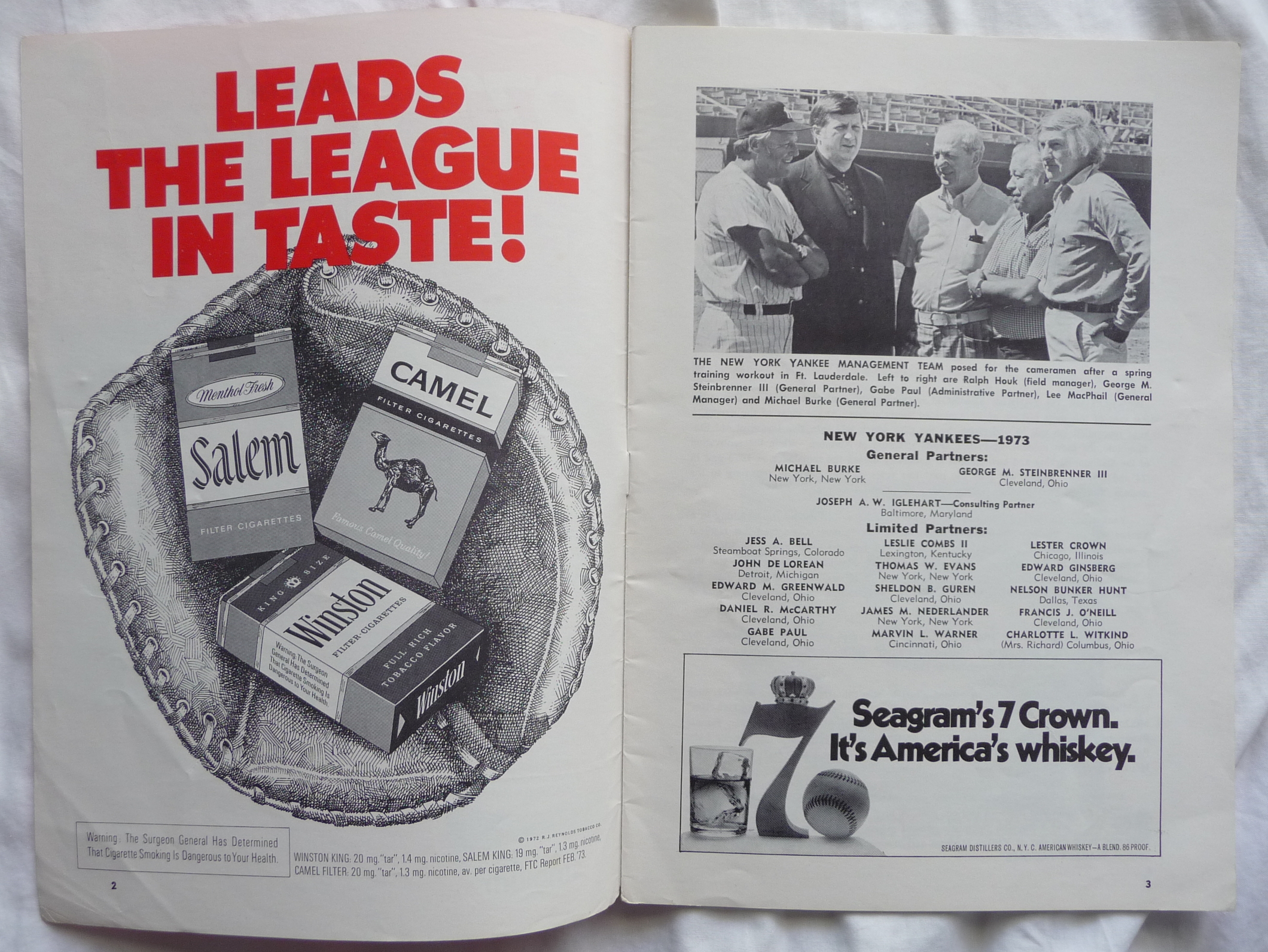
Recently I went to a baseball game at that imitation ballpark in the Bronx they call Yankee Stadium. After being gently frisked at the admission gates and going through the turnstiles, the thing that did not greet me was what you see above: a vendor selling scorecards.

You could buy a scorecard, but not for 10 cents as it was at the Polo Grounds in 1949. The archaic idea of a scorecard costs $10 at Yankee Stadium and is available at the souvenir shops spread throughout Yankee Mall Stadium. The scorecard is buried in some glossy souvenir publication which I did not purchase, nor did anyone else.

When I used to attend a lot of games in the 1970’s and 80’s buying a scorecard was a no-brainer. From anywhere from a reasonable 25 cents in the early 1970’s to two dollars in the late 80’s, filling out that scorecard and having a program was a nice memento of a game I went to. There is a certain enjoyment derived from scorekeeping and having a permanent record of a game you are attending.

I just dug this program of my closet from a game I went to on Thursday evening September 6, 1973. The Yankees came back in the bottom of the eighth inning after trailing 6-5 on a three run home run from Mike Hegan to beat the Milwaukee Brewers 8-6. Bobby Murcer and Roy White also homered for the Yanks. The time of the game was 2:22.

In my childish way I merely recorded outs as fly outs, ground outs or line outs without denoting the fielders who made the play. As you can see my scorekeeping leaves a lot to be desired, but for a little kid I think I did a pretty good job. Eventually I learned to score correctly.

For 30 cents they packed a lot into 28 pages. Continue reading →

The Moment Lou Gehrig Stepped Down “For The Good Of The Team”

The Story Of The End Of Lou Gehrig’s Consecutive Game Streak – May 2, 1939

Yankee captain Lou Gehrig stuns Tigers manager Del Baker, home plate umpire Steve Basil and umpires Red Ornsby and Bill Summers as Gehrig informs them he has benched himself.

Yankee captain Lou Gehrig stuns Tigers manager Del Baker, home plate umpire Steve Basil and umpires Red Ornsby and Bill Summers as Gehrig informs them he has benched himself. (photo AP)

Almost everyone knows something about Lou Gehrig, the Iron Horse, and his consecutive game playing streak. But you’ve probably never seen the dreaded moment when Gehrig took himself out of the lineup ending his streak, except by seeing actor Gary Cooper do it in the famous 1942 movie The Pride of the Yankees.

This photograph above shows that actual moment that occurred 75 years ago today.

Since June 1, 1925 Lou Gehrig had appeared in 2,130 straight games over the past fourteen seasons with the Yankees. Gehrig played with sprains, concussions, back spasms, broken bones and illnesses that would have had a lesser man take at least a day off, go on the disabled list or convalesce in a hospital. But Gehrig didn’t just play. He played exceptionally, putting up outstanding numbers offensively and defensively while always conducting himself with grace and humility on and off the field.

So on Tuesday, May 2, 1939 at Briggs Stadium in Detroit, nothing seemed out of the ordinary when Yankee captain Lou Gehrig came to home plate to deliver the starting lineup card.

But earlier in the locker room in a private talk, Gehrig informed Yankees manager Joe McCarthy that he was removing himself from the lineup because he “wasn’t doing the team any good.” McCarthy asked him if he was serious and Gehrig replied that he was. McCarthy then told Gehrig it would be as he wished.

Gehrig approached the plate and handed the lineup card without his name on it to home plate umpire Steve Basil and Tigers manager Del Baker. On the photo, you can see the shock and disbelief on the faces of the men gathered around Gehrig whose expression is one of complete dismay.

The thunderbolt news raced through both teams, then around the stadium and finally throughout the baseball world through the newswires that Lou Gehrig had taken himself out of the lineup and was ending his famous streak.

When the announcement was made over the public address system to the 11,379 fans in attendance of Gehrig’s voluntary withdrawal, it was suggested that he get a “a big hand.”

The New York Times reported a deafening cheer resounded as Lou walked to the dugout, doffed his cap and disappeared in a corner of the bench.

Lou Gehrig consoles  Babe Dahlgren about replacing Gehrig in the Yankees line-up, May 2 1939

Lou Gehrig consoles Babe Dahlgren about replacing Gehrig in the Yankees line-up, May 2 1939

Ellsworth “Babe” Dahlgren who had waited since 1937 to start at first base for the Yankees, finally, but reluctantly got his chance. “I hated to break his streak,” said Dahlgren.

”I remember Lou taking the lineup card up to the plate that day. When he came back to the dugout he went over to the water fountain and took a drink. He started to cry. Lou stood there with a towel on his head, taking the longest drink I’ve ever seen anybody take.” Continue reading →

May Day In Brooklyn -1919

10,000 Girls Celebrate May Day In Prospect Park, 1919

Brooklyn May Day celebration 10,000 girls at  Prospect Park 1919

Brooklyn May Day celebration 10,000 girls at Prospect Park 1919

I may not be 100 years old, but I do remember being in public school celebrating May Day with a traditional maypole dance.

May Day in New York has other connotations and since the 1890’s May Day has been known for communists, socialists, union activists and workers marching (sometimes together, sometimes separately) around the city protesting and trying to bring attention to their causes.

But here we see a time when the world was finally at peace, a few months after the conclusion of the Great War (World War I).  Soldiers with their hats on can be seen in the extreme foreground observing and enjoying the festivities.

10,000 Girls in Brooklyn, N.Y. May Day fete

Shouts of joy ring through Prospect Park as happy children dance, play games and sing. Photo shows a general view of thousands of girls of the Brooklyn Girls’ Branch of the Public Schools Athletic League in their annual May Day fete in Prospect Park, Brooklyn, New York.  (photo credit: Central News Photo Service May 2, 1919)

Book Advertisement From 1915: How To Make Love

“What To Do Before And After The Wedding” Among Other Things

Ad Book How To Make Love world almanac 1915So, how did people learn about sex and seduction 100 years ago? From a book of course. This ad appears in the 1915 World Almanac and was just too good not to share.

The text reads:

How To Make Love

(NEW BOOK) Tells how to Get Acquainted; How to Begin Courtship; How to Court a Bashful Girl; to Woo a Widow; to Win a Heiress; how to catch a Rich Bachelor; how to manage your beau to make him propose; how to make your fellow or girl love you; what to do before and after the wedding. Tells other things necessary for Lovers to know. Sample copy by mail, 10 cents.

Royal Book Co. Box 10 So. Norwalk, Conn.

The Simplicity Of The First Federal Income Tax

The First Income Tax Form Of 1913 And How Much The IRS Collected

1913 tax form pg 1

click to enlarge

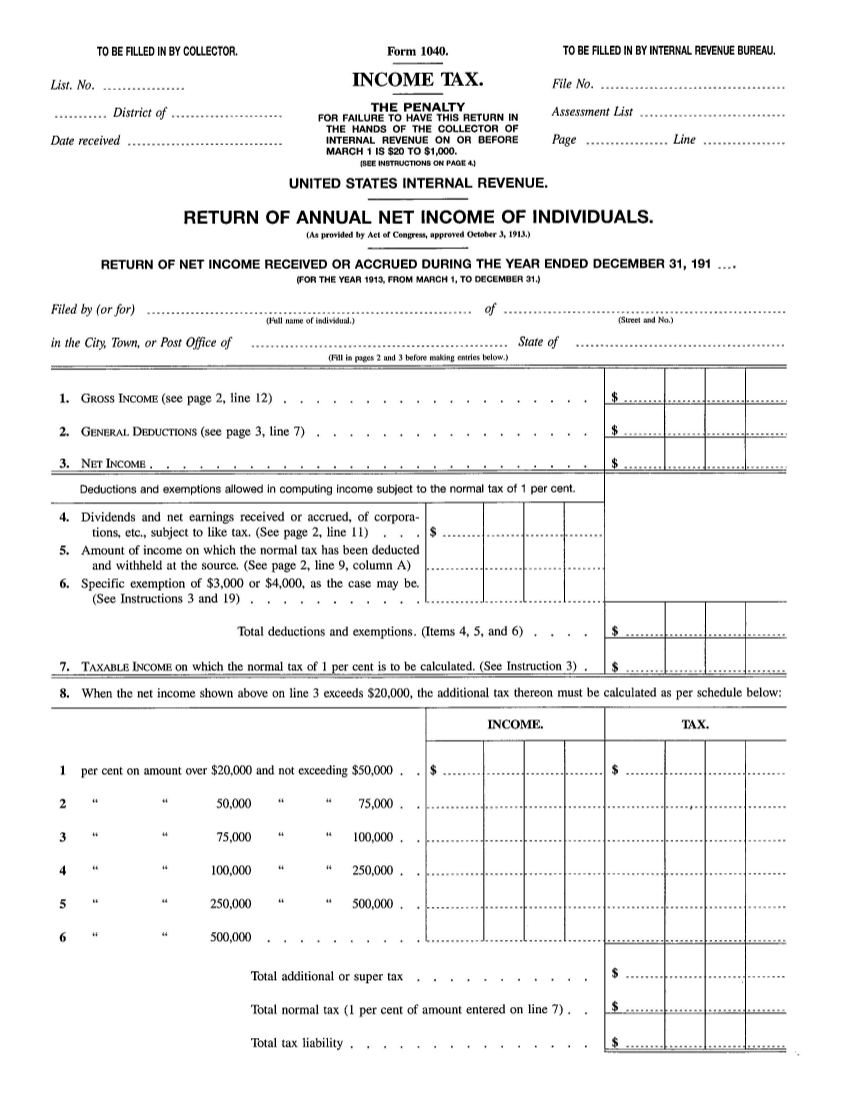
It was 100 years ago that the 1040 individual tax form many Americans dread filling out was introduced.

One thing is for sure, it was a lot simpler to file taxes in 1914 than today.

Pictured above is the 1913 1040 tax form which was due March 1, 1914.

With only three short pages to complete and one page of instructions, for most people who had to file, the average time to complete their taxes would take about an hour.

Had to file is an important term here, because the first $2,500 or $3,333.33 of income in 1913 for single and married couples respectively, was exempt. After 1914 the rate was $3,000 and $4,000 respectively. Considering very few Americans made more than $1,000 per year in income, the vast majority of Americans were exempt from paying any tax.

According to the Department of Labor in 1913, the average family household income was $827. Continue reading →

The Mystery Man Who Let John Wilkes Booth Escape

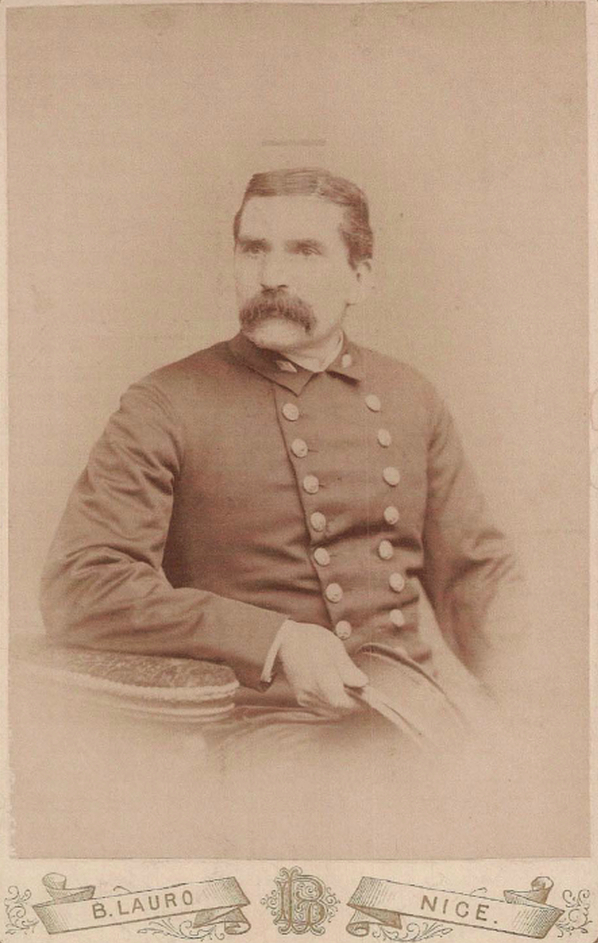
Lieut. Charles H. Jones Witnessed Lincoln’s Assassination And Claimed Someone Came On Stage And Stopped The Pursuit of John Wilkes Booth

Lincoln assassination witness Lieutenant Charles H. Jones

Lincoln assassination witness Lieutenant Charles H. Jones

On April 14, 1865 Lieutenant Charles H. Jones came to Ford’s Theatre to see General Grant who was supposed to attend that evening’s performance of the play Our American Cousin.

But, General Grant had decided earlier in the day that he was going to visit his children in Burlington, NJ, so he was not at the theatre to the great disappointment of many in the audience including Lieutenant Jones.

Instead of seeing General Grant, Jones witnessed the shocking assassination of President Lincoln.

Lieutenant Jones in 1915 telling his account of the assassination said he saw something that no other history of the Lincoln assassination ever mentions: that a man came on stage a few seconds after Booth had fled the theatre through a side stage door and announced that the assassin had been captured. This announcement the mystery man made was not true, and it delayed the pursuit of John Wilkes Booth.

In an earlier 1908 account of witnessing the assassination Lieutenant Jones said he never entered the President’s box after Lincoln was shot, which contradicts the account he gave below. So does his eyewitness account have any validity?

From The New York Call April 14, 1915

When John Wilkes Booth sprang from the president’s box in Ford’s Theater, April 14, 1865, and challenged the world with his dramatic cry, “The south is avenged,” only one man Continue reading →

Ladies Day – Rowing On The Harlem River Circa 1905

Ladies Get Ready For Rowing At An Annual Regatta On The Harlem River

Ladies Day Rowing on the Harlem River circa 1905 photo UPI

At the turn of the century, the male dominated rowing clubs of New York City, Long Island and Hoboken would hold regattas and invite the fairer sex to participate in the rowing races.

Rowing Clubs with names like the Nassau Boat Club, the Harlem Rowing Club, the Nonpareil Boat Club, the Bohemian Boat Club and the Dauntless Rowing Club would hold a “Ladies Day” and open the festivities to women entrants. In some races the women would have assistance from the men as they stroked their four oared gigs or eight oared barges along the Harlem River from Sherman Creek to about 145th Street. This area of the Harlem River has excellent conditions for rowing and the Columbia Rowing teams still holds practices there.

Both sides of the river would be packed with large crowds to cheer the ladies on during these regattas which were usually held by the different rowing clubs in June and September in the the late 1800’s and early 1900’s.

The Stress of Hank Aaron Breaking Babe Ruth’s All-Time Home Run Record

Before Breaking Ruth’s Record, Hank Aaron Had So Many Death Threats, He Had A Security Team Appointed To Protect Him

Willie Mays (l) and Hank Aaron at Shea Stadium June 3, 1972 – the two true #1 and #3 career home run leaders

Forty years ago today, on April 8, 1974, Hank Aaron, under incredible duress, hit his 715th career home run, breaking Babe Ruth’s record.

Aaron finished his career in 1976 with 755 home runs and is now second all-time on the career home run list to Barry Bonds. In my mind and many others, Aaron is still the legitimate home run champion due to Bonds strange physical transformation in which his body became gargantuan and slugged more and more home runs as he aged.

What Aaron had to endure with the constant death threats and pressure is poignantly told in an excellent article by USA Today‘s Bob Nightengale which is reproduced below.

Hank Aaron has the letters tucked away in his attic, preserved these last 40 years. He’s not ready to let them go.

He almost has them memorized by now, but still he carefully opens them up and reads every word, as if he wants to feel the pain.

“You are (not) going to break this record established by the great Babe Ruth if I can help it,” one of them reads. “Whites are far more superior than jungle bunnies. My gun is watching your every black move.” Continue reading →

Historic List Of Every Hotel In Manhattan In 1964

All The Hotels In Manhattan With Addresses and Telephone Numbers From 50 Years Ago

New York Guidebook John KouwenhovenFrom one of the best (and for some reason uncommon) guidebooks to New York City ever published, The New York Guidebook edited by John A. Kouwenhoven (Dell) 1964, comes this useful list of every hotel in Manhattan. We should clarify “every” with the word “approved” hotel and motel. In other words, the flop houses on The Bowery or other squalid hotels did not make the final cut.

The New York Guidebook was published with the 1964 New York World’s Fair visitor in mind as there is a special section devoted to it.

All together there are 183 hotels listed in the book. If you are wondering about the prices, they are not listed. But by checking another pamphlet from the time I discovered The Plaza Hotel was charging from $20 – $34 per night for a double room, while The Madison Square Hotel was charging $7 – $8 per night for a double.

You will note that all the telephone numbers begin with the letter prefix’s such as GR for Gramercy, BU for Butterfield, CI for Circle and RH for Rhinelander. This was because the telephone exchange corresponded with the neighborhood a person or business was located in.  It is a much more picturesque way of assigning a phone number and made remembering the number much easier. PEnnsylvania 6-5000 anybody?

What is also interesting to notice is how many of these hotels are still in existence today and how many which had been in business for such a long time have now vanished.

This is presented as a research tool, but for many the list will bring up a wisp of nostalgia when you see the names Hotel Astor, The Drake, Biltmore and Savoy. I wish there was a list like this available online for every decade in New York City from the 1800’s and on.

So here is our online contribution to researchers or those who are just curious.

Hotels of Manhattan –  1964:

Abbey Hotel, 151 W. 51st St., N. Y. 19, N. Y., (CI 6-9400)

Aberdeen Hotel, 17 W. 32nd St., N. Y. 1, N. Y., (PE 6-1600)

Adams Hotel, 2 E. 86th St., N. Y. 28, N. Y., (RH 4-1800)

Alamac Hotel, 71st St. & Broadway, N. Y. 23, N. Y., (EN 2-5000)

Albert Hotel, 23 E. 10th St., N. Y. 3, N. Y., (OR 7-0100)

Alden Hotel, 225 Central Park W., N. Y. 24, N. Y., (TR 3-7300)

Algonquin Hotel, 59 W. 44th St., N. Y. 36, N. Y., (MU 7-4400) Continue reading →