Category Archives: History

One Of The Greatest Pitching Performances Ever

49 Years Ago, Satchel Paige Shut Out The Red Sox For Three Innings. 

No Big Deal, Except That He Was 59

Satchel Paige, age 59 warming up on September 13, 1965 two weeks before facing the Red Sox photo: AP

Satchel Paige, age 59 warming up on September 13, 1965 two weeks before facing the Red Sox photo: AP

To hold “a day” for a ballplayer years after he last played in the major leagues is a special treat for the player. What makes it even more special is when the player participates in the game.

Forty nine years ago on September 25, 1965, Satchel Paige stepped on to the field at Kansas City’s Municipal Stadium on Satchel Paige Night as the starting pitcher for the Kansas City Athletics. It was supposed to be a publicity stunt conceived by Athletics owner Charlie Finley to boost attendance, but Paige took his pitching seriously and would not be embarrassed.

Paige considered by many to be the Negro League’s best pitcher for over two decades, came to the Major Leagues when he was 42-years-old in 1948 when he was signed by Indians owner Bill Veeck.

Paige went 6-1 with a 2.48 ERA that year and helped Cleveland win the pennant. Paige stayed in the majors until he was 46 and continued playing in the minors and barnstorming into the early 1960’s.

At Satchel Paige Night, Charlie Finley had provided a rocking chair for Paige to sit in before the ball game began and a nurse was stationed next to Paige to massage him and keep his arm loose.

The visiting Boston Red Sox did not lay down for Paige. They tried, but the crafty 59-year-old was not going to let a bunch of kids show him up on his own night.

In the first three innings the Red Sox managed to get a runner on with an error and a double by Sox star Carl Yastrzemski.

At the beginning of the fourth inning with the A’s winning one to nothing, Paige went to the mound Continue reading →
The Ninth Avenue Elevated Train Crash Of 1905

 In 1905, The Worst Elevated Train Accident In New York’s History Occurred

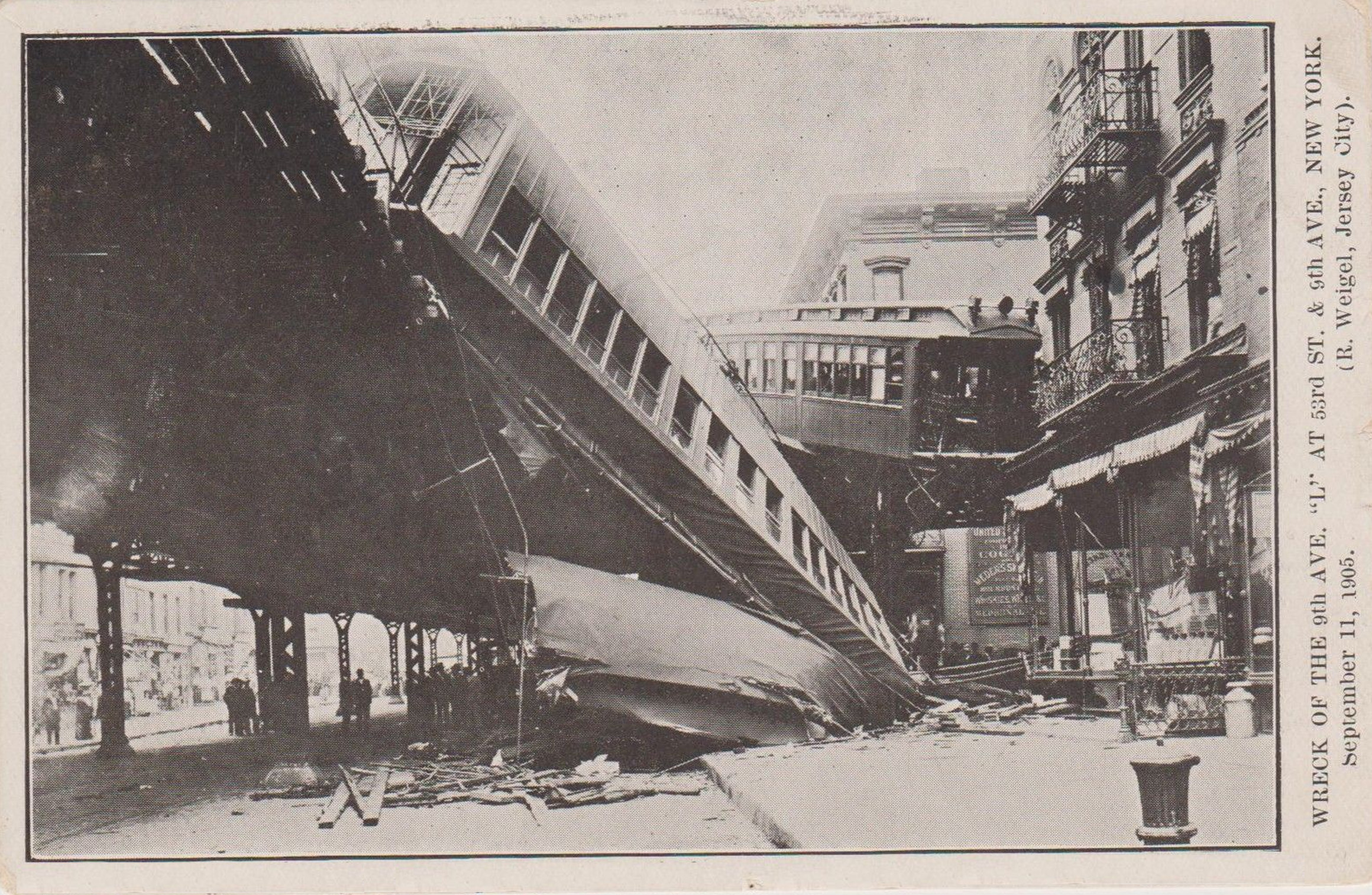
9th ave elevated railway accident 9 11 1905 postcard photo R Weigel

For as long as you live September 11 will be remembered as the date of  the terrorist attacks on America that brought down the World Trade Center towers. But before 2001,  9/11 marked the anniversary of the worst elevated train disaster in New York’s history. It is a disaster no one wanted to remember and was quickly forgotten except by train and New York history buffs.

The four elevated lines in Manhattan which had a glorious history are long gone, demolished between 1938 and 1955. The elevated lines began service in 1878 and until the subway was built, they provided the quickest and safest routes around New York.

9th Ave 53rd Street junction photo via - http://warofyesterday.blogspot.com

9th Ave 53rd Street elevated junction
photo via – http://warofyesterday.blogspot.com

But there were always fears among riders that one day an elevated train would jump the tracks.

Those fears came true on September 11, 1905.

Not surprisingly it happened at one of the more dangerous stretches of track along the elevated system.

The Sixth and Ninth Avenue Elevated lines shared their tracks above 53rd Street along Ninth Avenue. At 53rd Street the lines diverged, with the Sixth Avenue el traveling three avenues east along 53rd Street to continue its journey along Sixth Avenue.

At that Ninth Avenue junction, the towerman (also called switchman) was responsible for controlling whether trains traveling downtown would continue straight on the Ninth Avenue line or go along 53rd Street to the Sixth Avenue line.

The passengers aboard a five car “el” train that September 11 morning believed their train was going to continue straight down Ninth Avenue, as that was what the station guards at the previous station at 59th Street had told them.

If the train was proceeding down Sixth Avenue it was supposed to come to a full stop at 54th street and await a signal. The recommended maximum speed if a train was to continue down Ninth Avenue was nine miles per hour.

Diagram of Ninth Avenue El crash

Diagram of Ninth Avenue El crash (click to enlarge)

It was 7:05 in the morning as Paul Kelly, the motorman of the el train approached the intersection at 53rd street without stopping.

Witnesses said Kelly slowed down a bit but the train’s estimated speed was 25 miles per hour. Continue reading →

While Touring With A Friend, A New Yorker Finds Her Missing Brother – 1905

Places A Tourist Should Go in 1905?

Bellevue And The Morgue.

1st Ave. 26th Bellevue Hospital postcard circa 1912

Visiting New York City today there are things that most tourists go and see. Typical touristy places include The Empire State Building, Times Square, The Statue of Liberty . A hundred years ago you might be surprised at what sights people would go and visit. In 1905 for one New Yorker, accompanying a visiting friend to Bellevue and visiting the morgue seemed like an interesting, if not macabre way to spend the day.

They say truth is stranger than fiction, so we’ll let The New York Evening World of September 11, 1905 pick up the rest of this strange story:

SAW PICTURE AT MORGUE OF DEAD BROTHER

Miss Magner, Showing a Friend the Sights, Identifies Photograph.

This isn’t a very big world since the railroad, the telegraph and the telephone annihilated distances, but here is the strange story of what happened at the points of a triangle with sides only a mile long.

On Feb. 26, 1904, the body of a young man was found on the doors of No. 269 Ninth Avenue, dead. No one knew him. At the morgue the body was photographed and a complete description taken. The breast and arms were tattooed with the form of a woman, the emblems of Faith, Hope and Charity and the initials “J.M.”

After a few days the unidentified body was burled In Potter’s Field, where it has lain for nineteen months. Last Saturday Miss Laura Magner, of No. 354 West Forty-sixth Street, who was entertaining a visiting friend from out-of-town, took him to see Bellevue Hospital and the Morgue.

Continue reading →

Salaries Of Hollywood In 1937 – A List of The Film Stars Pay

Katharine Hepburn Was Paid $206,928, While Peter Lorre Made Just $15,265

1937 Was A Good Year For Film Salaries

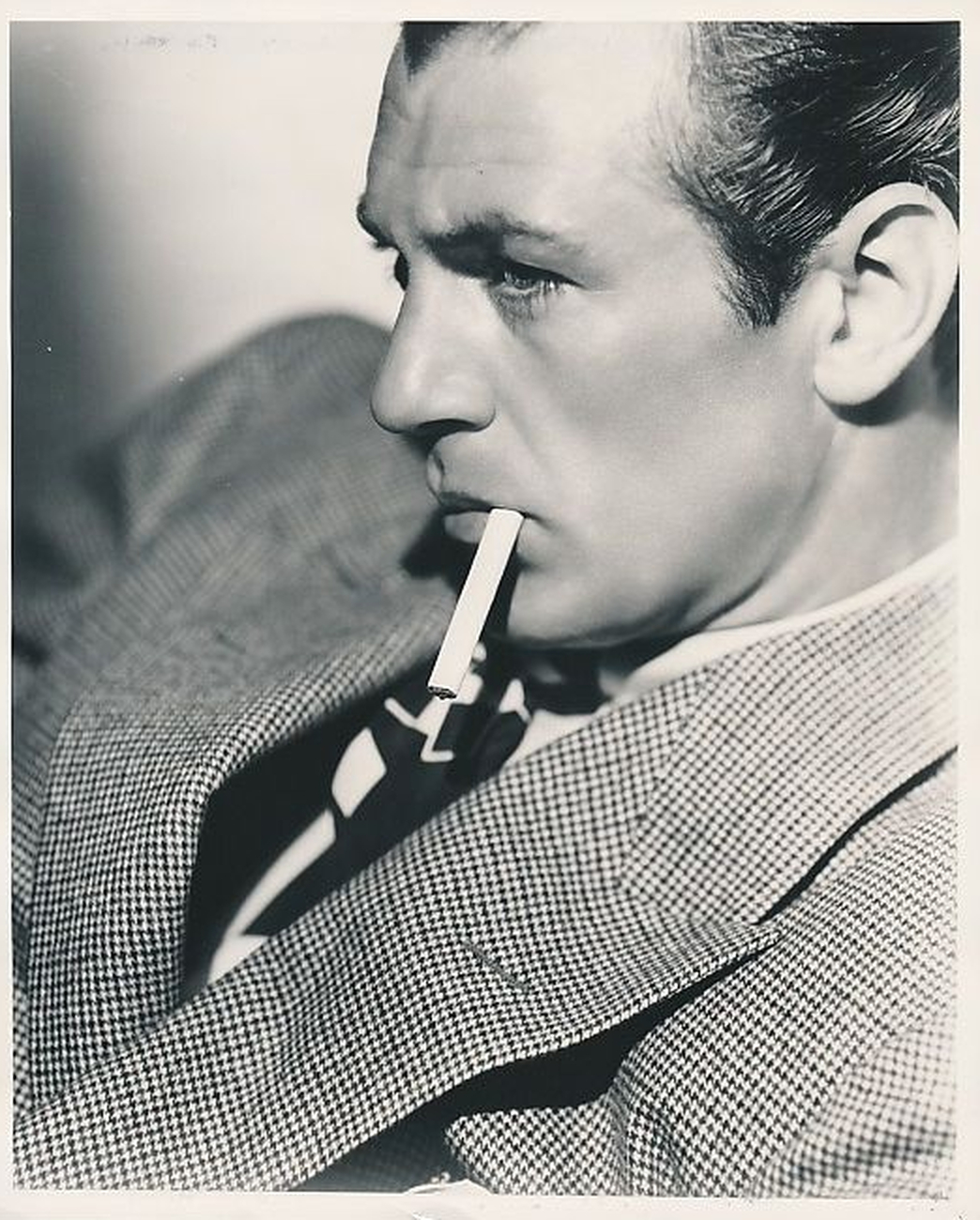
Gary Cooper - Filmdom's top paid personality in 1937

Gary Cooper – Filmdom’s top paid personality in 1937

I find this sort of stuff fascinating.

In 1938 the U.S. Treasury released a report to Congress that listed how much compensation was paid to luminaries in the film industry for 1937.

The highlight of the report was that Gary Cooper ($370,214) overtook Mae West ($323.333) as the highest salaried film personality.

This was during the height of the Great Depression, so many of the salaries seem astronomical when compared to the average annual salary of a working person which was only $890 in 1937 according to Time magazine.

The list is interesting to look over and there are quite a few surprises. For instance Zeppo Marx ($56,766) is listed in the report and his more famous brothers Groucho, Chico and Harpo are not. Laurel and Hardy are there, and Stan Laurel ($135,167 ) earned nearly $50,000 more than his rotund comedy partner Oliver Hardy ( $88,600).

Ginger Rogers and those famous legs. Ginger received a $124,770 salary in 1937.

Ginger Rogers and those famous legs. Ginger received $124,770 in pay in 1937.

Studio chief and creative genius Walt Disney made only $39,000, yet William A. Seiter, director in 1937 of This is My Affair and Life Begins In College made $135,750!

Box office draws, Barbara Stanwyck, Ginger Rogers and Claudette Colbert were all pulling in over $100,000.

I recognized most of the names on the list, but there are also a handful of people I never heard of like The Yacht Club Boys, ($32,166) who were a popular singing group. And I should have known Alan Dinehart, ($39,666) a busy character actor who appeared in 89 movies during his abbreviated acting career (he died at the age of 54 in 1944).

Bette Davis, Joan Crawford, Spencer Tracy, Olivia de Havilland, Clark Gable, Humphrey Bogart and many others who were big stars are unfortunately not listed.

There are writers, directors, producers, and songwriters mixed in among the stars and supporting players of the movies.

Sadly, so many of these names are now completely forgotten except by a much older generation of contemporaries or rabid TCM movie fans.

Here are the 1937 salaries of over 160 of some of Hollywood’s top talent in alphabetical order:

  1. Don Ameche, $34,499;
  2. Heather Angel, $15,375;
  3. Jean Arthur, $119,041;
  4. Fred Astaire, $211,666; Continue reading →

Miss America, Not Once, But Twice

There She Is, Mary Campbell, The Only Two Time Miss America

Miss America 1922 1923 winner Mary Campbell

Growing up I have slight memories of the Miss America Beauty Pageant: mostly of the perennial emcee Bert Parks singing the “There She Is, Miss America” song, while some young woman was given flowers and started crying.

The Miss America Beauty Pageant and all beauty pageants are generally a bore. They are really thinly disguised T & A shows.

But back in the 1920’s when the Miss America Beauty Pageant began, things were set up a little differently.

In 1922 Mary Campbell was named the winner of the second Miss America Beauty Pageant. Nothing extraordinary in that. As you can see in the above portrait and below that Mary Campbell was not breathtakingly beautiful, but still an attractive girl.

But what caught my attention was that this 17-year-old was not just the winner of the Miss America Beauty Pageant in 1922, but also the winner of the pageant in 1923!

Miss America 1922 winner Mary Campbell on beachHow Mary Campbell became the only two time Miss America winner is an amusing story.

Mary Campbell did not even consider herself the least bit good-looking. In 1922 when Campbell was watching the preliminaries for an Ohio beauty contest, a judge suggested she enter the contest. She did and surprisingly won the contest becoming “Miss Columbus.”

Later she was told she won because of her figure, which was 35-26-36. Being self admittedly  very naive, Campbell did not even know what a “figure” was. She asked her mother who replied, “It’s none of your business.” Continue reading →

Crazy Baseball All-Star Game Ticket Prices

$2.40 For An All-Star Game Box Seat?

Fenway Park ticket booth before the 1946 All Star Game

$2.40 for a box seat is not the crazy price we are talking about. Those days are long gone.

The scene above is Fenway Park where the 1946 All-Star Game was played. As fans lined up for tickets the night before the game at the box office (what a novel idea), they had the choice of purchasing box seats for $2.40 or reserved seats for $1.80.

Please direct your attention to the kids, wearing suits no less, neatly lined up waiting for tickets. Yes, even kids could save up $1.80 by delivering newspapers, mowing lawns or doing chores in 1946.

The crazy prices we are talking about are for the current baseball All-Star game.

According to a May 9 Forbes Magazine story, the 2014 baseball All Star Game in Minneapolis is the second most expensive ticket in All-Star game history. The article points out that according to a ticket broker who owns hundreds of MLB All-Star tickets the average ticket price for the 2014 All-Star Game is significantly higher than the previous four All-Star games, with a current average ticket price of $1,096. Continue reading →

Banning Cars On City Streets In Manhattan – Not A New Idea

Fifth Avenue – Sans Cars 1970

The Story Of Mayor John Lindsay’s Pedestrian Malls

Top photo shows 5th Ave. on a typical day. Bottom photo shows 5th Ave. on July 11, 1970

Top photo shows 5th Ave. on a typical day. Bottom shows 5th Ave. on July 11, 1970 as traffic was cleared

While many environmental and safety groups bandy about various schemes for making streets safer for pedestrians by removing or limiting cars from city streets, the idea is older than you might think.

During his tenure as mayor of New York City from 1966-1973, John Lindsay always favored pedestrians.

Lindsay’s initial ban of cars took place in May of 1969. Lindsay and the city closed a small area of Nassau Street in downtown Manhattan as part of a temporary 90 day experiment during lunch hour from 11 A.M. to 2 P.M..

After 90 days Lindsay declared the “experimental” closure permanent.

The next year on April 22, 1970 the city closed some streets for the first Earth Day.

It’s one thing to shut down a narrow street in the financial district or some larger streets for a special occasion like Earth Day, it’s quite another to ban cars in the heart of New York’s shopping district.

Lindsay’s bigger plans came to fruition, also as an experiment, 44 years ago on Saturday, July 11, 1970. Lindsay closed vehicular traffic from 10 a.m. until 5 p.m., on a fifteen block stretch on Fifth Avenue from 42nd through 57th Streets.

The day before the experiment Mayor Lindsay said, “New Yorker’s should enjoy the most beautiful and exciting street when it becomes a pedestrian mall.”

This would also be different because the merchants along Fifth Avenue were not enamored with the idea. It was the first concerted effort by city officials to see the impact of a traffic closure on a major New York City street and observe the effects on noise, air quality and more importantly, quality of life. Continue reading →

The Craigslist Of Its Day – 1906

New York Times Lost And Found Simultaneous Classified Ads, Results In Diamond Brooch Being  Returned To Its Owner

diamond broochIf you look at old editions of newspapers from around the turn of the century you’ll notice the classified advertisements made up sometimes up to one quarter of the paper.

A typical weekday edition of the New York Times back then was only around twelve pages.

As such, people read newspapers from cover to cover and the classified’s acted as the craigslist of their day with all sorts of wanted ads: jobs and situations wanted, real estate and merchandise offerings and lost and found’s.

This story appeared in the January 26, 1906 New York Times:

HER LOST JEWEL RECOVERED

The Finder Took Mrs. Morgan’s Reward and Both Are Satisfied

Mrs. D.P. Morgan of 70 Park Avenue lost a jewel in a car on Sunday. She inserted the following advertisement in THE TIMES of Friday:

LOST- Sunday, Jan. 21, on 4th Av. car entered at 38th St, or in 47th St., between 4th and 6th Avs., circular brooch, size of a nickel, of 13 diamonds. If returned to 70 Park Av. $40 reward.

The same day this advertisement was brought to THE TIMES:

FOUND – In Madison Av. car, Sunday, one 13-stone diamond brooch, which will be, upon proper identification, returned to its owner for the reward of $100: make arrangements to receive same C.O.D. by express. T.X. Box 305 Times Square.

As the result of the publication of both advertisements “T.X.” has returned the jewel. He received the $40 reward and in addition the cost of his own advertisement in THE TIMES, and he is content. Mrs. Morgan is equally pleased.

“It is the first time that this brooch has been so speedily found,” said Mrs. Morgan yesterday. “It has been lost twice already . Perhaps because it had thirteen stones. I think I will either leave it at home in future or have a stone added or removed.”

Probably the most amazing thing about this article is that Mrs. Morgan lost the brooch twice previously and it was returned each time. She sounds rather cavalier about it, as if it is expected that if you lose something valuable in New York City, of course it will be returned to the rightful owner. Maybe the city was once like that, but I wouldn’t hold my breath waiting for it to happen today.

The second part of Mrs. Morgan’s solution to not losing the brooch in the future is also quite bizarre or extremely superstitious. How altering the brooch from thirteen diamonds to an even number of diamonds will prevent its future loss is baffling, as it is illogical.

The 1904 General Slocum Disaster Had Survivors That Lived Into The 21st Century

Catherine Connelly & Adella Wotherspoon, General Slocum Survivors, Lived To Ages 109 & 100

The Story of The General Slocum Steamship Disaster

General Slocum Disaster

June 15, 2014 marks the 110th anniversary of what had been New York’s biggest disaster and loss of life until the September 11 attacks occurred. We think it is worth remembering the ill-fated General Slocum steamship fire. Here is the story of the General Slocum and  a brief summary of the lives of the last two survivors of the disaster who amazingly lived into the 21st century.

A Beautiful Day For A Picnic

“Kleindeutchland,” as the area of Little Germany was called on the lower east side, was bounded approximately by the East River and Third Avenue and stretched from Houston Street to about 23rd Street. It was a working class, close-knit community of laborers and business owners. The German families that lived in this neighborhood made Tompkins Square Park their center for congregating and relaxation. But for special occasions they would embark on a trip to get out of the city.

Wednesday, June 15, 1904 was a sunny day and the members of the Sunday School of St. Mark’s Evangelical Lutheran Church at 323 E. 6th Street were looking forward to a day filled with games, music and a large picnic for their 17th annual excursion to bucolic Locust Grove, Long Island.

To get there, the church had chartered a steamship built in 1891, the three decked white paddle-wheeler, General Slocum.

Sudden Disaster

New York Tribune June 16, 1904 (click to enlarge)

New York Tribune June 16, 1904 (click to enlarge)

The General Slocum was filled with around 1,400 passengers, mostly women and children as the men generally had to work on a weekday. The Slocum headed out from its berth at 3rd Street on the East River at about 9:30 am with a band playing and the passengers joyously celebrating the smooth ride and beautiful weather.

Thirty minutes after setting out, the ship caught fire Continue reading →

Notorious Crime Scene Property Is For Sale

In Back Of This House One Of The Most Horrendous Killings In New York History Occurred

Westchester Home For Sale in 2014. In the 1930's the home was known as Wisteria House. photo: HGMLS

Westchester Home For Sale in 2014. In the 1930’s the home was known as Wisteria House. photo: HGMLS

You may or may not believe that houses have vibes, memories or energies surrounding them. But regardless of your beliefs, would you want to live on a property where a serial killer committed a murder so horrific that the police did not initially believe the details of the confession?

"<yoastmark

In a bucolic town in Westchester, NY, you can buy the three acre property where serial killer Albert Fish took and brutally killed ten-year-old Grace Budd on June 3, 1928.

"<yoastmark

Asking price – $799,900.

The home shown in the contemporary photograph above and in the vintage news photograph on the left was once known as Wisteria House, an 1860 villa in what was once Greenburgh, NY, and is now part of the town of Irvington.

Obviously the real estate agent listing the home will not advertise the fact, that on this property right behind the old home was where Wisteria Cottage stood (shown in photo to the right). This is where Albert Fish strangled, dismembered and later, at his own home, ate Grace Budd.

To say Albert Fish was one of the most heinous people who ever walked the earth would be an understatement.

Reading Fish’s life story is to uncover the debaucheries of a real life Hannibal Lecter as described in Silence of the Lambs. Continue reading →