Tag Archives: Advertising

Part 2 – An Interview With Avery Corman “My Old Neighborhood Remembered A Memoir”

Avery Corman Talks About: Dating, Restaurants, High School in The Bronx, The Advertising World, Getting Published and Having His Books Adapted To Film

We continue our interview with Avery Corman, author of the new book My Old Neighborhood Remembered A Memoir (Barricade Books) 2014, and his story of growing up in the Bronx during the 1940’s and 50’s.

Divided into 5 parts the first two parts of the interview can be seen here.

In part 3 Avery Corman discusses dating, blind dates, sex, going to the movies, the differences between eating out and restaurants, dessert havens like Krum’s, Addie Vallins and Jahn’s and the coming of television.

Part 4 Avery Corman recalls his high school years at DeWitt Clinton High School and his decision to go to New York University. Upon graduating Continue reading

Second Avenue Elevated, 100 Years Ago

A View Of The Second Avenue El From 14th Street

Second Avenue El from First Ave 14th Street Station Jan 13 1915The Second Avenue Elevated (El for short) was one of four elevated train lines that ran in Manhattan. This photo was taken 100 years ago today on Wednesday, January 13, 1915, and shows the view looking north from the 14th street station and First Avenue. That is correct, the Second Avenue El ran on First Avenue up until it turned west on 23rd Street to continue north on Second Avenue.

Enlarging the photo, at track level we can see the next station at 19th Street. At street level there is little activity, with a few people going about their errands. We see on the left side of the street a wall advertisement for Mecca Cigarettes and on the right side of the street on the second floor, a pawn shop window advertisement saying they’ve been “here since 1880” and a warning to any criminals that they have Holmes Electrical Protection (inventors of the modern burglar alarm).

The Els in Manhattan were discontinued over a 17 year period. The first to shut down was the Sixth Avenue El in 1938, followed by the Ninth Avenue El in 1940 and the Second Avenue El in 1942. The Third Avenue El ceased service in 1955 (the Bronx part of the Third Avenue line continued running until 1973), bringing a close to the era of Manhattan elevated trains.

Old New York In Photos #45 – Broadway After Snowstorm 1905

New York City 1905 After A Big Snowstorm – The Sights Along Broadway Between 29th and 30th Streets Described

New York After a Big Snowstorm 1905 ph Detroit Photo Library of CongressSo far New York City has not had a major snowstorm this season like upstate New York received earlier this month. But I dream of New York City days gone by like this one shown above.

In this high resolution photograph (click to greatly enlarge) taken in 1905, the effects of a recent snowstorm can be seen as the snow has been shoveled high onto the edge of the street and sidewalk.

We are looking up Broadway from the northwest corner of 29th Street towards 30th Street. On the extreme left at 1209 Broadway is one of the many United Cigar Stores outlets, a chain store which dominated New York’s tobacco retail industry at the turn of the century. Next door at 1211 Broadway is Marcus & Marcus supplying men’s furnishings.

Across the street at 1204 Broadway an advertisement in the window at ground level announces that the entire stock in their window was purchased by The Maurice Company, a clothing company run by Maurice Rogaliner. The “Broadway Dentists” also had offices in the same building along with Sol Young, Photographer.

Next door to the Maurice Company is Shanley’s Restaurant, owned by brothers Tom and Michael Shanley.

Shanley’s was one of the most famous eateries of the late 19th and early 20th century in Manhattan. With three restaurants, this one at 1210-1212 Broadway was their second location which opened in 1896. As the restaurant guide Where And How To Dine In New York (Lewis, Scribner & Co; 1903) describes it:

Everybody in New York knows Shanley’s and almost everybody has dined at one or another of the three establishments conducted under this name. The management acknowledges but one purpose in the conduct of its restaurants — to make its guests absolutely comfortable and to persuade them that Shanley^s holds the recipe for good cheer. It has taken twelve years to develop the atmosphere which one finds in Shanley’s and during this time the extent of its business operations has been greatly enlarged.   The service at Shanley’s is entirely a la carte. The cuisine is proverbial for its excellence. Chops, steaks, lobsters, game, shell fish and kidneys are among the special attractions of the house.

Next to Shanley’s the building with the initials HB and the crown on its sign is the Hof Brau Haus Restaurant. Continue reading

Increase Your Bust Ad – 1915

Same Scam As Today, Perpetrated 100 Years Ago

Ad Increase Your Bust world almanac 1915 0115

World Almanac 1915 ad

Before plastic surgery and breast implants became the way to change your natural assets, there were charlatans preying upon young girls and women’s insecurities. Growing up I remember reading magazines in the 1970’s and 80’s and constantly seeing the ads saying you can increase your bust size with creams, ointments or exercises. Most of the ads did not describe exactly how the transformation would occur.

Well this scam has been going on for a lot longer than you may think . Continue reading

Old New York In Photos #43 – Times Square Advertising Billboards

Giant Times Square Advertising Billboards Of The Past

New York's Times Square at night 60 Years ago, 1954 photo: Charles Shaw

New York’s Times Square at night 60 Years ago, 1954 photo: Charles Shaw

The New York Times article about the new eight story high, block long, LED illuminated billboard that will be put into use on Tuesday night, November 18, 2014, made me think about some of the classic advertising signs that were in place during the 1940’s and 1950’s at the crossroads of the world.

Bond Clothiers sign, 1948, Times Square looking north

Bond Clothiers sign, 1948, Times Square looking north

Chief among these ads was the dramatic Bond Clothiers sign taking up the entire Broadway block between 44th and 45th Streets. The 200 foot wide, 50 foot high billboard was brightly lit up at night and had a waterfall cascading between the two large scantily clad statues flanking it. The figures appeared nude during by day and had electric lights draped around them which produced a quasi-covering effect on the statues when the lights went on.

With two miles of neon, it was a colorful spectacle to behold in person, especially at nigTimes Square 1948 Bond Clothiers at night billboardht. The sign was only up from 1948-1954.

We previously showed what the area looked like at night in our story about the giant New York snowstorm of 1948.

The Bond sign replaced an earlier sign for Wrigley’s Spearmint Gum that also was breathtaking with its neon aquatic design. Designed by Dorothy Shepard, it occupied the site from about 1936 to 1948.

Times Square Wrigleys Billboard sign Ad postcardThe other billboard Continue reading

The Craigslist Of Its Day – 1906

New York Times Lost And Found Simultaneous Classified Ads, Results In Diamond Brooch Being  Returned To Its Owner

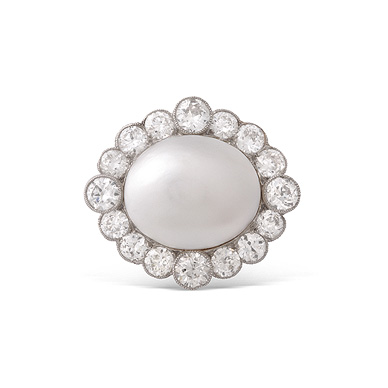
diamond broochIf you look at old editions of newspapers from around the turn of the century you’ll notice the classified advertisements made up sometimes up to one quarter of the paper.

A typical weekday edition of the New York Times back then was only around twelve pages.

As such, people read newspapers from cover to cover and the classified’s acted as the craigslist of their day with all sorts of wanted ads: jobs and situations wanted, real estate and merchandise offerings and lost and found’s.

This story appeared in the January 26, 1906 New York Times:

HER LOST JEWEL RECOVERED

The Finder Took Mrs. Morgan’s Reward and Both Are Satisfied

Mrs. D.P. Morgan of 70 Park Avenue lost a jewel in a car on Sunday. She inserted the following advertisement in THE TIMES of Friday:

LOST- Sunday, Jan. 21, on 4th Av. car entered at 38th St, or in 47th St., between 4th and 6th Avs., circular brooch, size of a nickel, of 13 diamonds. If returned to 70 Park Av. $40 reward.

The same day this advertisement was brought to THE TIMES:

FOUND – In Madison Av. car, Sunday, one 13-stone diamond brooch, which will be, upon proper identification, returned to its owner for the reward of $100: make arrangements to receive same C.O.D. by express. T.X. Box 305 Times Square.

As the result of the publication of both advertisements “T.X.” has returned the jewel. He received the $40 reward and in addition the cost of his own advertisement in THE TIMES, and he is content. Mrs. Morgan is equally pleased.

“It is the first time that this brooch has been so speedily found,” said Mrs. Morgan yesterday. “It has been lost twice already . Perhaps because it had thirteen stones. I think I will either leave it at home in future or have a stone added or removed.”

Probably the most amazing thing about this article is that Mrs. Morgan lost the brooch twice previously and it was returned each time. She sounds rather cavalier about it, as if it is expected that if you lose something valuable in New York City, of course it will be returned to the rightful owner. Maybe the city was once like that, but I wouldn’t hold my breath waiting for it to happen today.

The second part of Mrs. Morgan’s solution to not losing the brooch in the future is also quite bizarre or extremely superstitious. How altering the brooch from thirteen diamonds to an even number of diamonds will prevent its future loss is baffling, as it is illogical.

Book Advertisement From 1915: How To Make Love

“What To Do Before And After The Wedding” Among Other Things

Ad Book How To Make Love world almanac 1915So, how did people learn about sex and seduction 100 years ago? From a book of course. This ad appears in the 1915 World Almanac and was just too good not to share.

The text reads:

How To Make Love

(NEW BOOK) Tells how to Get Acquainted; How to Begin Courtship; How to Court a Bashful Girl; to Woo a Widow; to Win a Heiress; how to catch a Rich Bachelor; how to manage your beau to make him propose; how to make your fellow or girl love you; what to do before and after the wedding. Tells other things necessary for Lovers to know. Sample copy by mail, 10 cents.

Royal Book Co. Box 10 So. Norwalk, Conn.

Times Square January 11, 1954 – Lots of Snow And Cold Weather

January 11-12, 1954 – Biggest Snowstorm In Five Years Hits New York

Times Square Snowstorm Jan 12 1954

60 years ago, on Monday January 11, 1954 New York City got walloped with a 10 inch snowstorm with temperatures dipping down to 15 degrees. The storm continued on through Tuesday making travel difficult and it gave sanitation department workers extra long shifts for snow removal. It was the heaviest snowfall in New York City since December 19-20, 1948, when more than 19 inches fell.

The scene shown here is Times Square looking north with the Hotel Astor on the left. Directly across the street is the famous Bond Clothiers advertising sign.

The snow did not result in shutting down New York City schools. Some elementary schools did allow girls to be dismissed 15 minutes early to spare them from being pelted with snowballs by the boys. Just outside of the city it was a different story as Rockland, Westchester, Nassau and Suffolk Counties generally did close public and parochial schools for the day.

The snow ended at 7:05 a.m. on January 12. Highways were mostly kept clear, but most drivers played it safe and left their cars at home. The real problem was that over the next two days the temperature in New York kept dropping. It went down to a low of 11 degrees, freezing the snow into hard packed ice, making it difficult for pedestrians to navigate the streets.

Western Rockland and northern Westchester counties, saw the temperature dip to as low as two below zero. In northern Maine the temperature was minus 25.

The cold wave stuck around for a whole week. The temperature hit a two year low in New York City on the morning of January 18. The mercury registered just 8.8 degrees at 1:30 a.m.. The weather finally changed on January 19 when the temperature rose to 40 degrees.

7 Old Ads Of New York Businesses From 1874

How Macy’s, Tiffany & Co. And Other New York Firms Advertised Their Businesses In 1874

Macy's Ad 1874 The 1874 book New York Past and Present by Charles Edwin Prescott (Mercantile Publishing) contains interesting advertising which provides a look at how various companies sold their wares.

Some companies or the buildings they occupied in 1874 are still here today, other companies vanished long ago without a trace and are completely forgotten.

Click on any advertisement to enlarge.

R. H. Macy was down on 14th Street at the corner of Sixth Avenue. They had a collection of buildings joined together on 14th Street as the company kept growing throughout the late 1800’s. They moved to their Herald Square location in 1902. I remember up until the 1980’s looking up at some of the buildings on 14th Street and still being able to see the Macy’s red star emblazoned on the facades of a few buildings.

In 1874 Macy’s top line for advertising was that they were “importers and dealers of embroideries and lace goods.” The rest of the ad goes on to describe carrying goods:”various ladies’, gents’ and childrens’ furnishing goods,” “white goods,” “fancy goods” and “kid gloves”

Colton Dental Ad 1874The advertisement for the Colton Dental Association located at 19 Cooper Institute says they originated the use of “laughing gas for the painless extraction of teeth.” Who knew?

In the 19th century, people were really scared of the dentist because it was generally a painful experience. The interesting part of the ad: “77,228 patients without a failure or an accident.”

Zero Refrigerator Ad 1874Seeing the word “refrigerator” in an 1874 ad may cause you to do a double take. But this is not a modern refrigeration system advertised by Alex M. Lesley, the manufacturer of the Zero Refrigerator with offices located at 224 -226 West 23rd Street. The Zero Refrigerator was merely an icebox with “water, wine and milk cooler.” Mr. Lesley simply says the Zero “is the best food and ice keeper in the world.” The world’s first refrigerator was built in 1834. Refrigerators for home use didn’t come into existence until 1913.    Continue reading