Category Archives: History

10 Witty Quotations

I Wish I Had Said That

Ralph Waldo Emerson

Ralph Waldo Emerson – photo Library of Congress

Over the years I’ve collected what I think are sound words of wisdom and pithy lines. These fall into the latter category. While you may not find many of these in Bartlett’s Quotations, I’m sure there will be a couple of quotes here that should go down in posterity as memorable and be included in that most famous of quotation books.

Thoughts to ponder:

“Being a woman is a terribly difficult task, since it consists principally in dealing with men” – Joseph Conrad

“A dose of poison can do its work only once, but a bad book can go on poisoning people’s minds for any length of time” –  John Murray

“Some have been thought brave because they were afraid to run away.” –  Ralph Waldo  Emerson

Continue reading →

Where Did New Yorker’s Go For Rest & Relaxation in the 1840s and 50s? To The Cemetery, Of Course.

Before There Was Central Park, There Was Green-Wood Cemetery

Greenwood Cemetery Bayside Ave.Fern Hill Mausoleums print published 1855

Greenwood Cemetery Bayside Ave. Fern Hill Mausoleums – print published 1855

While few New Yorker’s today take Central Park for granted, there was a time in the city’s history that open spaces where nature could be enjoyed unimpeded by noise and pollution were scarce.

Greenwood Cemetery The Angels Await stereoview circa 1870

Greenwood Cemetery The Angels Await stereoview circa 1870

The great public parks which we enjoy today did not come into existence until the late 1850’s with the creation of Central Park followed by Brooklyn’s Prospect Park in 1867. From the 1840s until the 1860s, the rural cemetery was the place to go if a New Yorker or visitor wanted to experience rolling hills, plains, lakes, fabulous artworks and stroll peacefully while contemplating life.

The oldest of these rural cemeteries in New York City is Brooklyn’s Green-Wood Cemetery which was founded in 1838.

Green-Wood itself put out its own tour book soon after its creation to give visitors what they called “the tour.”

Green-Wood Cemetery admission ticket 1886

Green-Wood Cemetery admission ticket 1886

What could you expect when you got there besides mausoleums and tombstones?

Nature in abundance.

To give you an idea of how popular it was to visit Green-Wood, this section of Appleton’s New York City and Vicinity Guide by W. Williams, published by D. Appleton and Co. (1849) extols some of Green-wood’s virtues: Continue reading →

Ads Targeted To Women – 1955

Maybe In 1955 This Type Of Advertising Attracted Women To Products

Ad Counselor Scales Dec 12 1955

These advertisements featuring women and various products are all from the December 12, 1955 issue of Life Magazine.

If you believed the advertising, a scale may have seemed like an appropriate gift, because the ad proclaims, “the Counselor Capri is the scale for you… or as a gift for others.” By others I’m assuming those people you want to give a not so subtle hint to.

Ad Sunbeam Life Dec 12 1955While an electric razor is a practical gift I am dubious of the ad’s claim that “Now every woman wants Lady Sunbeam.” I doubt that this would make  any woman’s top ten…. ummm, better make that top 100, gift wish list today.

Ad Lewyt Vacuum Life Dec 12 1955 Remember folks that this isn’t just any vacuum, it’s a Lewyt. A Lewyt? I like the way the woman is dressed for vacuuming.

Ad Eureka Vacuum Life Dec 12 1955It wasn’t just Lewyt’s roller and nozzle on wheels that was a breakthrough in vacuuming, Apparently vacuums had some other big innovations with the Eureka Roto-Dolly. Also “no dust bag to empty,” means Mrs. 1955 Housewife won’t soil her chic white dress that she does the vacuuming in.

Ad Bell Telephone Life Dec 12 1955“The Christmas gift that rings a bell,” the Bell Telephone System says. Something as simple as installing a kitchen telephone will have your wife saying, “I have the nicest husband.” This appears to be a large kitchen. So one question: is that the best place for the telephone? Please take note of the length of the phone cord.

The First Day Of School In New York City 1937

Giving The Teacher An Apple – 1937

New York City school photo giving the teacher an apple 1937

Today, September 9, 2015 marks the first day of school here in New York City.  It might seem like a cliche now, but in the not so distant past, on the first day of school, many children really did present their teachers with an apple, as shown here in this 1937 NYC Schools photo.

The mode of dress may have changed, but the excitement and trepidation of the first day of school hasn’t.

Donald Trump And W.C. Fields On China

A Businessman And A Comedian’s Views On China And The Chinese

Donald Trump’s views on China versus W.C. Field comments on the Chinese may not seem clearly related. But I think they are.

Who’s statements are more accurate?

Donald Trump photo distorted chroniclescomDonald Trump

“Every single country that does business with us is ripping America off. The money China took out of the United States is the greatest theft in the history of our country”

“I’ve been telling everybody for a long time China’s taking our jobs. They’re taking our money. Be careful: They’ll bring us down. You have to know what you’re doing. We have nobody that has a clue.”

“When was the last time anybody saw us beating, let’s say, China in a trade deal? They kill us. I beat China all the time. All the time.”

WC Fields You Cant CheatW.C. Fields (from W.C. Fields & Me by Carlotta Monti 1971 Prentice Hall)

(On the Chinese) “All they have to do is give each one a gun, plus a few rounds of ammunition and they could conquer the world. It may happen one day.”

“And if they can’t do it by brute force they can accomplish it by cleverness. All they have to do is shrink the neck size of customers’ shirts at every laundry, and everybody will choke to death.”

Fields For President dj

Fields made his statements to Monti in private in the 1930s or 40’s, she does not specify exact dates in her account. Apparently Fields was seriously apprehensive of the Chinese as he was among many other groups (clergy, lawyers, children, film writers, tax collectors, doctors, etc. etc.)

You may not think of Fields as presidential material Continue reading →

Would You Recognize Central Park From 125 Years Ago?

20 Stereoviews Of 19th Century Central Park

Some Long Vanished Scenes And Other Familiar Sites

Mount Saint Vincent Convent, east side of Central Park near 102nd street

Mount Saint Vincent Convent, east side of Central Park near 103rd street

Central Park is a constantly evolving mixture of landscape, architecture, buildings and people.  Engineer Egbert Viele first surveyed the space encompassing the park. Landscape architects  Frederick Law Olmsted and Calvert Vaux, won the competition to design the park and  construction started in 1858.

Over the last 150 plus years, the park has seen many additions and subtractions within it.

The 19th century version of Central Park has many things that a New Yorker today would find familiar and others that seem completely out of character; such as a convent located in the northern part of the park.

The Academy of Mount St. Vincent shown above in the 1860’s was a group of buildings which predated the park and contained a school and convent run by the Roman Catholic Sisters. The nuns left the buildings before construction started on the park and moved to Riverdale in the Bronx in 1857.  The buildings they left behind remained for other uses such as a museum, storage and a rare plant conservatory.  All the structures were destroyed by fire on January 2, 1881. The site of Mount St. Vincent at East 103rd Street is now the composting area for the park.

Here are some other views of Central Park from 1863-1896. Click on images to vastly enlarge.

Central Park Bethesda Fountain without statueBethesda Fountain before sculptor Emma Stebbins famous bronze statue Angel of the Waters was installed in 1873.

Central Park The entrance on Fifth AvenueCentral Park’s original grand entrance on Fifth Avenue with policeman and guard house. Continue reading →

The First Execution By Electric Chair

125 Years Ago Today William Kemmler Became The First Prisoner To Be Put To Death By Electrocution

The original and first electric chair that was used to execute a prisoner on August 6, 1890 in Auburn, NY

The original and first electric chair that was used to execute a prisoner on August 6, 1890 in Auburn, NY. The chair was destroyed in a prison riot and fire on July 28, 1929.

While the debate continues today over what exactly comprises cruel and unusual punishment or whether the death penalty should ever be invoked, 125 years ago today on August 6, 1890 William Kemmler became the first person put to death by the electric chair. The electric chair was proposed to be a more “humane” way to execute criminals.

On June 4, 1888 New York’s Governor David B. Hill signed a law passed by the legislature that the punishment for murder after January 1, 1889 should be “death by means of an electrical current that should be caused to pass through the body of the condemned.” Electrical experts then came up with the plan to apply the current and strap a man in a chair while he sat.

The New York Evening World wrote of the convict Kemmler on the day of his execution, “If vengeance were what the law seeks by capital punishment for murder it would get little satisfaction out of the event today, for the poor wretch whose life has been taken within the walls of Auburn Prison has for weeks awaited the coming of black-visored Death with a child-like expectancy, almost impatience.”

One of eleven children, William Kemmler was born into poverty on May 9, 1860 in Philadelphia, PA. Continue reading →

The Forgotten Richard Nixon Assassination Attempt – 1968

Yemeni Born Brooklyn Resident, Ahmed Rageh Namer Is Arrested For A Conspiracy To Assassinate President-Elect Richard Nixon – 1968

Ahmed Rageh Namer in custody as a Brooklyn detective holds a rifle confiscated from Namer's home

Ahmed Rageh Namer (in hat) is arrested and charged with conspiracy to commit murder, as a Brooklyn detective holds a rifle confiscated from Namer’s home. photo: AP

Some students of history are familiar with Samuel Byck’s  1974 deluded attempted assassination attempt of Richard Nixon by hijacking and flying a plane into the White House.  Or they may know about Arthur Bremer’s attempt on Nixon in 1972. Bremer failed to get near Nixon and instead successfully shot and paralyzed presidential candidate George Wallace a few weeks after his failed attempt at Nixon.

But most people are unaware that a Brooklyn man, born in Yemen named Ahmed Rageh Namer was arrested along with his two sons in 1968 and charged with conspiracy to kill President-elect Richard Nixon. Continue reading →

Nicholas Winton Dies At 106, Saved Hundreds From The Holocaust

The Extraordinary Life Of Nicholas Winton

Nicholas Winton at 105 photo David Levene for The Guardian

Nicholas Winton at 105 photo David Levene for The Guardian

Nicholas Winton who saved hundreds of children from the Holocaust and didn’t tell anyone about it for over 50 years died Wednesday, July 1 in Maidenhead, England at the age of 106.

With all the chaos and hatred that permeates today’s news, it is sometimes easy to forget that there are real humanitarians in this world who have accomplished extraordinary things. Nicholas Winton was one of those truly good people who remind us that good deeds can come out of bad events.

How Nicholas Winton rescued 669 children from Nazi occupied Czechoslovakia on the eve of World War II is an amazing story told on the BBC 27 years ago and in America in 2014 on 60 Minutes.

Here is a portrait of humanity at its best with 60 Minutes telling Winton’s story.

“He Ruined My Wife.” The 109th Anniversary of The Crime Of The Century

Millionaire Harry K. Thaw Shoots Architect Stanford White At Madison Square Garden  June 25, 1906

The Beautiful Evelyn Nesbit Is At The Center Of It All

Evelyn Nesbit happy

In the annals of 20th century crime there are many cases that claim the title of the “crime of the century.” From the Lindbergh kidnapping case to the O.J Simpson saga, the public has always had an unquenchable thirst for following the media coverage of lurid crimes.

Madison Square Garden photo H.N. Tiemann

Madison Square Garden 1909 photo H.N. Tiemann

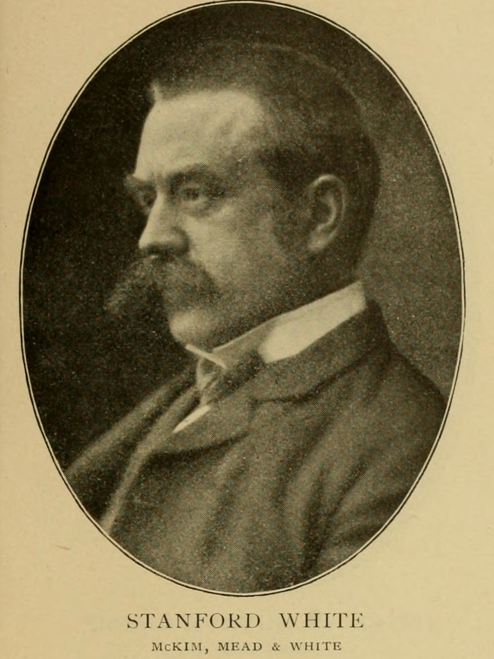
Harry Thaw’s murder of Stanford White at the roof garden theater of White’s creation, Madison Square Garden on June 25, 1906, was as big a story that has ever played out in the public eye. If it was not the “crime of the century,” it certainly qualifies for being in the top five.

A brief summary of the principal players in this drama and the events leading up to the murder goes like this.

In 1901, Stanford White, partner in the renowned architectural firm of McKim, Mead & White wants to meet artist’s model and showgirl Evelyn Nesbit, who is 16. White is known in certain circles for being a scoundrel and having many sexual affairs with actresses, models and other pretty girls. Stanford White photo Kings Notable New YorkersAfter meeting Nesbit under the approval of Evelyn’s mother, White becomes Evelyn’s benefactor over the course of several months paying for a multitude of things for Evelyn, her brother and mother. White arranges for Evelyn’s mother to take a trip back home to Pennsylvania while he promises to “look after Evelyn.” One night, while Evelyn’s mother is away and Evelyn is at White’s bachelor apartment, he plies Evelyn with liquor.  Evelyn passes out and White has his way with his virgin teen beauty. Evelyn wakes up in bed naked with White and is in shock after being raped. White begs Evelyn not to talk about what has happened. Continue reading →