Category Archives: History

The 1929 World Almanac

Some Vintage Advertisements of the Era and What Americans Paid in Taxes

The World Almanac was called The World Almanac because it was published by The New York World newspaper, not because it contained everything about the world. A version is still published every year even though the New York World has been gone for many years.

This edition was published in early 1929 when America was riding high. The stock market crash that caused the Great Depression in October was still months away.  The almanac covers the past events of 1928 and has data on thousands of items that are no longer covered in modern almanacs.

The first 70+ pages were advertisements. The rest, useful information.

Here are a few interesting things I found looking at my copy. (click on any photo to enlarge and click again for high resolution)

You need a coffin? The Springfield Metallic Casket Company of Springfield Ohio has many to choose from including “old reliable.” My favorite Continue reading →
One of the Strangest Deaths in New York’s History

Girls Chase A Boy to Give Him Birthday Kisses… and He Dies

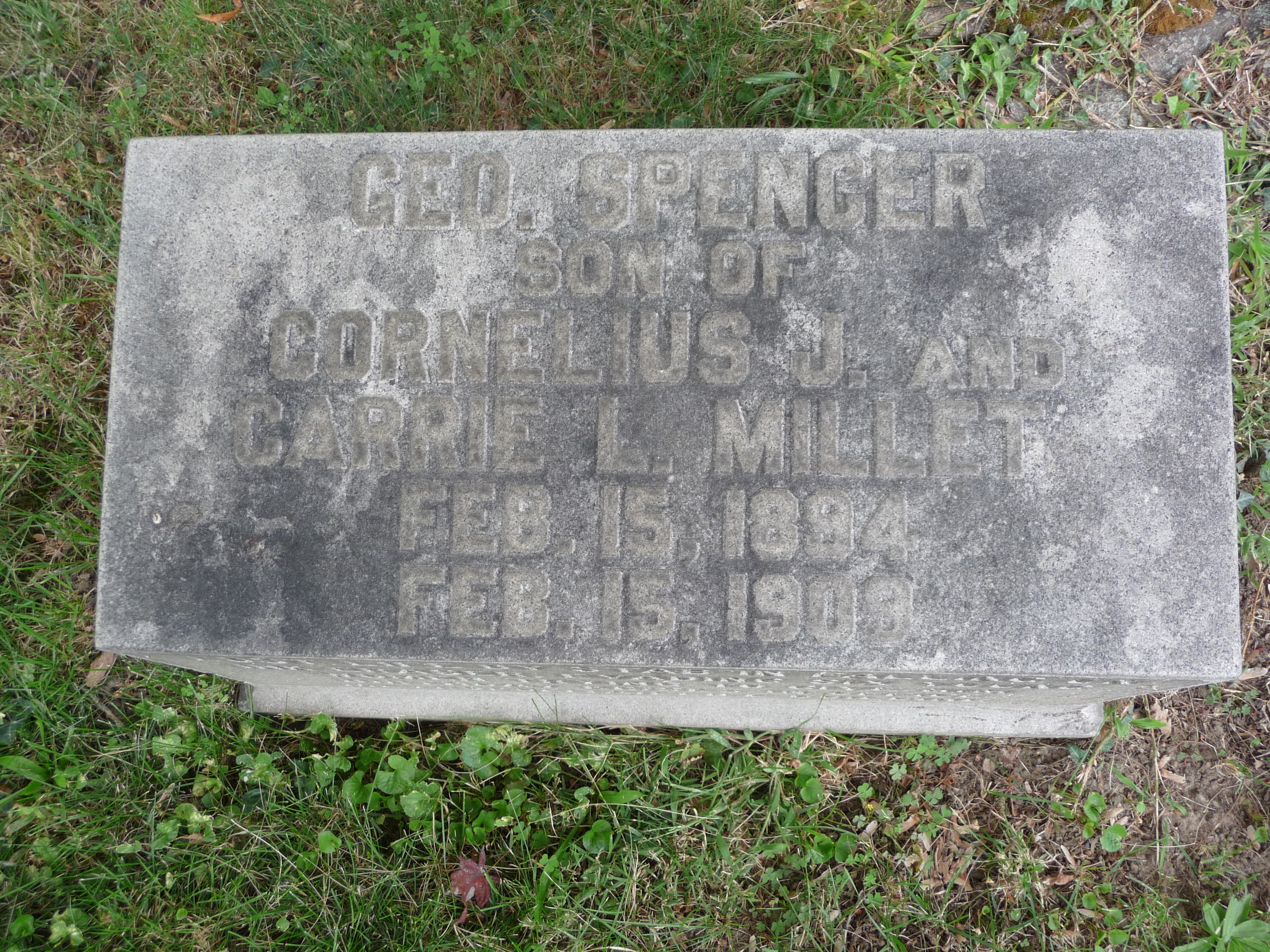
Woodlawn Cemetery Is The Final Resting Place of George Spencer Millet Who Had One Of The Strangest Deaths In New York’s History

Woodlawn cemetery 1909 Gravestone of George Spencer Millet died while evading girls kisses on his birthday at Metropolitan Life Building

There is a book called Woodlawn Remembers: Cemetery of American History by Edward F. Bergman (North County Books, 1988.)  The book is mostly comprised of beautiful full page color and black & white photographs of monuments, tombstones and mausoleums with one page of text describing each person profiled.  The cemetery is located in the northern part of the Bronx. Woodlawn is on my shortlist of recommendations of unusual places to go for New York visitors.

The book is fascinating to be sure. It covers many of the interesting and important historical figures at Woodlawn. But one story not mentioned, is the life and death of George Spencer Millet (misspelled as George Millitt by The New York Times in the story at the end of this article) who is interred at the cemetery.

Millet’s story is briefly recounted in Permanent New Yorkers A Biographical Guide To The Cemeteries of New York by Judi Culbertson and Tom Randall (Chelsea Green 1987.) This book contains photographs too, but has more detailed biographies than Woodlawn Remembers. Permanent New Yorkers also covers the entire New York area, not just focusing on the two most famous New York City cemeteries. Woodlawn and Greenwood. I highly recommend both of these out-of-print books.

It was February 15, 1909 and Millet was a good-looking boy. Because when the girls he worked with at The Metropolitan Life Insurance Company found out that it was his 15th birthday, they all insisted on giving him a kiss. Continue reading →

Under First Avenue

Beneath the Pavement

1st Avenue and 61st Street – August 11, 2010

Cobblestone streets.

Every so often New York scrapes away its layers and you can get a glimpse into the past. There was a time when many of New York City’s streets were paved with what are popularly called cobblestones, but in actuality is Belgian Block.

Last summer, the city repaved a twelve block section of First Avenue and huge swaths of Belgian Block were uncovered for a few days by the road milling machine. These vestiges of the past could be seen for the first time in decades.  Within a week, they were covered again.

For the short time they were exposed, late at night, if you listened very hard, I bet you could hear the horses hoofbeats.

The Original Yankee Stadium – Photographs and Memories

A Reflection on The Late, Great Yankee Stadium With Vintage Photographs

I visited the new Yankee Stadium once in 2009 when it first opened. The feeling was a bit surreal. It was like being in Yankee Stadium, but it wasn’t. The main difference for me was the surrounding neighborhood and looking out past the right-center field bleachers and not seeing the apartment buildings and the Bronx County Court House.

The new Yankee Stadium is a glorified mall.

The old Yankee Stadium that existed from 1923 – 1973 was where the storied history of the Yankees took place. Even after the renovation of Yankee Stadium from 1974-1975 which included taking out the old wooden seats and the removal of the beams that could block your view from many of those seats, the stadium still retained some of the old charm, even though it lost a bit of its character. From 1976 -2008 the Yankees played in the same spot where Lou Gehrig, Babe Ruth, Mickey Mantle, Red Ruffing, Hank Bauer, Whitey Ford Joe DiMaggio and Bill Dickey saw action.

The Yankees of the last 35 years; Thurman Munson, Bobby Murcer, Ron Guidry, Mel Stottlemyre, Paul O’Neill, Don Mattingly and Derek Jeter could look around and seep in the history of this altered palace of baseball, even if there were heavy cosmetic changes to the outside and inside of the stadium itself.

There was no more “Death Valley” Continue reading →

Guess What? The World Is NOT Ending May 21

People Believing In Strange Things

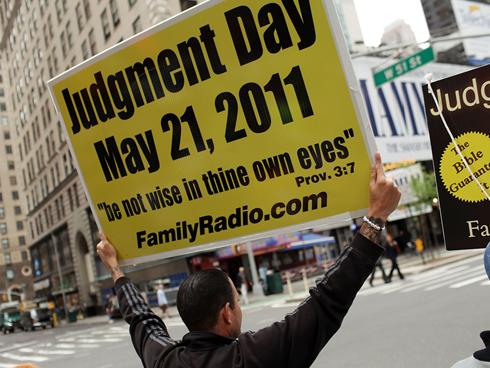
Maybe you’ve seen these people?

The New York Times front page story on the people who believe in Harold Camping’s prophecy about the return of Jesus on May 21 and the end of the world on October 21, points out that the children of these doomsayers are somewhat confused by their parent’s strange beliefs.

The idea of knowing doomsday’s arrival by interpreting or unlocking the secrets of sacred text has been around for a while.

The Times has a second story about a New Yorker who gathered about a dozen believers to prepare for the end of the world in 1925.

The United States has quite a history of biblical Doomsday prophets. A very notable occurrence happened Continue reading →

The First Baseball Strike – May 18, 1912

An Unlikely Catalyst Causes a Baseball Strike – Other Players Rally Around the Unpopular Ty Cobb

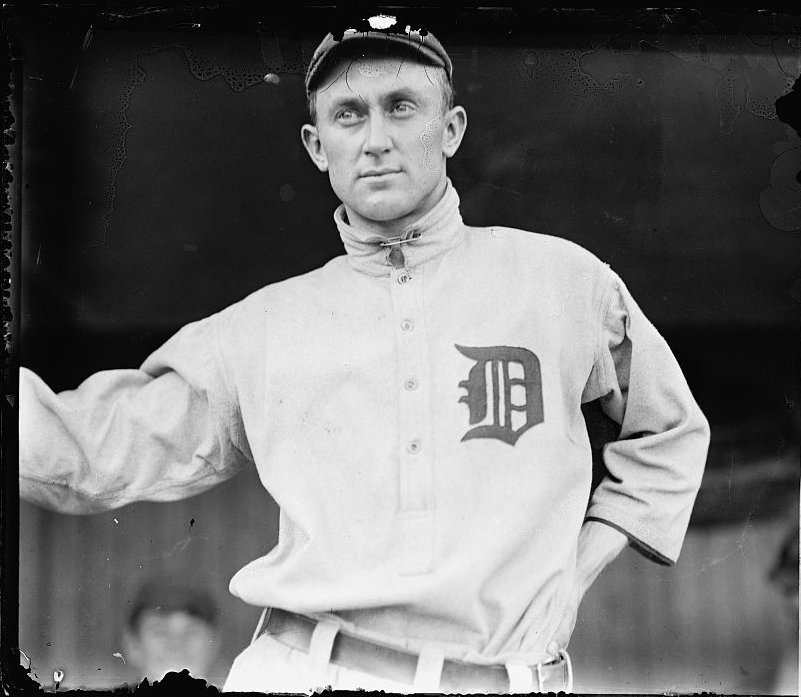
On Wednesday May 15, 1912 The Detroit Tigers were playing the New York Yankees at Hilltop Park in upper Manhattan when one of the most infamous incidents in baseball history occurred.

Ty Cobb, the star outfielder for the Tigers was incited by a fan to go into the stands and pummel him.

The fan, Claude Lucker (alternately spelled by contemporary papers as Lueker or Leuker) worked as a page in the office of Tammany boss “Big Tom” Foley.  From the onset of the game Lucker was being particularly obnoxious according to all accounts. Cobb and Lucker exchanged nasty barbs and Cobb warned Lucker to stop calling him names or he would come into the stands to take care of him personally. By the fourth inning Cobb had had enough and he jumped into the left field stands and started administering a beating and no one seemed to interfere.

Sticks and stones were probably not as harmful to Cobb as the names which could hurt him – especially when the racist outfielder was called a “half-nigger” by Lucker, which was what apparently drove him over the edge.

It should be noted that Lucker had a machine press  accident when he was younger and was missing one hand and had Continue reading →

The Oldest Man In The World? A New Yorker Lives A Very,Very Long Time In The 19th Century

The Oldest Man In New York

I’ve always had a problem with people saying, “I read it on the internet and therefore it is true.”

I am more of a believer in the accuracy of books, but I’ll admit it- bibliophile that I am, even books are wrong sometimes. Actually, more than sometimes. How often, I’ve wondered, does a mistake appear in a book, that book becomes the “authority” or “reference” material for other books and the mistake becomes gospel?

When something strikes me as unusual, amazing or inconsistent with what I know, I try and check the facts by going to the original or earliest source material. This is just my natural curiosity. This includes lots of history that is inconsequential in the greater scheme of things. But when I get fascinated and have to know more, I’ll take the time to look into it.

In an earlier post we noted we would return to the book, “The Secrets of the Great City: A Work Descriptive of the Virtues and the Vices, the Mysteries, Miseries and Crimes of New York City” by Edward Winslow Martin (pseud. James D. McCabe) published by Jones, Brothers & Co. 1868.

One short chapter entitled The Oldest Man in New York aroused my investigative instincts, two samples from that chapter are reproduced below (the full three page text can be found here)

Strangers visiting the Church of the Ascension, in New York, cannot fail to notice the presence of an old gentleman, who occupies an arm-chair immediately in front of the chancel, in the middle aisle, and who gives the responses to the service in a very loud and distinct manner. This is, perhaps, the oldest man of the entire million of New York City inhabitants. It is Captain Lahrbush, formerly Continue reading →

Old Time Crime In New York – Prostitutes And Panel Thieves

19th Century Prostitution and a Sly Trick of the Trade

Every so often we will look back at the history of New York City.

Secrets of a great cityToday’s entry is from “The Secrets of the Great City: A Work Descriptive of the Virtues and the Vices, the Mysteries, Miseries and Crimes of New York City” by Edward Winslow Martin published by Jones, Brothers & Co. 1868

Edward Winslow Martin was the pseudonym of James Dabney McCabe and he published this book or a slightly altered version of it many times beginning in 1868 under various titles and through different publishers until 1883 when he died.  The illustrated book is a 600 plus page turner of practically every sleazy Continue reading →

The Triangle Shirtwaist Fire

The Triangle Fire – One Hundred Years Later

Anniversaries of older, tragic events are usually the only time those events play into the public consciousness. Other than that, they are rarely thought about, discussed or even remembered.

This week a vast amount of attention has been devoted by newspapers, PBS, HBO and news stations in New York that are marking the 100th anniversary of The Triangle Shirtwaist Fire in which 146 people, mostly young immigrant girls, perished.

The details of the March 25th, 1911 conflagration which are summed up best by Cornell University’s Industrial and Labor Relations School web site are heartbreaking. Many of these girls Continue reading →

North Brother Island

A Close-up Look At Hidden New York: No People, But Lots Of Abandoned Buildings, Neglected Structures And A Safe Haven To Birds.

Having lived in New York City my whole life, there are places that I have never visited by choice and others that I have never been to because they are off-limits.  One of those off-limits places is North Brother Island, which is a small island just off the southern coast of the Bronx near the entrance to Long Island sound.

North Brother Island, if known by the general public at all, is famous for two reasons:

1-   In 1904 the excursion boat General Slocum caught fire and was beached near the island. The fire took the lives of over 1,000 people, mostly women and children going on a church outing to Long Island. Heroic rescuers who worked on North Brother brought many of the victims to the shores of the island.

2-   Mary Mallon a.k.a. Typhoid Mary who was a carrier of typhoid and spread disease and death in turn of the century New York. She was quarantined there until she died in 1938.

I am fascinated by abandoned structures. North Brother Island is chock full of history. Presented here is the link to the fabulous web site The Kingston Lounge which has done a phenomenal history and photo essay of the decaying remains on this forgotten section of New York City.

The 19.3 acre island is now controlled by the New York City Department of Parks and Recreation and since its human abandonment in the 1970’s has become a bird sanctuary.