59th Street Entrance To The Queensboro Bridge December 21, 2011 9:15 am

At first glance this is an ordinary street scene. Until you see what is written on the electronic sign. Continue reading

At first glance this is an ordinary street scene. Until you see what is written on the electronic sign. Continue reading

September 29, 2011 8:35pm
They say the neon lights are bright on Broadway. Not much neon, Continue reading
A Penny From Heaven by Max Winkler (Appleton-Century-Crofts, Inc 1951)
 Anyone suffering through the trepidation of an uncertain job market and being out of work with no savings, would find comfort and inspiration by reading Max Winkler’s, 1951 autobiography and ode to America, A Penny From Heaven.
Even for those not being in the same circumstances, Winkler’s book is a page-turning, lively recreation of the United States at the dawn of the twentieth century. Achieving the American Dream and leaving behind the “old country” forever, was the goal of millions of ignorant, poor and helpless European immigrants and Winkler conveys the struggle as well as any writer ever has. Continue reading

This photograph is from a stereoview which captioned the Presbyterian Hospital as “the old men and women’s hospital.” This photo was taken by E. & H.T. Anthony Co. about 1872, shortly before the hospital’s first complex of buildings was completed. The hospital was built by the leading architect of the day, Richard Morris Hunt. Though you cannot tell from the black and white photograph, the contrasting color scheme had bricks that were very red and others that were pale. Continue reading
December 19, 1948 – Times Square 8:53 pm

On this day 63 years ago, 19.6 inches of snow blanketed the city. Here is Times Square in the midst of this snowstorm with only a few pedestrians and cars visible. Because it was a Sunday, traffic was light and the city was able to prepare and battle the storm efficiently. Mayor William O’Dwyer had a force of 18,340 men to remove the snow and keep the city running.
To the disappointment of children on Monday, New York City schools were open.
Looking north from the Times Building we see on the left The Paramount Building with the Paramount Theatre’s marquee lights casting an extreme white glow and on the next block The Hotel Astor. On the right are two iconic neon advertising signs; one for Camel cigarettes between 43rd and 44th Streets and the other for Bond Clothiers between 44th and 45th Streets.
The Bond sign contained nearly two miles of neon and had two fifty foot nude figures at each end, one male and one female. A huge recirculating waterfall between the two figures topped off this amazing advertising sign which was in place from 1948-1954.
This video first appeared four years ago, but I just discovered it. If you have ever watched a silent film you will appreciate this. Continue reading
You Have To Hear It To Believe It…
Shatner, The Transformed Man, continues his musical career. His new album is called, Continue reading

In this January 7, 1957 photograph Jackie Robinson packs up the contents of his locker from Ebbets Field, his home for his entire ten year major league career.
After the 1956 season Jackie Robinson’s legs were gone. He was no longer the player he once was and he knew it. He batted a respectable .275 with ten homers. But rather than continue playing with eroding skills, Robinson would retire at the age of 37.
One problem: except for his family and future non-baseball employer, Robinson didn’t tell anyone of his decision.
The Dodgers shocked everyone including Robinson, with a December 13, 1956 trade to the New York Giants for Dick Littlefield and $35,000 for the Dodger legend. After the trade announcement, fans of the Dodgers were outraged. Brooklynites believed that Robinson would retire rather than play for the hated crosstown rival Giants. But they did not know Robinson had already decided before the trade that he was retiring.
All Robinson would publicly say was he would “inform the Giants by January 14, if he would play in 1957.”
The reason Robinson couldn’t announce his retirement was because he had signed a contract to write an exclusive article for Look magazine, about his retirement in December which would not hit the newsstands until January 8.
Announcing his retirement on January 7, many Dodger fans were happy Robinson would not be playing for the Giants. Robinson said he had decided to take a position with Chock full O’Nuts as Vice President of personnel rather than play baseball.
Whether Robinson would have played for the Giants had he not retired is open to speculation.

click to read Robinson’s letter
Robinson’s January 14, 1957 letter to Giants owner Horace Stoneham takes the high road. Robinson says he appreciates being offered the chance to play for the Giants, but he has “decided to devote his full time to business opportunities.”

This news photograph is entitled, “Government agent mixing and weighing heroin and morphine.” September 20, 1938.
All they needed was some cocaine for a giant speedball.
Why the government needed an agent to mix these massive quantities of drugs I do not know. Continue reading
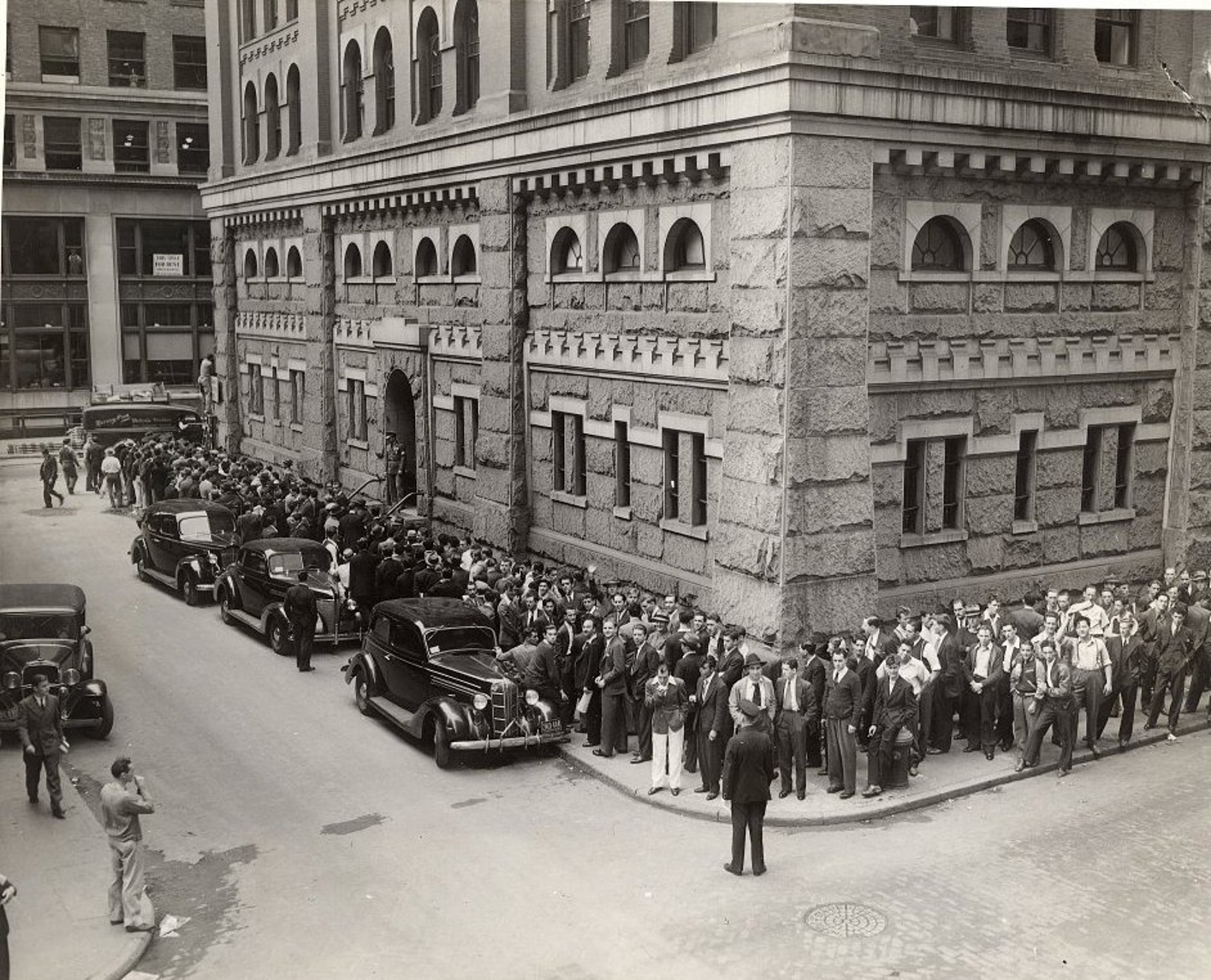
Sunday afternoon on “a day that will live in infamy.” Volunteers for military service stretch around the block after the Japanese launched a surprise attack against the United States at Pearl Harbor. Continue reading