Tag Archives: Advertising

30 Vintage Advertisements From The New Yorker Part 1

Ads From The November 3, 1951 New Yorker Magazine

I really enjoy looking at old magazines. Those old issues of Life, Look, Collier’s, The Saturday Evening Post and especially The New Yorker uniquely capture the 1920’s-1960’s.

I like the articles, the cartoons and especially the ads.  You read the copy, look at the typography and study the images.  The salesmanship is very direct. Some ads are wordy and try and convince you of the merits of the product. Others let the product stand on its own with few or no words.

I picked a random issue of The New Yorker Magazine from over 60 years ago to look over and picked 30 ads that were indicative of the time.  There are over 100 advertisements in this issue: some are very small, some are full page, some black and white others are in color.

Then, probably more than now, The New Yorker was read by and appealed to the upper crust of society and the ads definitely reflect that.

Here are the first fifteen ads. Click on any image to enlarge.

They Liked To Drink

Those post-war years meant if you were going out, coming home or even at the office you should have an alcoholic drink.

Booth’s House Of Lords Finest Distilled Dry Gin – Probably better than Booth’s House of Commons Gin Continue reading

New York’s Big Snowstorm Of 1948

December 19, 1948 – Times Square 8:53 pm

On this day 63 years ago, 19.6 inches of snow blanketed the city.  Here is Times Square in the midst of this snowstorm with only a few pedestrians and cars visible. Because it was a Sunday, traffic was light and the city was able to prepare and battle the storm efficiently. Mayor William O’Dwyer had a force of 18,340 men to remove the snow and keep the city running.

To the disappointment of children on Monday, New York City schools were open.

Looking north from the Times Building we see on the left The Paramount Building with the Paramount Theatre’s marquee lights casting an extreme white glow and on the next block The Hotel Astor. On the right are two iconic neon advertising signs; one for Camel cigarettes between 43rd and 44th Streets and the other for Bond Clothiers between 44th and 45th Streets.

The Bond sign contained nearly two miles of neon and had two fifty foot nude figures at each end, one male and one female. A huge recirculating waterfall between the two figures topped off this amazing advertising sign which was in place from 1948-1954.

MTA Propaganda

Open For Business  ** Shop 2nd Ave ** It’s Worth It!

A cryptic poster on a city bus that says absolutely nothing. Typical of the MTA.

The punishment for the person who wrote this slogan should be to live in an apartment adjacent to the constant construction.

Below is the text of this MTA sign pictured above that “encourages” shoppers.

The many interesting shops, restaurants and services on Second Avenue are open while MTA Capital Construction builds the Second Avenue Subway. Shop Second Avenue. It’s Worth It!

Visit mta.info and click on the Capital Construction link for more about your local shops, restaurants and services.

The Manhattan Chamber of Commerce is a partner with MTA Capital Construction in support of local establishments as construction continues on the Second Avenue Subway.

This is going to convince anyone to shop in the construction zone?

Lame signs do not get people to shop in an area that is having many of its businesses being decimated by the constant construction for the Second Avenue Subway project. The poor business owners and residents along the construction route have suffered since 2007 and many stores have gone under in the intervening four-plus years.

Solutions, Not Signs

More people might patronize the establishments on Second Avenue if the MTA didn’t in a prima facie way, block access to the stores along the construction path. One side of certain streets appear to be inaccessible. Maybe the MTA could cut down on the hours that allowed filth and noise to be generated. Or just make a conscious effort to make the streets more inviting by not chopping the sidewalks to half their normal width and blocking re-routing crosswalks, making it difficult for pedestrians to stroll.

Plus the area is just plain ugly. It seems little or no thought was given into making the avenue look more appealing.  The fences, walls and temporary banners give Second Avenue a very shabby appearance. In many places Second Avenue looks more like a post-war zone, not a construction zone.

Originally the MTA projected the first phase from 105th Street to 72nd Street of the Second Avenue subway would be completed in 2014.  It is of course delayed and over budget. If they don’t run out of funds it might be completed by June 2018.

One side note: the entire first phase of the original New York City subway from City Hall to 145th Street, (almost nine miles) was built in just over four years from March 27, 1900 – October 26, 1904.

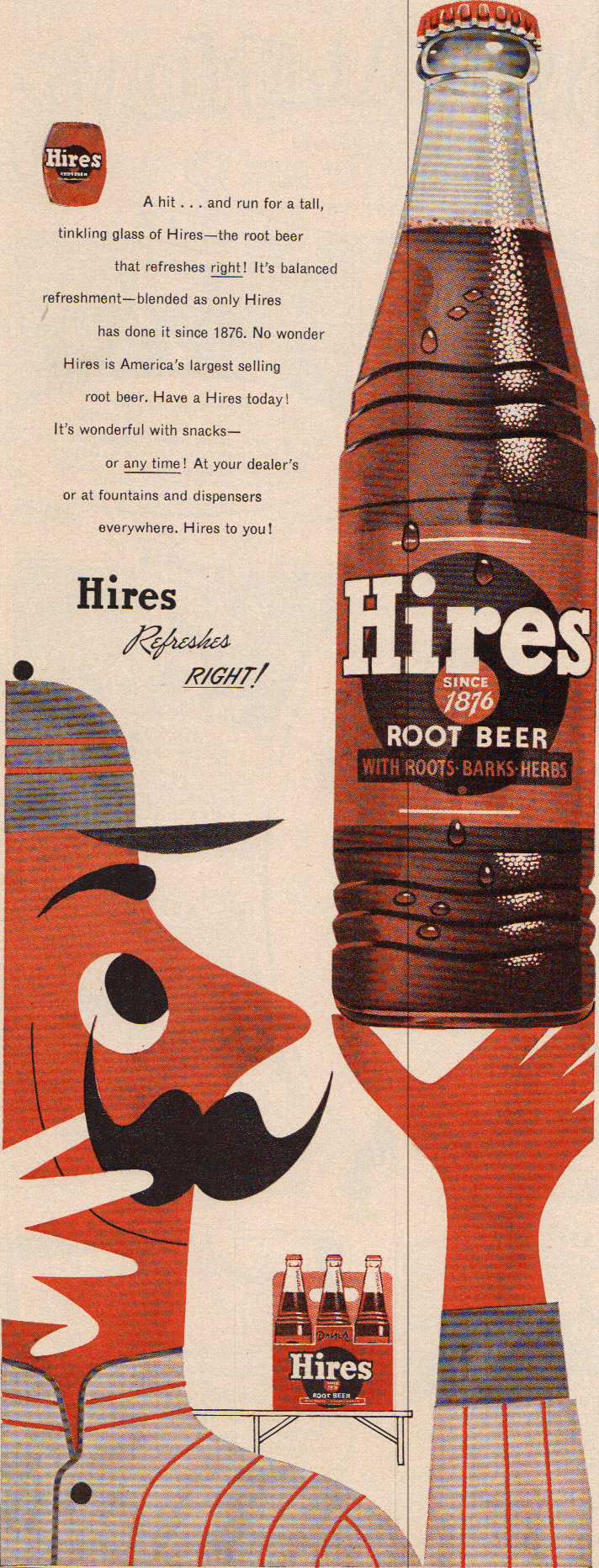
Q: Where Can You Buy Hires Root Beer? A: Nowhere. Killing A Product – The Demise of Hires

Hires – The First Root Beer, Dying A Slow, Prolonged Death

(This article is from 2011 and has updates at the end through 2025)

I know soda isn’t good for you. New York City Mayor Michael Bloomberg and many nutritionists would like to slap a soda tax on sugary beverages.

I try not to drink a lot of soda, but I have a sweet spot in my heart for Hires Root Beer. I love the stuff. It is by far the best root beer ever made and I have tried many of them:  IBC, Stewart’s, Mug, A&W, Dr. Brown’s and about a dozen or more other smaller regional brands, and none compare to the unique, smooth taste of Hires.  But I have not had a sip of Hires in over six years.

I did not forsake Hires.  Instead the brand has slowly been vanishing off the shelves of supermarkets in an ever widening circle over the past 20 years. It is now unavailable in most portions of the United States and Canada.

How did the oldest continually produced soft drink and for many years, most popular root beer Continue reading

The Cost of Living in Manhattan Apartments – 1926

The Prices of Fancy New York  Apartments and Where You Could Live on a Decent Salary

As I continue to look through the Sunday October 10, 1926 New York Times real estate section, I wanted to get a better understanding of what a dollar could buy when it came to apartments.

First I did some income research.

According to FRASER (the Federal Reserve Archival System for Economic Research) , a little over 4 million individual tax returns were filed in 1926.

The average net income on those returns was $5,306.43.

The average amount of tax liability was – get this – only $176.11!

So you might think that everyone was doing Continue reading

The Most Pretentious Home

How To Advertise a House – 1926 Style

This is an ad from a copy of the October 10, 1926 Sunday New York Times. An odd choice of words to sell a home.

Larchmont is a wealthy suburb 25 miles north of New York City.

This ad has me pondering numerous questions:

I wonder if this home sold quickly because the H.M. Williams copywriting team knew the word  “pretentious” would appeal to that special, up and coming snob who wanted to live in a pretentious home?

Even in 1926 wasn’t it demeaning if you admitted that you lived in the most pretentious home in Larchmont? Maybe it was bad, only if other people said it about you or your home?

If this house still exists in 2011, do the current owners know how it was once advertised?

Does anyone out there from Larchmont recognize the house and if so can you drop us a line with the street address?

The 1929 World Almanac

Some Vintage Advertisements of the Era and What Americans Paid in Taxes

The World Almanac was called The World Almanac because it was published by The New York World newspaper, not because it contained everything about the world. A version is still published every year even though the New York World has been gone for many years.

This edition was published in early 1929 when America was riding high. The stock market crash that caused the Great Depression in October was still months away.  The almanac covers the past events of 1928 and has data on thousands of items that are no longer covered in modern almanacs.

The first 70+ pages were advertisements. The rest, useful information.

Here are a few interesting things I found looking at my copy. (click on any photo to enlarge and click again for high resolution)

You need a coffin? The Springfield Metallic Casket Company of Springfield Ohio has many to choose from including “old reliable.” My favorite Continue reading