Category Archives: Baseball

An Interview With Avery Corman “My Old Neighborhood Remembered A Memoir”

Avery Corman, Author of Kramer vs. Kramer, Talks About His Latest Book: My Old Neighborhood Remembered A Memoir

My Old Neighborhood RememberedThe neighborhood is the Bronx. The time is World War II and the post war years. And the writer is Avery Corman. His newest book My Old Neighborhood Remembered A Memoir (2014) Barricade Books, is his first non-fiction book and is filled with wonderful recollections of growing up.

After graduating college Corman was working on the fringes of advertising and with the encouragement of a friend, Herb Gardner (A Thousand Clowns; I’m Not Rappaport; etc), he took a stab at writing a book. That effort was published as Oh God! A Novel (1971). After that hurdle Corman never looked back and he became a full-time novelist. Oh God! was eventually made into a very popular movie in 1977 starring George Burns and John Denver.

Some of Corman’s other acclaimed novels include The Bust-Out King (1977), The Old Neighborhood (1980); 50 (1987); Prized Possessions (1991); The Boyfriend from Hell (2006) and his most famous work, Kramer vs. Kramer (1977) which was adapted into a movie in 1979 and was the winner of five Academy Awards including Best Picture.

Avery Corman’s success must partially stem from his middle-class upbringing in the Fordham section of the Bronx during the 1940’s and 50’s, where he admits he was not the best student when it came to math and science, but did well in the humanities and was surrounded by a loving, extended family.

My Old Neighborhood Remembered A Memoir is more a series of vignettes rather than a straight autobiography and that style comes off well. Corman shares his memories of childhood during World War II up until he becomes a successful author in the late 1960’s. He paints beautiful word pictures, sometimes tinged with sadness, of growing up in a wondrous place that no longer exists. Most of the stories offer short bursts of family life, games, food, education, sports and all the things that contributed to making the Bronx a special place to grow up in.

Corman’s stories resonate with a tender glow of friendships, family and the feeling that neighborhoods were once really neighborhoods, where the familiarity of rituals, people and places were ingrained in the surroundings.

Here are parts one and two of an exclusive interview with Avery Corman.

Part I, Avery Corman talks about what made the Bronx a special place during the war. His unique living situation and school life.

In part II Corman Continue reading

World Series Photos Delivered Instantly

Before The Internet, The Quickest Way To Get Photos Back To The Newspaper- Via Pigeon

Walker Cooper Phil Rizzuto pigeon delivers negatives 1942 world series

Walker Cooper, Phil Rizzuto and Private Harry Myers and carrier pigeons, October 4, 1942 photo: New York Journal-American

You would have thought by 1942 there was a quicker way for a newspaper to get photos from one place to another than using a carrier pigeon. Apparently not.

Before game four of the World Series at Yankee Stadium, Private Harry Myers, the Journal-American’s pigeon specialist, shows the Cardinal’s Walker Cooper and the Yankee’s Phil Rizzuto how photographic negatives of the World Series game are sent by pigeon from the ballpark to the newspaper’s offices for same-day publication of the photos.

Amazing.

Maybe it was just the New York Journal-American’s method, as I cannot imagine all the newspapers releasing pigeons during a baseball game.

One Big Reason Baseball Is Dropping In Popularity

Catering To The Next Generation Of Baseball Fans

You may have read that one of the 2014 World Series games was competing for viewers with a Thursday night football game. The television audience for the World Series ended up being less than half of that of the football game.

No surprise there as football has become the dominant televised sport in America. So besides letting World Series games be played at night when the next generation of fans is going to bed, what else is MLB doing to discourage young people from getting to like baseball?

This photograph below will clue you in:

Group Seating Citifield September 2013

Group Seating Citifield September 2013

This photo taken in mid-September 2013 shows a class trip of 12-year-olds at Citifield, the New York Mets ballpark.

It was a beautiful sunny weekday and the Mets and San Francisco Giants were playing for nothing, nada, zilch. Both teams had been eliminated from any playoff possibilities weeks earlier.

Obviously with group seating the Mets gave the kids the best possible seats in the house to get them engaged and interested in the game, right?

Well of course not. Group seats are usually in the farthest reaches of the ballpark and these were no exception, in the corner of the upper deck in right field in section 503.

Now I understand why the Mets and most other teams put group seats in generally undesirable places. These are seats that will usually never be sold, because who wants to pay $15 or more and sit in the stratosphere. The Mets are not going to give $75 seats away for $15 to a group.

But this photograph below shows the kids view of the game and the reality of how many fans were at the ballpark just 10 minutes before starting time.

Citifield 10 minutes before game time

Citifield 10 minutes before game time

It never got much more crowded than this when the game got underway. The announced attendance was 22,897. Everyone there knew that there was no possible way that there were even 12,000 people at this game. The ballpark remained as you see it: thousands of empty seats in huge clusters.

There were schoolgirls sitting on either side of me and both were attending their first baseball game. Being a chaperone on this trip, they asked me questions and tried to watch from our birds-eye vantage point. As the game progressed, with the exception of the few boys who follow baseball, most of the children lost interest rapidly.

For many of the kids who were in attendance this would be the only game they would ever go to because they had no interest in baseball before the game, and were not going to have any interest after the game.

What could the Mets have done?

They should have taken the thousand or so children that were in the four to five large groups seated in the far reaches of the upper deck and moved them to seats anywhere closer to the field. When I actually mentioned this to the Mets personnel man in charge of groups in our section he looked at me like I was crazy and said that was not possible.

It was indeed possible if someone from the Mets ticketing, marketing or publicity department could have had a bright idea and made an executive decision and said something like, “Hey, the season’s virtually over and our ballpark is pretty empty today. You know what might get us more fans in the future? Let’s move these kids down to decent seats so that they will be close enough to be involved in the game. Maybe some of them will come to appreciate and love baseball if they can actually see what is going on up close, rather than watching the jumbotron screen or straining to see the ant-size ballplayers from their mile away seats. This would be a good way to develop a new generation of Mets fans.”

Well that never happened and it probably never will happen. Unless MLB and their teams realize that they are rapidly losing a huge part of their future baseball audience, baseball  will be as popular here as cricket.

It’s Time For Day Baseball Games To Return To The World Series

It’s Been 30 Years Since The Last Outdoor, Daytime World Series Game Was Played – Who’s to Blame? MLB, FOX & “TV Research People”

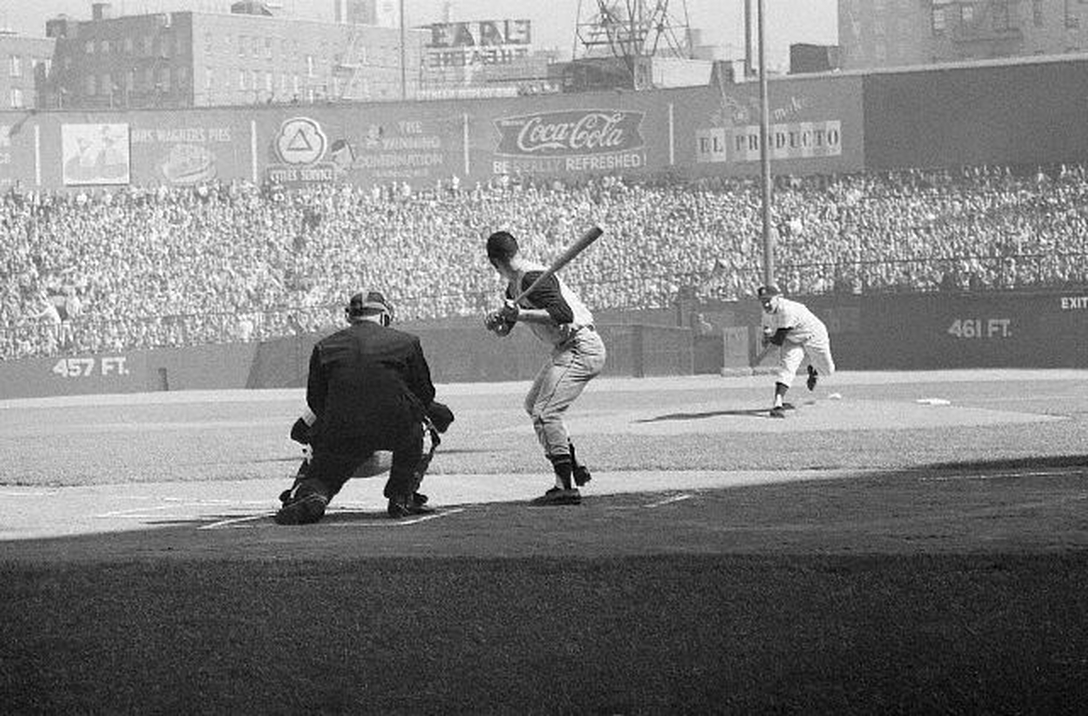
World Series baseball the way it used to be played - during the daytime. Pirates center fielder Bill Virdon awaits the first pitch from Yankees ace Whitey Ford to begin game 3 of the 1960 World Series at Yankee Stadium, October 8, 1960.

World Series baseball the way it used to be played – during the day. Pirates center fielder Bill Virdon awaits the first pitch from Yankees ace Whitey Ford to begin game 3 of the 1960 World Series at Yankee Stadium, October 8, 1960.

30 years ago on October 14, 1984 the Detroit Tigers and San Diego Padres played game 5 of the World Series at Tigers Stadium under what used to be normal circumstances – they played a day game.

Three years later in 1987 the Minnesota Twins and St. Louis Cardinals also played a day game in the World Series, but you would not have known it because the Twins played their home games indoors at the Hubert H. Humphrey Metrodome.

Since then, every World Series game has been played at night. Continue reading

Wes Parker Battles Fans For A Foul Ball In The 1965 World Series

Hey Dodgers Fans Get Out Of The Way!

Wes Parker catch attempt WS game 4 Oct 10 1965 photo UPI

Wes Parker goes after a ball in game 4 of the World Series Oct 10 1965 photo: UPI

The Los Angeles Dodgers played the Minnesota Twins in the 1965 World Series with the Dodgers prevailing in seven games.

At Dodger Stadium on October 10, 1965, in game four with two outs in the top of the ninth, Twins slugger Don Mincher hit a pop fly that was drifting into the stands in foul territory. With the Dodgers leading 7-2, Dodgers first baseman Wes Parker made a desperate leap into the stands to try and catch Mincher’s foul ball and end the game.

Parker’s jump fell short and he missed the ball.

Mincher ended up striking out and Don Drysdale got the complete game win for the Dodgers. Time of the game two hours and fifteen minutes.

An Incredible Baseball Card Error – Aurelio Rodriguez & The Bat Boy

How The Bat Boy Ended Up On Aurelio Rodriguez’s 1969 Topps Baseball Card

Aurelio Rodriguez 1969 Topps Error cardAurelio Rodriguez was a slick fielding, rocket-armed, gold glove winning third baseman who enjoyed a 17 year major league career and batted .237 with 124 career home runs in just over 2,000 games with seven teams.

Though he is wearing a uniform, and the baseball card states that this is Aurelio Rodriguez, the California Angels third baseman, it is not.

In actuality the card shows Angels bat boy, Leonard Garcia, on what was supposed to be Rodriguez’s card #653, for 1969. The error was not divulged until 1973.

So how does a bat boy get on a baseball card?

There are two popular rumors/theories of how this happened. The first, was that the Topps photographer Continue reading

October 3, 1951 A Day Brooklyn Dodgers Fans Would Love To Forget

The Moment Bobby Thomson Hit His “Shot Heard Round The World”

Bobby Thomson connects, Oct. 3, 1951, catcher is Rube Walker, umpire is Lou Jorda photo: Wide World

Bobby Thomson connects, Oct. 3, 1951, catcher is Rube Walker, umpire is Lou Jorda photo: Wide World

This article is titled “A Day Brooklyn Dodgers Fans Would Love To Forget” but in actuality Brooklyn Dodgers fans are dwindling in number.

You’d have to be at least 60 years old to have any memory of “dem bums” playing at that great ballpark known as Ebbets Field. The team moved to Los Angeles in 1958, breaking everyone in Brooklyn’s hearts.

The day the Dodgers left Brooklyn for smoggy L.A. was a horrible moment, but no moment was as painful for Dodgers fans as the Giants bottom of the ninth inning comeback of a best two out of three playoff series with the Dodgers.

On Wednesday October 3, 1951 one of the most memorable events in all of baseball history occurred. As seen in the photo above, Dodgers fans were devastated when the New York Giants third baseman Bobby Thomson hit a one out, three run home run to left field off of Dodgers pitcher Ralph Branca, to give the Giants a 5-4 miracle win at the Polo Grounds and propel them into the World Series against the Yankees. Continue reading

One Of The Greatest Pitching Performances Ever

49 Years Ago, Satchel Paige Shut Out The Red Sox For Three Innings. 

No Big Deal, Except That He Was 59

Satchel Paige, age 59 warming up on September 13, 1965 two weeks before facing the Red Sox photo: AP

Satchel Paige, age 59 warming up on September 13, 1965 two weeks before facing the Red Sox photo: AP

To hold “a day” for a ballplayer years after he last played in the major leagues is a special treat for the player. What makes it even more special is when the player participates in the game.

Forty nine years ago on September 25, 1965, Satchel Paige stepped on to the field at Kansas City’s Municipal Stadium on Satchel Paige Night as the starting pitcher for the Kansas City Athletics. It was supposed to be a publicity stunt conceived by Athletics owner Charlie Finley to boost attendance, but Paige took his pitching seriously and would not be embarrassed.

Paige considered by many to be the Negro League’s best pitcher for over two decades, came to the Major Leagues when he was 42-years-old in 1948 when he was signed by Indians owner Bill Veeck.

Paige went 6-1 with a 2.48 ERA that year and helped Cleveland win the pennant. Paige stayed in the majors until he was 46 and continued playing in the minors and barnstorming into the early 1960’s.

At Satchel Paige Night, Charlie Finley had provided a rocking chair for Paige to sit in before the ball game began and a nurse was stationed next to Paige to massage him and keep his arm loose.

The visiting Boston Red Sox did not lay down for Paige. They tried, but the crafty 59-year-old was not going to let a bunch of kids show him up on his own night.

In the first three innings the Red Sox managed to get a runner on with an error and a double by Sox star Carl Yastrzemski.

At the beginning of the fourth inning with the A’s winning one to nothing, Paige went to the mound Continue reading

Thurman Munson And Billy Martin Argue A Call

Thurman Munson Is Out And Billy Martin Does Not Agree

Thurman Munson Billy Martin argue call July 21 1978

There was no instant replay back when this scene occurred on July 21, 1978 as Billy Martin pleads his case in vain to umpire Durwood Merrill. Believe it or not, they are arguing that Munson should have been called safe when he attempted to steal home.

The Yankees were playing the Minnesota Twins at Metropolitan Stadium, a place very familiar to Yankees manager Billy Martin and the theft of home. When Martin managed the Twins in 1969 he taught Rod Carew how to swipe home and Carew ended up with a record seven steals of home.

It was not a big deal that Munson was called out in this instance, as the Yankees won the game 4-0.

Alvin Dark Slides Home Safely At The Polo Grounds – 1950

Al Dark – Giant Star And Religious Man

Andy Seminick Al Dark May 27 1950

Dark Deed

New York: Alvin Dark of the Giants plows home safely from third in the eighth inning of the game with the Phillies at the Polo Grounds May 27. Action came in Don Mueller’s grounder to Eddie Waitkus at first. Eddie ran in for the ball and threw to catcher Andy Seminick in an attempt to nail Dark, but the throw was late. Umpire is Al Barlick. Phillies won, 8-5. credit: (Acme) 5-27-50

(UPDATE 11/13/2014 – Alvin Dark dies of natural causes at age 92)

Al Dark is 92 and living in Easley, South Carolina. He is at peace with his life and can look back on a very successful fourteen year playing career in which Dark compiled a .289 career batting average, had over 2,000 hits and was a three time all-star.

Alvin Dark in 2012 ERIK S. LESSER FOR SAN FRANCISCO CHRONICLE

Alvin Dark at home in Easley, SC in a 2012 photo: Erik S. Lesser for the San Francisco Chronicle

Dark said in an interview with the San Francisco Chronicle on the eve of his 90th birthday, “I never drank, never smoked, never chewed, never anything like that. It was all against my sports upbringing. I feel very fortunate. And very happy. God blessed me.”

After his playing career ended in 1960 at the age of 38, Dark managed four teams over the course of 13 seasons winning the pennant in 1962 with the Giants and the World Series with the Oakland Athletics in 1974. Athletics owner Charlie Finley dumped Dark after the 1975 season when the team went 98-64, but the Athletics were swept in three games by the Red Sox in the divisional playoffs. Finley had previously fired Dark in 1967 with the Kansas City Athletics.

According to sportswriter Harold Parrott, Finley fired or technically “did not rehire” Dark, not for losing the playoffs in 1975 but for something Dark said at a prayer meeting!

Dark recounted what he said in the prayer meeting in his autobiography When in Doubt, Fire the Manager: My Life and Times in Baseball, “You know — and I’m saying this with respect — Charlie Finley feels he is a fantastic big person in the game of baseball. And he is. He has accomplished things, and I give him credit for building up the ball club. But to God, Charlie Finley is just a very little bitty thing that’s lost, and if he doesn’t accept Jesus Christ as his personal savior he’s going to Hell.”

Shortly after he was fired Dark claimed he held no grudges against Finley and delivered a sermon at a church in Louisville saying, “I really care for Charlie Finley, my family and I pray for him; in fact we have Christians all over America praying for him.”

When later asked by a reporter, “Would you ever work for Charlie Finley again?”

Dark said, “If I thought that was what the Lord wanted, certainly.”