Last Of “12 Angry Men” Cast Passes Away At Home

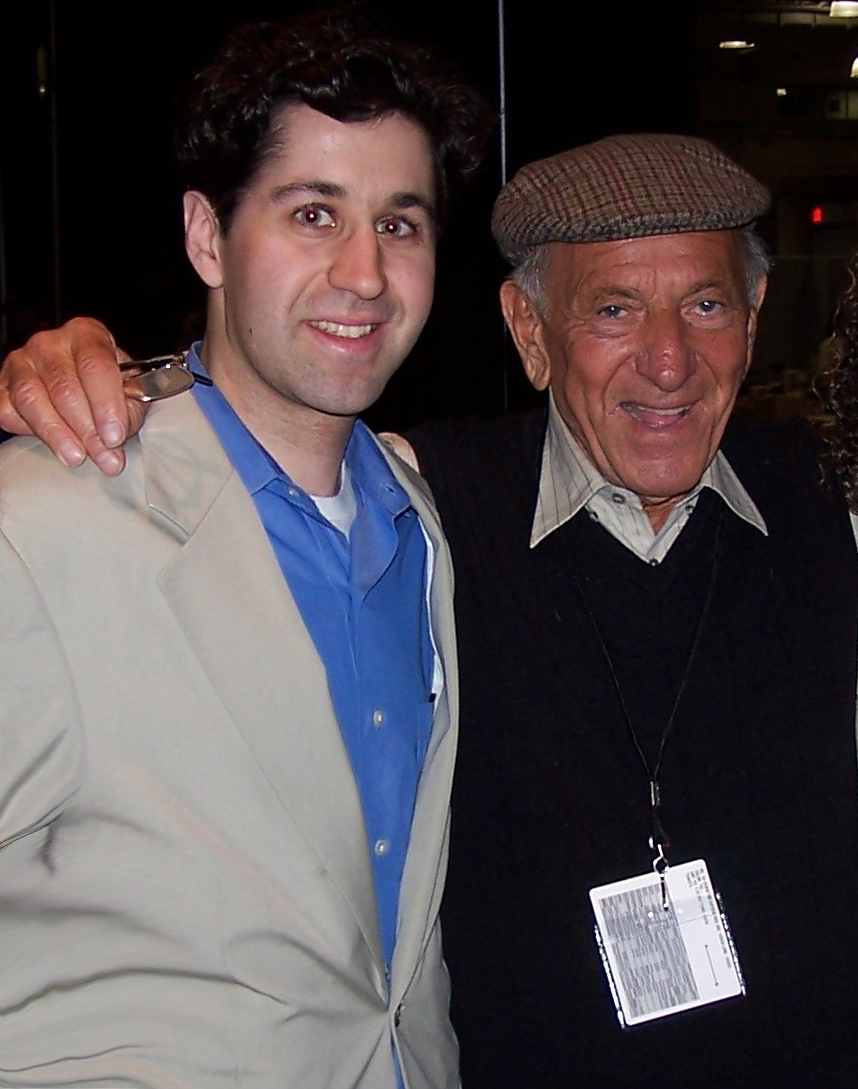
Jack Klugman with son Adam Klugman promoting Tony and Me 2005 © stuffnobodycaresabout.com
When Jack Klugman decided to write a book he insisted it would not be an autobiography. He was too modest for that. Instead he wrote a book about his close relationship with his Odd Couple co-star Tony Randall. The book, Tony and Me A Story of Friendship, published in 2005 by Good Hill Press, was short on details about Klugman’s life, but very illuminating about Randall and Klugman’s close relationship.
After Klugman was treated for throat cancer he thought his acting career might be over. It wasn’t. With the encouragement of Tony Randall, Klugman returned to the stage and began his career anew, re-learning how to use his new voice, a scratchy rasp that pained some people to listen to. Klugman insisted it didn’t hurt him at all to talk, it just sounded that way to others.
The star of one of the best written and best acted television programs of all-time, The Odd Couple, Jack Klugman died on December 24, 2012 at his home in Woodland Hills, CA at the age of 90. He had been in declining health for the past year. He leaves behind his sons Adam and David and his second wife Peggy. His first wife actress Brett Somers died in 2007, they had been separated since 1974, but had never divorced.
I spent quite a bit of time in 2005 with Jack Klugman helping to promote his book. One of the things I asked him was why he didn’t write an autobiography. He said, “This is all there ever will be. I’m the sort of of person who likes to keep things private. I’ll write about Tony because our relationship was special and that story should be told, but that’s it.”
Our conversations about life and acting made me believe that this was a mistake, and I told Jack Klugman he could have told the world so much more about his career and recollections and many people would be fascinated.
He politely replied that it wasn’t that interesting.
I disagree. His full life story would have been very interesting.
Some things people may not have known about Jack Klugman:
Klugman had an incredibly sharp mind and he attended the prestigious Carnegie Tech (now Carnegie Mellon University).
On The Odd Couple, Klugman portrayed Oscar Madison, a sloppy sportswriter who was a New York Mets fan. In reality Klugman knew little about modern baseball and his knowledge after the DiMaggio era of baseball was lacking. I arranged an appearance on the New York Mets pre-game radio show with Gary Cohen to promote his book. After some initial nervousness and hesitancy on Klugman’s part, he did the interview and both Klugman and Cohen were very satisfied with the results and Cohen said it was one of his favorite interviews that he had ever conducted. Klugman’s real love was the track. He loved the horses. But for that interview you would not have known that Jack Klugman was not a real life New York Mets fan.
He worked with some of the most famous actors of their day, such as Humphrey Bogart, on live television. Most of those appearances are now lost forever.
Klugman’s role as Juror #5 in of one of the all-time greatest movies, 12 Angry Men was a breakthrough part for him, leading to many more acting offers. He discounted his importance to that film as being “small.” It wasn’t small. Klugman’s portrayal may have had the most authenticity of all the actors based on his rough and tumble upbringing.
On a bright day in late June 2005 in the midst of the book publicity tour in a chilly New York office building, we had some spare time alone between interviews. Klugman was wearing his trademark V-neck sweater and cap. I asked Klugman what he remembered about working with Henry Fonda and Lee J. Cobb and rest of the stellar cast of 12 Angry Men. Klugman grew wistful, saying, “I never really liked acting in the movies, the pace was too slow. I always preferred the stage and television. But that cast…that was amazing. It was a privilege to be a small part of that movie.”
We talked about John Fiedler (the voice of Piglet from Winnie The Pooh) who had co-starred with Klugman on a couple of episodes of The Odd Couple and appeared in 12 Angry Men as Juror #2. I told Klugman he just passed away.
Klugman was surprised and said, “I just spoke to John a few months ago.” Apparently no one had told him about Fiedler’s very recent death. He was silent for a moment or two, looked out toward the window and said slowly, “They’re all gone. Fonda, Balsam, Cobb, Warden. I’m the last of the 12 Angry Men.”

 Hacking New York by Robert Hazard, New York: Charles Scribner’s Sons, 1930 dj illustrator, unknown