Category Archives: Obituary

Two Baseball Greats Pass Away- Stan Musial & Earl Weaver – Remembering An Infamous Interview

Cardinals Superstar Stan Musial Dies At 92, Orioles Manager Earl Weaver Dies At 82

Plus One Very Dirty, Funny Radio Show Featuring Earl Weaver

If you are like me, Saturday, January 19, 2013 will be remembered by baseball fans as a very sad day because two Hall of Famers died.

Stan Musial was one of the greatest players to ever play the game and was a gentleman on and off the field.

Earl Weaver was supposedly a gentleman off the field. On the field he could be a terror to the umpires.

I’ll leave the comments of greatness to others on both of these legends. While both of these men will get accolades and fond remembrances in the obituary pages, few will mention the outtake reel from “The Manager’s Corner” with Earl Weaver and Tom Marr. Continue reading

Jack Klugman, Odd Couple’s Oscar Madison, Dies At 90

Last Of “12 Angry Men” Cast Passes Away At Home

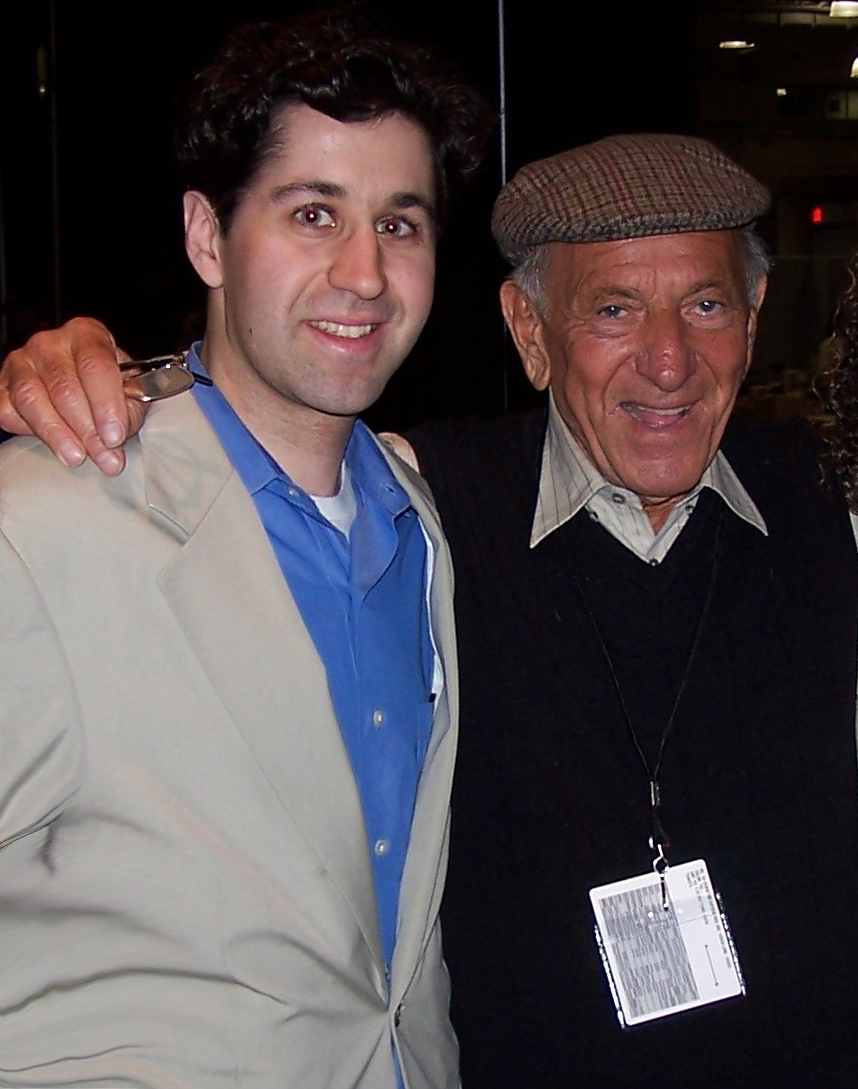
Jack Klugman with son Adam Klugman promoting Tony and Me 2005 © stuffnobodycaresabout.com

Jack Klugman with son Adam Klugman promoting Tony and Me 2005 © stuffnobodycaresabout.com

When Jack Klugman decided to write a book he insisted it would not be an autobiography. He was too modest for that. Instead he wrote a book about his close relationship with his Odd Couple co-star Tony Randall. The book, Tony and Me A Story of Friendship, published in 2005 by Good Hill Press, was short on details about Klugman’s life, but very illuminating about Randall and Klugman’s close relationship.

After Klugman was treated for throat cancer he thought his acting career might be over. It wasn’t. With the encouragement of Tony Randall, Klugman returned to the stage and began his career anew, re-learning how to use his new voice, a scratchy rasp that pained some people to listen to. Klugman insisted it didn’t hurt him at all to talk, it just sounded that way to others.

The star of one of the best written and best acted television programs of all-time, The Odd Couple, Jack Klugman died on December 24, 2012 at his home in Woodland Hills, CA at the age of 90. He had been in declining health for the past year. He leaves behind his sons Adam and David and his second wife Peggy. His first wife actress Brett Somers died in 2007, they had been separated since 1974, but had never divorced.

I spent quite a bit of time in 2005 with Jack Klugman helping to promote his book. One of the things I asked him was why he didn’t write an autobiography. He said, “This is all there ever will be. I’m the sort of of person who likes to keep things private. I’ll write about Tony because our relationship was special and that story should be told, but that’s it.”

Our conversations about life and acting made me believe that this was a mistake, and I told Jack Klugman he could have told the world so much more about his career and recollections and many people would be fascinated.

He politely replied that it wasn’t that interesting.

I disagree. His full life story would have been very interesting.

Some things people may not have known about Jack Klugman:

Klugman had an incredibly sharp mind and he attended the prestigious Carnegie Tech (now Carnegie Mellon University).

On The Odd Couple, Klugman portrayed Oscar Madison, a sloppy sportswriter who was a New York Mets fan. In reality Klugman knew little about modern baseball and his knowledge after the DiMaggio era of baseball was lacking. I arranged an appearance on the New York Mets pre-game radio show with Gary Cohen to promote his book. After some initial nervousness and hesitancy on Klugman’s part, he did the interview and both Klugman and Cohen were very satisfied with the results and Cohen said it was one of his favorite interviews that he had ever conducted. Klugman’s real love was the track. He loved the horses. But for that interview you would not have known that Jack Klugman was not a real life New York Mets fan.

He worked with some of the most famous actors of their day, such as Humphrey Bogart, on live television. Most of those appearances are now lost forever.

Klugman’s role as Juror #5 in of one of the all-time greatest movies, 12 Angry Men was a breakthrough part for him, leading to many more acting offers. He discounted his importance to that film as being “small.” It wasn’t small. Klugman’s portrayal may have had the most authenticity of all the actors based on his rough and tumble upbringing.

On a bright day in late June 2005 in the midst of the book publicity tour in a chilly New York office building, we had some spare time alone between interviews. Klugman was wearing his trademark V-neck sweater and cap.  I asked Klugman what he remembered about working with Henry Fonda and Lee J. Cobb and rest of the stellar cast of 12 Angry Men. Klugman grew wistful, saying, “I never really liked acting in the movies, the pace was too slow. I always preferred the stage and television. But that cast…that was amazing. It was a privilege to be a small part of that movie.”

We talked about John Fiedler (the voice of Piglet from Winnie The Pooh) who had co-starred with Klugman on a couple of episodes of The Odd Couple and appeared in 12 Angry Men as Juror #2.  I told Klugman he just passed away.

Klugman was surprised and said, “I just spoke to John a few months ago.” Apparently no one had told him about Fiedler’s very recent death. He was silent for a moment or two, looked out toward the window and said slowly, “They’re all gone. Fonda, Balsam, Cobb, Warden. I’m the last of the 12 Angry Men.”

You Are Creative And You Are Wasting Your Life

The Most Important Piece Of Career Advice You Will Ever Read

Forget all those best-selling, life affirming books which “reveal” valuable lessons that you should follow to have a happy life or a lucrative career.

Linds Redding, an award winning graphic designer who worked in the advertising industry for nearly 30 years, started a blog in 2011, the day he found out he had esophageal cancer.

The piece he wrote on March 11, 2012 called A Short Lesson In Perspective is a must read for anyone who is indulged in a creative profession or aspires to one. Even if you do not consider yourself creative, this is still well worth the few minutes it will take to read. It is not technically advice as much as it is self-reflection that has enormous value to the reader.

It is 2,900 words long, but even for those with short attention spans, I urge you to read to the end.

The whole article can, and should, be read here, and an excerpt (not from the beginning) is reproduced below: Continue reading

“Mongo” – Alex Karras NFL Star Dies At 77

Karras, Famous For Stellar NFL Career, Will Always Have A Place in Movie Comedy History

Alex Karras died in Los Angeles at the age of 77 on October 10, 2012 due to kidney failure and other health complications.

The Detroit Lions All-Pro defensive tackle will be remembered by many as a great football player who played from 1958-1970. But I, along with many other people, will remember his acting career which stretched from 1968 -1998. Mel Brooks comedy fans especially loved Karras’ portrayal as the monosyllabic ruffian cowboy, Mongo, in Brooks brilliant 1974 western satire Blazing Saddles.

Karras did not have many scenes in the movie, but they were all very funny.

This scene below is the one that shocked audiences: Karras’ one punch knockout of a horse.  As an fyi -Karras did not actually hurt the horse and people would later come up to him and ask how he could do such a horrible thing.  “I thought it was hilarious, but I didn’t want to hurt that horse at all, believe me,” Karras said in a 2011 interview with the “Sports and Torts” Internet radio show. “I’m not the type of person to do that.”


Lou Sleater, Detroit Tigers 1957

Getting Ready For The Game

Lou Sleater turns 86 on September 8, 2012. The St. Louis native pitched for some very bad teams such as the Browns, Senators and Athletics during a major league career which stretched intermittently from 1950 until 1958. His career record was 12-18.

In this photograph, Sleater is warming up before a game at a virtually empty Tiger Stadium in May of 1957 when he was with Detroit.

One personal highlight in his career came on May 30, 1957. Sleater pitched an inning of  Continue reading

Deep Purple Founder And Keyboardist Jon Lord Dies At 71

Jon Lord: God Of The Hammond Organ, June 9, 1941 – July 16, 2012

More and more of the people I grew up admiring are leaving us. In the last couple of weeks actor Ernest Borgnine, Encyclopedia Brown author Donald Sobol and director William Asher died and on Monday, July 16, 2012 the announcement of Jon Lord’s sudden death really hit home.

Lord who had been battling pancreatic cancer, died unexpectedly at the London Clinic of a pulmonary embolism. He leaves behind his second wife Vickie, their daughter, Amy, and Sara, his daughter with his first wife Judith Feldman whom he married in 1969 and divorced in 1981.

I grew up admiring Deep Purple and they have always been one of my favorite bands. I had seen them perform live which was a very festive and loud experience.  After seeing them live I came away with the first hand knowledge that Jon Lord was without a doubt one of the most exciting and greatest rock keyboard players ever.

Being an extremely amateur musician myself, there are two things I wish I had the ability to do. One is to play stride style piano like James Johnson or Fats Waller and the other is to flawlessly play the guitar solo or keyboard solo to Deep Purple’s driving locomotive of a song, Highway Star.

Jon Lord was a classically trained musician and that training always came through in Deep Purple’s music. The structure of many of the bands songs are clearly classically influenced and this is due to the fact that both Lord and guitarist Ritchie Blackmore drew a lot of their inspiration from the classical realm.

(l-r) Ian Paice, Ian Gillan, Ritchie Blackmore, Roger Glover, Jon Lord

In rock n’ roll there are many talented composers that are not great performers. There are great live bands, without good original songs. Then, there are phenomenal studio bands who can’t cut it live. During the height of their fame in the 1970’s,  I don’t think there was a more talented group of individuals playing together as a band than Deep Purple. What I mean is each individual was a virtuoso in his own right, a master at their instrument. Together they were able to write great songs, record them in the studio and play them effortlessly with an edge in front of a live audience as few rock bands could. To do any one of these three things well is an accomplishment.  Deep Purple was in a rare class as they did all three. Continue reading

The New York Times Obituaries Occasionally Celebrates Low-Lifes, Yet Ignores Deserving Artists and Notables

Who Gets A New York Times Obituary Write-up?

What do legendary blues and heavy metal guitarist, Gary Moore, rock album photographer Jim McCrary and playwright, screenwriter, author and jazz champion Max Wilk all have in common?

When they died, the New York Times did not cover their deaths in the obituary column. We all know space is limited, but these people were significant in their artistic fields, enriching the lives of countless others.  It would be nice had the self-proclaimed “newspaper of record” recorded and noted their amazing lives. But The Times editors felt these people were not deserving.

The official policy about who the The Times decides to write up is :

When we look to see whether someone had made a newsworthy impact in some way — who “made a wrinkle in the social fabric,” — we don’t equate significance with fame. In point of fact, 9 out of 10 people we write about are indeed not household names (the 10th is — a movie star, a secretary of state). But that doesn’t negate their importance. Most made their marks in quiet ways, out of the public limelight, but they still made a mark, possibly on your life and mine.

So who is deserving?

Apparently an unremarkable low-life, graffiti tagger, StayHigh 149, a.k.a. Wayne Roberts , can get a full write-up.

Yes, Roberts definitely, as the Times puts it, “made a mark on your life and mine.”

More like a blemish.

Especially in New York City in the 1970’s when the city was bombarded with the eyesore of graffiti defacing public and private property.

As is noted in the obituary, this great man (sarcasm) in the 1960’s was working as a messenger on Wall Street and smoking about an ounce of marijuana a week, earning the Stay High nickname.

Inspired by other vandals tagging subway cars, he then began defacing public property.

Chris Pape a fellow graffiti  aficionado says in the Times obituary:

“He (Roberts) rode empty trains all day with markers in his pocket, and he wrote everywhere.” By the early ’80s, Pape said, drugs had begun to take their toll. Roberts left his World Trade Center job, and his wife, because of his drug use. “He was a functional junkie who occasionally did time in prison for stupid things,” Pape said. “He was like that for 20 years. He didn’t want to be found.”

For some reason, I can only think of the millions of wasted dollars that it cost taxpayers to eradicate the vandalism this cretin created.  As I have said before – graffiti is definitely not art.

This is the sort of person The New York Times chooses to cover in their obituaries?

For the record, when one of the most influential singers in heavy metal history, Ronnie James Dio, died on May 16, 2010, the following day The Times devoted 493 words to summing up his life.

Graffiti vandal Wayne Roberts had 838 words written about him.

Jim McCrary, Rock Photographer Dies at 72, Famous For Carole King Tapestry Photos

Jim McCrary Photographed Over 300 Album Covers For A&M Records

Cover Photograph to Carole King’s Tapestry Album

Jim McCrary who will be remembered for taking in 1971 one of the most iconic album cover photos in music history, Carole King’s Tapestry, died  at the age of 72 on April 29, 2012 of complications from a chronic nervous system disorder at the Veterans Affairs hospital in Palo Alto, CA.

Jim McCrary self-portrait 1978

McCrary was a self-taught photographer beginning his career in 1952. He worked for many years as staff photographer for several portrait studios and in the photography department of Rockwell International during the 1950’s and 1960’s. McCrary joined Herb Alpert’s and Jerry Moss’ A&M Records in 1967 as chief photographer. For the next seven years he photographed most of A&M’s albums, publicity and advertising work.  Among his better known images are of Joe Cocker, Cat Stevens, Gram Parsons & The Carpenters.


McCrary left rock photography in the late 70’s after he felt he had lost touch with the music of the bands he was working with.  His work won many awards from the Los Angeles & New York Art Directors Clubs, and appeared in several “Best” Album Cover books.

McCrary shared his talent and taught at the Art Center College of Design in Pasadena. Tom Upton, who was once a student of McCrary’s in the 70’s said “…he was magnanimous and kind. He expected hard work and absolute transparency when reviewing work. He was the antithesis of the celebrity photographer as guru, popular at the time. He required no fealty or brown-nosing, just honesty and plain backgrounds so you had to engage your subject. He taught us about hard light and soft light in a portrait, and what the consequences were.  You, the subject, the light, and no bull.  His assignments were affectionately termed ‘McCrary Portraits’ by his students.”

Survivors include his son Jason McCrary and two brothers Wylee Dale McCrary and Doug McCrary.

To read the story about how Carol King’s Tapestry photo shoot unfolded, click here.

Bill Moose Skowron Dies at 81 – An Appreciation of a Kind Man

Casey Stengel and Bill “Moose” Skowron

Bill “Moose” Skowron died today, April 27, 2012 of congestive heart failure in Arligton Heights, IL.

In this news photograph above, the caption says, “Bill Moose Skowron reports for his first day, at Comiskey Park in Chicago, September 19.”

The only problem with this is that Moose’s first game was April 13, 1954 and it was not at Comiskey Park.  And the Yankees did not play in Chicago on September 19, 1954.

So what is the answer to this problem? Continue reading

Marty Springstead Demonstrates How To Eject A Manager

Marty Springstead, Former American League Umpire, Dies At 74 (January 17, 2012)

Major league baseball umpires are beloved by their families and friends, but are generally not appreciated by the fans. When longtime umpire Marty Springstead died after suffering a heart attack on January 17th in Sarasota Florida, I felt sad that one of the more memorable baseball names that I heard throughout my childhood was gone. As a fan, I appreciated Marty Springstead’s umpiring skills  and not just because he would consistently eject Orioles manager and longtime Yankee nemesis Earl Weaver from ballgames during the 1970’s and 1980’s, but because he was from the old school of umpiring and was not flamboyant.

Springstead umpired in the American League from 1966-1985. He went on to become an executive and supervisor of umpires from 1986-2009. He worked in three All-Star Games and three World Series. He also got to be behind the plate for two no-hitters, but missed the chance for a third. He would have been calling balls and strikes on June 1, 1975 when Nolan Ryan pitched his fourth no-hitter, but he took off to be with his wife who was having a baby.  People who knew Springstead said Marty was funny and a great storyteller.

But managers who got under his skin would not see that side of him while he was on the field. Springstead was a very good umpire who took his job seriously and didn’t take flak from players, coaches or managers.  Twice during his career Springstead led the league in manager ejections.

I was among the 10,670 long suffering Yankee fans who attended the ballgame shown in the photo below.

At Yankee Stadium on Saturday, August 26, 1972, the Kansas City Royals had already scored two unearned runs in the third inning, and were leading two to one. There were two outs and Yankees pitcher Rob Gardner had a 1-2 count on Kansas City Royals slugger John Mayberry with two men on base. It looked like Gardner would get out of the inning. Continue reading