Category Archives: History

A New York City 1859 Mass Murder Prank

15 Dead Bodies Discovered in The East River

A shocking discovery was made on Thursday June 9, 1859 near Hell Gate in the East River, when some fishermen picked up a box which contained 15 dead bodies in various states of decomposition.

Death on the River print 19th centuryAs was common in early journalism there were mistakes made when the papers first broke the story.

They reported the box contained seven bodies, all dressed in fine night clothes, packed in lime and shavings and having the appearance of recent decease.

This caused a bit of panic among New York’s citizens who concluded that a whole family had been murdered in their beds and packed off to sea to conceal the crime.

The investigation by city authorities three days later revealed the true nature of what had transpired.

The bodies had been removed from the old Potter’s Field and were being transported by barges for re-interment in Long Island.

The box containing these bodies went overboard, and the workmen let it go without trying to retrieve it – just to see what an excitement it would create!

Celebrity Stalkers Aren’t New

Maude Adams, Biggest Star of The New York Stage Had A Stalker Committed To Bellevue

Maude Adams In Quality Street

Maude Adams In Quality Street

Today the paparazzi are considered the primary stalkers of celebrities and their children. But every now and then we read about the true psychopaths who are scary or downright dangerous to those who are in the limelight (see Rebecca Schaeffer and David Letterman).

What is interesting is that the phenomenon is not new. It was happening over a hundred years ago.

Maude Adams was one of the biggest stars of the legitimate stage in the late 19th and early 20th century. James Barrie the playwright, author and creator of Peter Pan wrote roles specifically for Maude.

For those who have seen the 1980 time travel love story Somewhere in Time, starring Christopher Reeve and Jane Seymour, there is little doubt that author Richard Matheson based Seymour’s beautiful Elise McKenna character on Maude Adams.

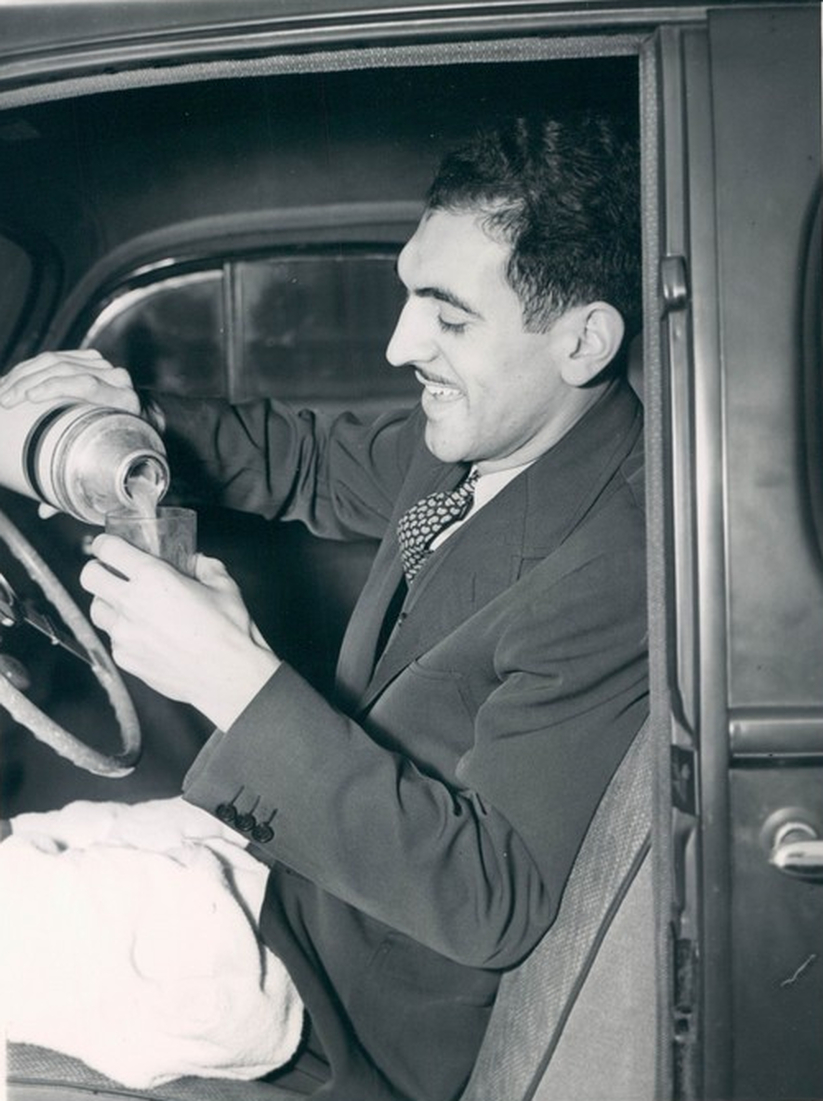
Morris Gottlieb of East 14th Street had a thing for Maude Adams. Unlike many who just capitulated or ignored their overbearing admirers, she did something about it. Continue reading

Old New York In Photos #31 – Garbage Strike 1911

The Garbage Strike of 1911

boys chase garbage carts Nov 13 1911

This photograph shows First Avenue and 50th street looking north. A policeman is running after boys who were harassing and chasing a garbage truck (to the left of the trolley) driven by a strike-breaker (now what would be termed a scab) in November 1911.

On November 8, 1911 New York City’s garbage collector’s went on strike demanding better working conditions. The ashcart men did not like working at night when seeing dangerous items deposited in the trash and obstacles on the street was difficult, so they wanted to work only during the daylight hours when it was warmer and safer. Another complaint the union lodged was having only one man to lift trash cans that sometimes weighed over 200 pounds.

City officials were irate and refused to give in. Earlier in July during a smaller garbage strike, Mayor William Jay Gaynor warned that every worker who did not report to work would be fired. Continue reading

Babe Ruth’s Funeral

Paying Respects To Babe Ruth

New York says goodbye to Babe Ruth at Yankee Stadium August 17-18, 1948.

Babe Ruth funeral Yankee Stadium 8 18 48

Sixty five years ago today, when Babe Ruth died of cancer at the age of 53 on Monday, August 16, 1948, New Yorker’s and the baseball world mourned as it never had before.

As lines stretched into the night on August 17, 1948 for a last look at the Babe lying in state in the rotunda at Yankee Stadium, the stream of fans never let up. It was estimated that 50,000 fans on August 17th and 55,000 on the 18th filed past the open coffin. Among the mourners at the stadium were baseball executives Dan Topping, owner of the Yankees, Will Harridge, president of the American League, Commissioner, Happy Chandler and former players Hank Greenberg and Leo Durocher.

Babe Ruth funeral fans line up 8 17 1948


They filed by at the rate of 100 people per minute. People waited all night. To see this…

Babe Ruth Lies in state 8 18.1948

Some were given more than a moment to mourn.

In this photograph above, Frankie Haggerty, 10, of Danvers, MA wipes away a tear as he looks upon Babe Ruth lying in his casket at Yankee Stadium. When Ruth was too ill to attend the funeral of one of his mentors, Brother Gilbert, he gave Frankie permission to attend as his personal representative.

One father said, “I wanted my boy to come see this so he could always say he had seen the Babe in person.”

Another elderly white haired visitor lifted his grandson for a look into Ruth’s casket. “Take a good look sonny,” he said. “You’ll never see another man like him.”

Eleven-year-old Peter Carter said, “I feel very sad. Every night I pray the Babe’s soul will go to heaven.”

A requiem mass and funeral for the Babe was held at St. Patrick’s Cathedral on August 19, 1948.

6,000 mourners bowed their heads as Cardinal Spellman made a special prayer at the end of the solemn 1 hour service. 75,000 people waited outside the Cathedral in the pouring rain.

What was unexpected was that after the funeral over 100,000 people lined the route in silence from Manhattan to Westchester as the Babe was driven to his final resting place at Gate of Heaven Cemetery in Mt. Pleasant, NY.

At the cemetery another 6,000 people were there to see the Babe off.  Ruth was put into a receiving vault until the family selected a site for burial.

Millions of people from around the country all said the same thing that you always hear after someone famous passes away, “he will never be forgotten.”

This time they were right.

Prophetic Words About Lying Politicians From T. De Witt Talmage

Our 21st Century Dysfunctional Politicians Accurately Described

DeWitt TalmageHe described our lying politicians better than anyone today could have. And he did it 140 years ago.

T. De Witt Talmage (1832-1902) was a sanctimonious Brooklyn preacher who attained a huge following in the 19th century as an orator and prolific author. Overflow crowds attended his Sunday sermons at The Brooklyn Tabernacle.

Talamge's Brooklyn Tabernacle courtesy New York Public Library

Brooklyn Tabernacle


While many people were quite enthralled by Talmage, there were just as many critics who called him a “pulpit clown” and a “mountebank.”

As would be expected from any of the crusading Victorian holy rollers, Talmage railed against vice and crime in his writings and firebrand speeches. His verse contains the typical road to ruin warnings that make reading his books unbearable today. However, Talmage did manage to string together some words that still ring true. Especially about lying.

If you didn’t know any better, you would swear that Talmage is describing our modern day politicians. This short passage is from 1872.

LIES: WHITE AND BLACK.

Abominations of modern Society Talmage

There are ten thousand ways of telling a lie. A man’s entire life may be a falsehood, while with his lips he may not once directly falsify. There are those who state what is positively untrue, but afterwards say, “may be,” softly. These departures from the truth are called “white lies;” but there is really no such thing as a white lie. Continue reading

Woodlawn Cemetery Memorial Tells A Coney Island Story Of Unusual Death

Brighton Beach Lightning Strike Felt By Thousands, Kills Six – July 30, 1905

When walking through Woodlawn Cemetery in the Bronx, you can come across fancy mausoleums and simple grave markers of the famous and infamous. F.W. Woolworth, Fiorello LaGuardia, Duke Ellington, Bat Masterson and Herman Melville are among the half million souls interred in this historic place.Demmerle Memorial

Then out of the blue you may stumble across the lives of ordinary New Yorker’s memorialized in an extraordinary way. Such is the Demmerle monument.

Unlike many other tombstones which record a name and birth and death years with a short epitaph, the Demmerle memorial is an ornate series of carved monuments which tells and shows the story of one family’s tragedy.

Demmerle Charles and EmilieSunday July 30, 1905 started out as a beautiful, sun-filled, hot day Continue reading

150th Anniversary Of The New York City Draft Riots

July 13, 1863 The Civil War Draft Riots Begin + Related Book Recommendations

"The Battle in Second Avenue" from John Shea's 1886 book, The Story of a Great Nation

“The Battle in Second Avenue” from John Shea’s 1886 book, The Story of a Great Nation

If you’ve watched Martin Scorcese’s 2002 film The Gangs of New York, you saw a vivid depiction of what the Civil War Draft Riots may have looked like. In reality the tumult was probably a lot worse than what was portrayed on the screen. It was the most violent civil disorder in 19th century American history.

Protesting the conscription act, mobs of citizens went on a multi-day rampage of killing and looting.  The riots were quelled after four or five days. The estimated number of people killed was 105. The number of injuries was in the hundreds.

In a November 26, 1938 New Yorker story, journalist Meyer Berger wrote about combing through the original blotters at the West Forty-Seventh Street Police Station. Berger came across the station’s last riot related arrest which occurred on July 30, 1863.  Fergus Brennan, 35 was charged with being a leader of the rioters. He was held on $2,000 bail by Justice Kelly.

There are several books which cover the draft riots in detail. Among the best are: July 1863 by Irving Werstein (Julian Messner, 1957); The New York City Draft Riots by Iver Bernstein (Oxford University Press, 1990); The Second Rebellion by James McCague (Dial Press, 1968); The Devil’s Own Work The Civil War Draft Riots of 1863 by Barnet Schecter (Walker & Co., 2006) and The Armies of the Streets: The New York City Draft Riots of 1863 by Adrian Cook (University of Kentucky, 1974).

Things You Didn’t Know About The George Washington Bridge

The George Washington Bridge Was Going To Have Its Steel Towers Covered In Stone

George Washington Bridge Under Construction circa 1930

The George Washington Bridge seen here during construction in 1930, was built from 1927 until 1931. Architect Cass Gilbert intended its towers to be sheathed in stone. Still visible on the towers are the hooks for which the stone was to be attached.

George Washington Bridge Original Design

Proposed Original Design With Stone Arches

It was decided for practical reasons that the bridge towers did not need to be encased in stone. The Depression hit soon after construction started and the cost of procuring and installing the stone would have been prohibitive. The designers and builders reevaluated the whole look of the bridge and felt that there was a natural beauty in showing the function through the form of the exposed naked steel.

The bridge’s chief designer and engineer Othmar Ammann had incredible foresight. Though the bridge had only one level when originally constructed, the design he came up with allowed for the eventual addition of a lower level which was added in 1962. This increased the number of traffic lanes from eight to fourteen. Morning and evening rush hours can create delays of one hour or longer. Can you imagine what the delays would be like without the second deck?

12 other interesting facts about the George Washington Bridge:

1. When completed in 1931 the George Washington was the longest suspension bridge in the world. It was eventually displaced as the longest bridge by San Francisco’s Golden Gate Bridge in 1937.

2. The bridge was completed eight months ahead of schedule and under budget.

3. To finance the bridge, the states of New York and New Jersey each advanced $5 million and $50 million in bonds were issued.

4. Tolls were set to pay off the bonds, which would mature serially starting in 1953. It was assumed after paying off the bond holders, the tolls would eventually be reduced or even eliminated. (Hah!) Continue reading

Chart of The World’s Religions In 1890 – Over 100 Million Barbarians

In 1890, Almost 10% Of The World Contained “Nondescript Heathens”

Click to enlarge

Click to enlarge

This plucky statistic is from a chart entitled “Estimated Number of all Creeds” in S.T.W. Sandford and Sons Book Of Information published in 1890.

The 32 page booklet was given away by the company to promote their patent medicines. Dr. Samuel T.W. Sandford was made wealthy during the mid to late 19th century by selling his cure-all Dr. Sandford’s Liver Invigorator. The information is presented in almanac-like fashion, yet interspersed with advertising for Dr. Sandford’s products on practically every page. Most of the information presented is basic “did you know” material. But the chart caught my eye. 

The world’s estimated 1.3 billion people are broken down as follows:

Number of all people Proportion to total Number percent
Buddhists 405,000,000 31.2
Christians 399,200,000 30.7
Mahomedans 204,200,000 15.8
Brahamanists 174,200,000 13.4
Nondescript Heathens 111,000,000 8.3
Jews      5,000,000 0.6

A 19th century Anglo-American viewpoint that over 100 million people could be described as “Nondescript Heathens” would not be considered anything out of the ordinary.