Category Archives: History

Old New York In Photos #189 – The Recently Completed Flatiron Building 1902

The Innovative Flatiron Skyscraper – Available To Rent 1902

Our photograph is from American Art Views, a view book published September 15, 1903 showing contemporary New York City.

To the right, with a flag on its roof is the six-story Fifth Avenue Hotel (1859-1908). The clock in front of the hotel remains standing today, though the hotel is long gone. On the corner of 24th Street we can glimpse the sign for for “Maillard’s.”

Maillard’s restaurant and confectionery shop was on the ground floor of The Fifth Avenue Hotel.  Continue reading

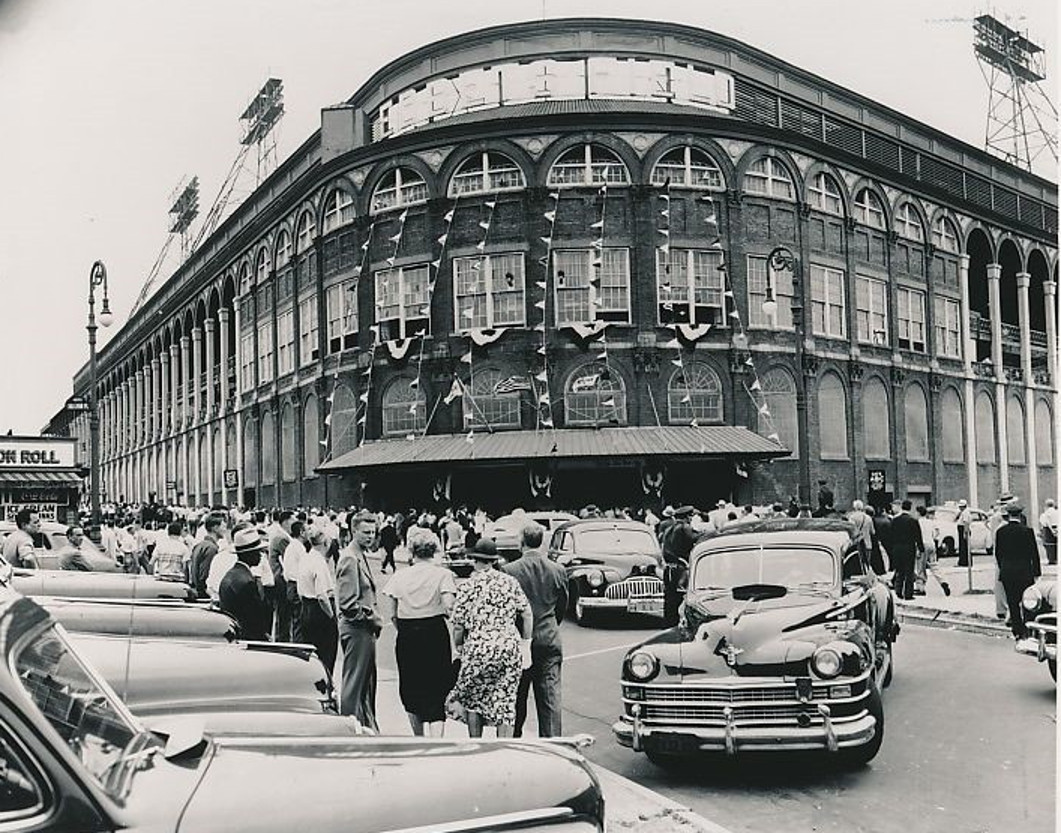
What Did The Rear Entrance To Ebbets Field Look Like?

The Less Than Iconic Rear Facade Of Ebbets Field

The Dodgers left Brooklyn after the 1957 season, breaking many Dodgers fans hearts. The Dodgers home park Ebbets Field was razed in 1960. A housing project is now on its site.

But the memories of what the ballpark looked like is etched in anyone’s mind who ever visited Ebbets Field. If you do remember visiting you are at least 70 years-old. The reality is, few people are still around who actually saw the place.

It’s really photographs of the ballpark, especially the front entrance, that baseball fans are familiar with.

The main entrance was at the corner of Sullivan Place and McKeever Place. McKeever Place was originally Cedar Street, but renamed in 1932 after one of the contractors who built Ebbets Field.

This is what the front  looked like.

Ebbets Field 1940s

The exterior of the front of the New York Mets home Continue reading

A Patriotic Macy’s Thanksgiving Day Balloon – 1940

Macy’s Thanksgiving Day Parade – 1940

Annual Macy Parade For Thanksgiving
New York: Photo shows “Uncle Sam” as it passed through 34th Street, in front of Macy’s. photo: Acme 11/21/1940

As isolationists wanted the United States to stay out of World War II, the Macy’s Thanksgiving Day Parade in 1940 had a patriotic balloon of Uncle Sam. The balloon was not a statement of being pro-war, Continue reading

William Randolph Hearst And Llama Drama

William Randolph Hearst’s Concern About His Llama’s Sex Life

Even if you know little about publishing magnate William Randolph Hearst you may have inferred a few things about him from Orson Welles film Citizen Kane (1941), “loosely” based upon Hearst’s life,

Hearst, an inveterate collector, loved all animals. He could not stand to see any animal suffer. Mice and even rats were to be caught and released. Continue reading

Ladies Testing An Inventor’s New Life Preserver – 1932

Escalator Inventor, Jesse W. Reno’s New Life Preserver Gets A Test In New York

Buoys And Girls – In New War On Drowning
New York – These lucky buoys are embracing the quartet of pretty maidens who assisted at the tests of a new life preserver at the Park Central Hotel pool today (Tuesday.) The device is said to be of one third the weight and three times the buoyancy of the present cork life vests. The belts are the invention of Jesse W. Reno, well known engineer who also invented the modern escalator or moving stairway. The girls are, left to right: Dorothy Day, Pat Hughes, Prudence Edgar and Sherry Pelham. photo: International News Photos 5-3-1932

As this old news photo confirms, getting publicity for a product usually works when you have pretty women pose with it.

Jesse W. Reno

Engineer Jesse Wilford Reno has an extremely short biography on Wikipedia. Reno’s entry says he invented the escalator and claims it was first installed at the Iron Pier at Coney Island in 1891.

But when Reno died at the age of 85, his obituary Continue reading

Book Review – The Day The Bubble Burst October 29, 1929

A Classic Wall Street Tale – Soon To Be Repeated

October 29 is an important anniversary date that many do not remember because they did not live through it. On that date in 1929 the stock market crashed to an astonishing level.

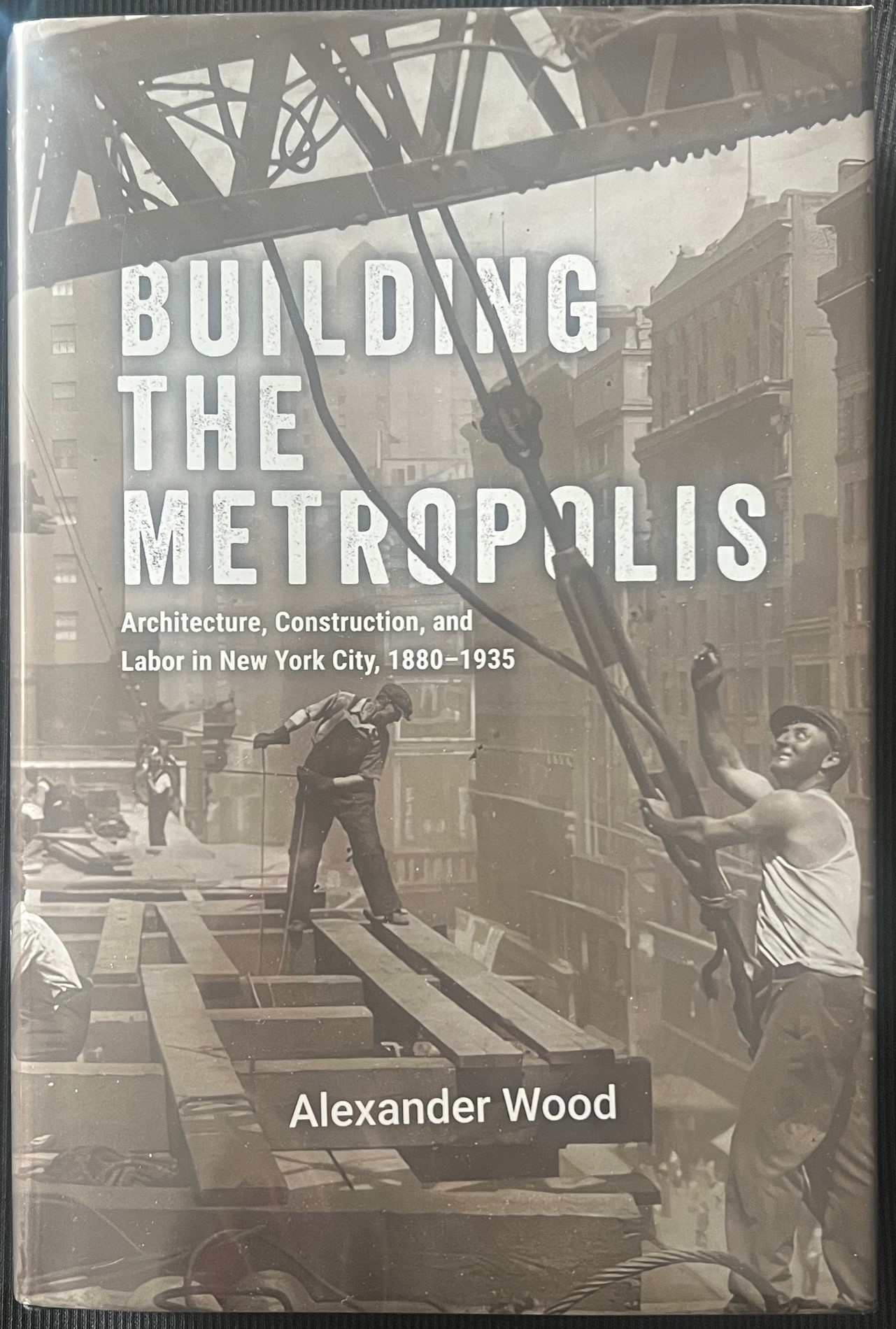
Major media outlets are praising Aaron Ross Sorkin’s forthcoming book 1929: Inside the Greatest Crash in Wall Street History–and How It Shattered a Nation, (Random House, November 4 2025). 

Coincidentally I was just finishing an older book about the same subject. It is  among the best books ever written about Wall Street.

The Day the Bubble Burst: A Social History of the Wall Street Crash of 1929 by Gordon Thomas and Max Morgan-Witts (Doubleday, 1979) is a masterful work of  storytelling.

While John Kenneth Galbraith’s 1955 book The Great Crash 1929, remains the seminal work on the economic causes of the crash, Thomas and Morgan-Witts examine the human aspects of the financial calamity which ushered in the Great Depression.

Threading together the lives of movers and shakers of Wall Street and the ordinary citizen, the authors lay out stories that resonate today. Events unfolding before us now, have similarities to the great crash of 1929. Continue reading

The Tragedy Of A Forgotten & Handsome 19th Century Artist

The Story Of Artist Reuben H. Norcott Who Died As His Star Was Rising

It’s funny when you are reading an old newspaper and you come across a completely different story that leads down a rabbit hole.

Such is the case of Reuben H. Norcott.

While researching a story in the Chicago Daily Tribune from 1883 about another person, I saw Norcott’s story on the same page.

I quickly became immersed in Norcott’s story as told by an (unfortunately) unnamed New York correspondent for the Tribune. Continue reading

Sexual Innuendo Postcards – Same Message With Different Risque Images

The Risque Postcard 1906-1908

While both of these double entendre postcards would be considered risque around 1900, the photographs are quite different.

This first postcard of “Practice This Piece With Me” from 1907 implies making out during piano practice time.

The second postcard goes a bit further. Notice where his hand is. Continue reading

See What Products Were Produced In Major Cities Of The United States In 1939

The United States Once Produced A Wide Array Of Goods And Products

Here’s What The Big Industrial Cities Used To Make

Parke, Davis and Company, manufacturing chemists, Detroit, Michigan. Packaging of pills and tablets on a conveyor belt May 1943 photo Arthur Siegel

We ran this list below a few years ago, but are showing it again considering all the talk of bringing manufacturing back to the United States.

The controversy over tariffs to correct a trade imbalance has its proponents and its critics. One of the goals for the United States is to be more self-reliant by bringing manufacturing jobs back to the United States. Continue reading