Author Archives: B.P.

Jack Klugman, Odd Couple’s Oscar Madison, Dies At 90

Last Of “12 Angry Men” Cast Passes Away At Home

Jack Klugman with son Adam Klugman promoting Tony and Me 2005 © stuffnobodycaresabout.com

Jack Klugman with son Adam Klugman promoting Tony and Me 2005 © stuffnobodycaresabout.com

When Jack Klugman decided to write a book he insisted it would not be an autobiography. He was too modest for that. Instead he wrote a book about his close relationship with his Odd Couple co-star Tony Randall. The book, Tony and Me A Story of Friendship, published in 2005 by Good Hill Press, was short on details about Klugman’s life, but very illuminating about Randall and Klugman’s close relationship.

After Klugman was treated for throat cancer he thought his acting career might be over. It wasn’t. With the encouragement of Tony Randall, Klugman returned to the stage and began his career anew, re-learning how to use his new voice, a scratchy rasp that pained some people to listen to. Klugman insisted it didn’t hurt him at all to talk, it just sounded that way to others.

The star of one of the best written and best acted television programs of all-time, The Odd Couple, Jack Klugman died on December 24, 2012 at his home in Woodland Hills, CA at the age of 90. He had been in declining health for the past year. He leaves behind his sons Adam and David and his second wife Peggy. His first wife actress Brett Somers died in 2007, they had been separated since 1974, but had never divorced.

I spent quite a bit of time in 2005 with Jack Klugman helping to promote his book. One of the things I asked him was why he didn’t write an autobiography. He said, “This is all there ever will be. I’m the sort of of person who likes to keep things private. I’ll write about Tony because our relationship was special and that story should be told, but that’s it.”

Our conversations about life and acting made me believe that this was a mistake, and I told Jack Klugman he could have told the world so much more about his career and recollections and many people would be fascinated.

He politely replied that it wasn’t that interesting.

I disagree. His full life story would have been very interesting.

Some things people may not have known about Jack Klugman:

Klugman had an incredibly sharp mind and he attended the prestigious Carnegie Tech (now Carnegie Mellon University).

On The Odd Couple, Klugman portrayed Oscar Madison, a sloppy sportswriter who was a New York Mets fan. In reality Klugman knew little about modern baseball and his knowledge after the DiMaggio era of baseball was lacking. I arranged an appearance on the New York Mets pre-game radio show with Gary Cohen to promote his book. After some initial nervousness and hesitancy on Klugman’s part, he did the interview and both Klugman and Cohen were very satisfied with the results and Cohen said it was one of his favorite interviews that he had ever conducted. Klugman’s real love was the track. He loved the horses. But for that interview you would not have known that Jack Klugman was not a real life New York Mets fan.

He worked with some of the most famous actors of their day, such as Humphrey Bogart, on live television. Most of those appearances are now lost forever.

Klugman’s role as Juror #5 in of one of the all-time greatest movies, 12 Angry Men was a breakthrough part for him, leading to many more acting offers. He discounted his importance to that film as being “small.” It wasn’t small. Klugman’s portrayal may have had the most authenticity of all the actors based on his rough and tumble upbringing.

On a bright day in late June 2005 in the midst of the book publicity tour in a chilly New York office building, we had some spare time alone between interviews. Klugman was wearing his trademark V-neck sweater and cap.  I asked Klugman what he remembered about working with Henry Fonda and Lee J. Cobb and rest of the stellar cast of 12 Angry Men. Klugman grew wistful, saying, “I never really liked acting in the movies, the pace was too slow. I always preferred the stage and television. But that cast…that was amazing. It was a privilege to be a small part of that movie.”

We talked about John Fiedler (the voice of Piglet from Winnie The Pooh) who had co-starred with Klugman on a couple of episodes of The Odd Couple and appeared in 12 Angry Men as Juror #2.  I told Klugman he just passed away.

Klugman was surprised and said, “I just spoke to John a few months ago.” Apparently no one had told him about Fiedler’s very recent death. He was silent for a moment or two, looked out toward the window and said slowly, “They’re all gone. Fonda, Balsam, Cobb, Warden. I’m the last of the 12 Angry Men.”

Classic Hollywood #19 – Cary Grant & Rosalind Russell

Cary Grant And Rosalind Russell Accept Awards

Cary Grant Rosalind Russell December 23 1942

Cary Grant and Rosalind Russell co-starred together in only one movie. The film, Howard Hawks His Girl Friday (1940), is one of the zaniest and funniest screwball comedies of all-time.

The two stars are seen here on December 23, 1942, 70 years ago today, receiving the Women’s Press Club of Hollywood Most Cooperative Golden Apple Prize.

Incredibly, Cary Grant never won an Academy Award for Best Actor. He was awarded an Honorary Oscar for Lifetime Achievement in 1970.When he accepted the award he said “You know that I may never look at this without remembering the quiet patience of directors who were so kind to me, who were kind enough to put up with me more than once, some of them even three or four times. I trust they and all the other directors, writers and producers and my leading women have forgiven me for what I didn’t know. You know that I’ve never been a joiner or a member of any particular social set, but I’ve been privileged to be a part of Hollywood’s most glorious era.”

The talented Rosalind Russell was also nominated by the Academy multiple times for Best Actress and never won. She was ultimately given the Jean Hersholt Humanitarian Award by the Academy in 1973, three years prior to her death in 1976. Interestingly Cary Grant introduced Russell to her future husband Frederick Brisson and Cary was best man at their wedding.

Russell once said, “It’s fine to have talent, but talent is the last of it. In an acting career, as in an acting performance, you’ve got to have vitality. The secret of successful acting is identical with a woman’s beauty secret: joy in living.”

Old New York In Photos #24 – Fort Tryon

Fort Tryon Hill As Seen From Fort George Hill

Fort Tryon Hill

The northern area of Manhattan: Washington Heights, Inwood and Fort Tryon were among the last areas of the island to be developed. Much of the area remained somewhat rural until the early 20th century as evidenced in this undated photograph.

The area of Fort George Hill was at the time of the Revolution called Laurel Hill. Upon it the British constructed an extensive fortification called Fort George. The Fort was located at what would today be 192nd Street and Audubon Avenue. The neighborhood that sprung up around this area was given the name of Fort George Hill.

Fort Tryon Hill was one of the last portions of Manhattan to pass from Indian ownership to the possession of the Dutch. The aboriginal owners were the Wickquaskeek corrupted to Wickers Creek Indians.

Fort Tryon Map Showing Land Ownership and Parcels

Fort Tryon Map Showing Land Ownership and Parcels

Fort Tryon was named by the British for Major General William Tryon (1729–1788), the last British governor of colonial New York. Fort Tryon was part of a series of posts running along the Hudson River during the revolutionary war.

Between 1901 and 1904 Cornelius Kingsley Garrison Billings acquired several property lots from many different owners around Fort Tryon Hill. Billings had begun assembling an estate that culminated in a stately mansion being built which was completed in 1907. The mansion can be seen on the right hand side of the photograph. Billings sold the mansion in 1916 to John D. Rockefeller. In 1917 Rockefeller donated the Billings estate and surrounding properties which he had acquired to New York City and the area was turned into Fort Tryon Park. The mansion was destroyed by fire in 1926.

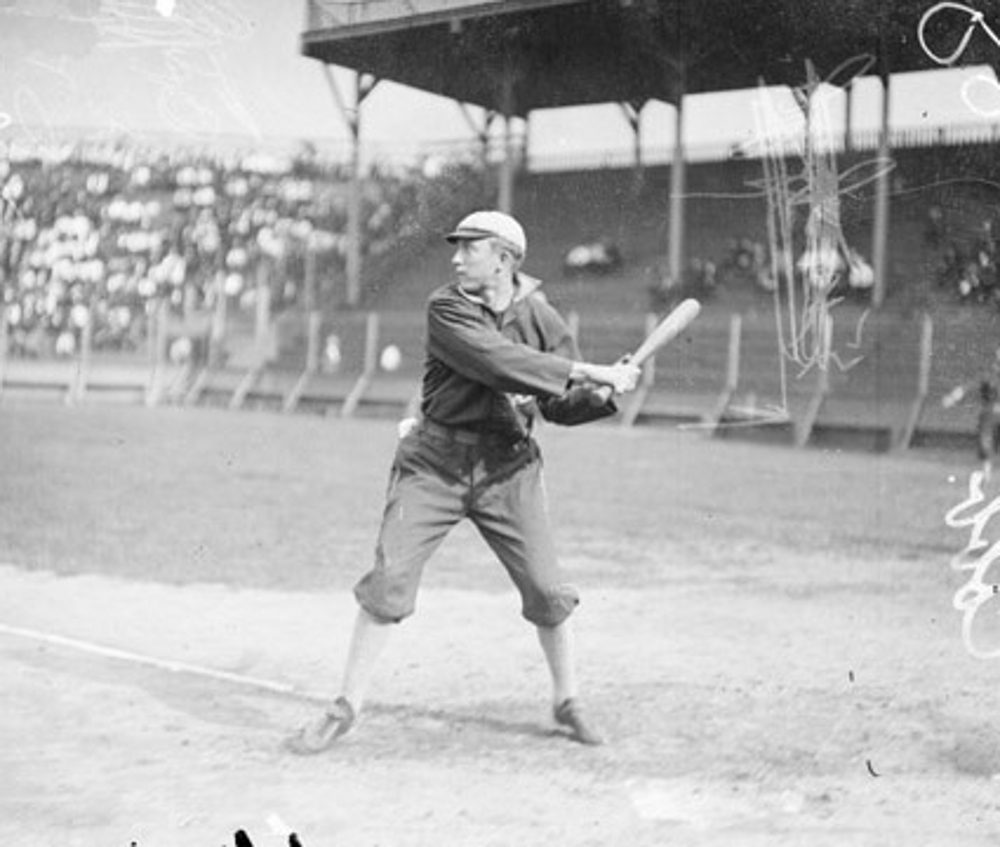
Lou Gehrig Plays Sandlot Baseball 1927

The Iron Horse Takes Some Time To Play With The Boys

After the New York Yankees swept the Pittsburgh Pirates in the 1927 World Series, Babe Ruth and Lou Gehrig went on a barnstorming tour across the country.

This news photograph’s caption reads:

Back To Sandlot Days

Los Angeles- Lou Gehrig, Yankee slugger, is shown here at bat during a sandlot game between kid teams. On his barnstorming trip with Babe Ruth, Lou finds himself as much an idol with the kids as the great Bambino himself. And look at the kid behind the plate, ready to help his pitcher strike out Lou. ——11-2-27

First Pneumatic Mail Delivery In New York 1897

The Pneumatic Mail Tubes And The “Age of Speed”

Pneumatic Tubes Produce Exchange Post Office 1897

Reading Howard Wallace Connelly’s highly entertaining 1931 autobiography Fifty-Six Years In The New York Post Office–  A Human Interest Story of Real Happenings in the Postal Service (self-published) the following anecdote begins Chapter VI:

When the pneumatic tubes were installed at the General Post Office, October 7, 1897, we Supervisors were given a fine treat after the ceremonies were over. A rough hastily constructed row of steps (circus show style) had been erected facing the tubes. Senator Chauncey M. Depew was Master of Ceremonies. Probably over a hundred friends and Post Office officials were spectators. The first tube contained only a large artificial peach. The roar of laughter that greeted it was heartily joined by the Senator. A Bowery audience that had attended a political meeting at which he was the principal speaker, instead of trying to break up the show, took quite a liking to the speaker and a loud voiced man yelled, “Chauncey, you’re a peach.” Hence the laugh when the first tube arrived. From the second tube, a cat was taken. How it could live after being shot at terrific speed from Station P in the Produce Exchange Building, making several turns before reaching Broadway and Park Row, I cannot conceive, but it did. It seemed to be dazed for a minute or two but started to run and was quickly secured and placed in a basket that had been provided for that purpose.  A suit of clothes was the third arrival and then came letters, papers, and other ordinary mail matter.

Hah-ha very funny. The postal officials must have had a ball putting a cat into the tubes. Can you imagine the public outcry if something like that was done now?

Connelly omits that the first parcel actually sent through the tubes was sent by Depew to the Produce Exchange Post Office which included Continue reading

New Yorker’s Starved For News -1953 The End Of The Strike

Newspaper Strike Ends December 8, 1953

Photo UPI

Beginning November 28, 1953, six of New York’s seven daily newspapers went on strike. 400 photo engravers demanded better pay and working conditions and the other newspaper employees honored their picket lines. For eleven days New York City had only one newspaper available to them, The New York Herald Tribune. Because the Herald Tribune had an outside commercial firm doing their photo engraving, they were the beneficiaries of added readership. Continue reading

You Are Creative And You Are Wasting Your Life

The Most Important Piece Of Career Advice You Will Ever Read

Forget all those best-selling, life affirming books which “reveal” valuable lessons that you should follow to have a happy life or a lucrative career.

Linds Redding, an award winning graphic designer who worked in the advertising industry for nearly 30 years, started a blog in 2011, the day he found out he had esophageal cancer.

The piece he wrote on March 11, 2012 called A Short Lesson In Perspective is a must read for anyone who is indulged in a creative profession or aspires to one. Even if you do not consider yourself creative, this is still well worth the few minutes it will take to read. It is not technically advice as much as it is self-reflection that has enormous value to the reader.

It is 2,900 words long, but even for those with short attention spans, I urge you to read to the end.

The whole article can, and should, be read here, and an excerpt (not from the beginning) is reproduced below: Continue reading

How To Throw A Spitball

Burleigh Grimes Demonstrates How To Throw A Spitter – July 12, 1929

The spitball was officially banned from baseball in 1920. Existing spitball pitchers were grandfathered to be allowed to legally throw the pitch. Hall of Famer Burleigh Grimes was the last of these legal spitball pitchers playing when he retired in 1934 after winning 270 games over 19 seasons. Grimes pitched for nine teams during his career and is one of only fourteen players to play for all three New York teams: the Brooklyn Dodgers, New York Giants and New York Yankees.

In this news photograph, which looks like it was taken in a backyard rather than a ballpark, Grimes demonstrates his method for throwing the spitter.

The news caption reads:

World Wide Photos

The National League’s Leading Hurler

Philadelphia, PA. – Burleigh Grimes veteran spitball pitcher of the Pittsburgh Pirates, who is leading the National League throwers with 14 wins and one defeat, demonstrates how he starts to throw his famous ‘spitter’ 7/12/29

illustration New York Times

Grimes won only three more games for the rest of the year and ended up with a 17-7 record. The Pirates finished in second place, ten and a half games behind the Cubs.

The object of the spitter is to have it sink. You first apply a good amount of saliva to an area of the ball. The two top fingers go over the wet part of the ball. The rest of the hand grips the ball tightly. You control the direction of the drop by tilting the top of the fingers slightly to the left or to the right. In order to be effective, your wrist must be straight and rigid when releasing the ball. This combination will give the ball a reverse spin. Controlling the location of the pitch is difficult and that is why when it was outlawed in 1920 there were only 17 pitchers using it effectively and they were grandfathered to keep using it.

Even though it has been banned for over 90 years, there are still many managers and batters who swear there are pitchers who throw the illegal pitch. In a 1967 Sports Illustrated article it was estimated that approximately 25% of pitchers were throwing spitballs.

A Rose By Any Other Name

The Aaron’s, Clemente’s and Mays’ Of A Lesser Ilk

Roberto, Willie and Hank

In major league baseball history there was only one Ruth, Gehrig, Koufax, Medwick, Seaver and Carew. You know who is being referred to when you hear the name Mantle.

Yet there have been several Robinson’s, Johnson’s, Ryan’s and Smith’s of varying playing ability. Some were great, some were good, and others were let’s just say, not so great. If you say, “Robinson was a fantastic player,” you usually have to clarify which- Jackie, Frank or Brooks.

What if you were a professional ballplayer and your last name happens to be Jeter, but your first name is not Derek?

Sharing a baseball great’s last name can sometimes be a drag because comparisons may be drawn to your famous counterpart. You can be sure that with the exception of your family and close friends, most references by the baseball loving public to your last name, go to the superstar.

So as a professional ballplayer if you share that famous last name but you never achieved super-stardom, at least you can always say you had your name on a baseball card.

So which baseball card would you rather have?

Hank Aaron or….

Tommie Aaron?

Derek Jeter or…

Johnny Jeter? Continue reading

Faces In The Rocks

The Incredible Rock Sculptures Of Rotheneuf France

photo courtesy flickr – Drisc67

Location of Rotheneuf Rock Sculptures

In the village of Rotheneuf on the Brittany coast of France, one man carved over 300 magnificent sculptures into the granite cliffs overlooking the sea.

This amazing work of faces, creatures and scenes were sculpted into the rocks painstakingly by a priest, Adolphe-Julien (Abbé) Fouré (1839-1910) over about a fifteen year period. (Sources vary on the number of years he was active.)

It was painstaking because when he was older, Abbé Fouré suffered a stroke which caused the left side of his body to be paralyzed. Over the years he eventually became deaf and his speech got very slurred.

Fouré  retired from the priesthood and became a hermit, renting a cabin by the cliffs of the village. In the early 1890’s with one side of his body crippled,  Fouré, began creating sculptures in the rocks, that told the history of the powerful Rotheneuf family. He continued carving up until about three years before his death on February 10, 1910.  Continue reading