Tag Archives: Entertainment

50 Years After Marilyn Monroe’s Death – Examining The Books That Were Written About Her While She Was Living

The Fascination With Marilyn Monroe: A Look At The First Six Books About Her

Sometime during the evening or early morning hours of August 4 or 5, 1962 Marilyn Monroe died under mysterious circumstances at the age of 36. Even after fifty years to the day that she died, Marilyn Monroe may be more popular now than when she was living. Her movies are what propelled her to fame and are the way people today primarily become familiar with Marilyn. Her image is part of our popular culture. But books about Marilyn have helped her achieve a level of immortality that is not shared by any other star.

By a wide margin no other entertainment personality has been covered in books more than Marilyn Monroe. Elvis would run a distant second. Since 1953 there have been slightly more than 200 books in English that are directly about Marilyn Monroe. There are dozens more that have been printed in other languages and hundreds of others that contain chapters about her.

Her movie career spanned from 1947-1962, yet only six books were written about Marilyn while she was living, with various levels of cooperation from the star herself.

The first book written about Marilyn was published with little fanfare on October 29, 1953. The Marilyn Monroe Story by Joe Franklin and Laurie Palmer, (1953 Rudolph Field Co.) distributed by Greenberg.  The book retailed in paperback for $1.00 and hardcover for $2.00. It is considered the rarest and most collectible book about Marilyn and very good condition paperback copies sell for upwards of $150 and hardcovers without the dustjacket fetch over $250 and with a nice dustjacket can sell for $500 or more.

So besides being the first book about Marilyn what makes it rare? In the early 1990’s I mentioned I owned a copy of his Marilyn book to author Joe Franklin and the longtime radio and television host told me quite a story about the book.

“I now don’t even have a copy of my own book,” Franklin said. Continue reading

Film Director Joseph H. Lewis On Why Films, Hollywood & L.A. Changed For The Worse

Observations On Hollywood Trash

Director Joseph H. Lewis

Peter Bogdanovich early in his career was a film writer for magazines. Over the years he interviewed many people in the film industry and continued to do so even after becoming a successful director himself.  The interviews with directors are compiled in a great book: Who The Devil Made It Conversations With Legendary Film Directors by Peter Bogdanovich (Knopf; 1997).

He interviewed director Joseph H. Lewis (1907-2000) an adept filmmaker best known for his 1950 movie Gun Crazy, a precursor to Arthur Penn’s landmark film, Bonnie and Clyde (1967).

Bogdanovich asked Lewis in 1994, to “define the change that had happened in Hollywood.”

Lewis was able to clearly answer him:

“Yes, I define it one way. When I was a little boy I worked at MGM: I loaded film; from there I became an assistant camera boy; from there, an assistant cutter; from there, the head of a cutting department; from there I became a director. These things don’t happen today. A guy comes up and, yes, he has a script- he wrote it; he’ll let them do it, providing he can direct it. And they go for it.” Continue reading

Deep Purple Founder And Keyboardist Jon Lord Dies At 71

Jon Lord: God Of The Hammond Organ, June 9, 1941 – July 16, 2012

More and more of the people I grew up admiring are leaving us. In the last couple of weeks actor Ernest Borgnine, Encyclopedia Brown author Donald Sobol and director William Asher died and on Monday, July 16, 2012 the announcement of Jon Lord’s sudden death really hit home.

Lord who had been battling pancreatic cancer, died unexpectedly at the London Clinic of a pulmonary embolism. He leaves behind his second wife Vickie, their daughter, Amy, and Sara, his daughter with his first wife Judith Feldman whom he married in 1969 and divorced in 1981.

I grew up admiring Deep Purple and they have always been one of my favorite bands. I had seen them perform live which was a very festive and loud experience.  After seeing them live I came away with the first hand knowledge that Jon Lord was without a doubt one of the most exciting and greatest rock keyboard players ever.

Being an extremely amateur musician myself, there are two things I wish I had the ability to do. One is to play stride style piano like James Johnson or Fats Waller and the other is to flawlessly play the guitar solo or keyboard solo to Deep Purple’s driving locomotive of a song, Highway Star.

Jon Lord was a classically trained musician and that training always came through in Deep Purple’s music. The structure of many of the bands songs are clearly classically influenced and this is due to the fact that both Lord and guitarist Ritchie Blackmore drew a lot of their inspiration from the classical realm.

(l-r) Ian Paice, Ian Gillan, Ritchie Blackmore, Roger Glover, Jon Lord

In rock n’ roll there are many talented composers that are not great performers. There are great live bands, without good original songs. Then, there are phenomenal studio bands who can’t cut it live. During the height of their fame in the 1970’s,  I don’t think there was a more talented group of individuals playing together as a band than Deep Purple. What I mean is each individual was a virtuoso in his own right, a master at their instrument. Together they were able to write great songs, record them in the studio and play them effortlessly with an edge in front of a live audience as few rock bands could. To do any one of these three things well is an accomplishment.  Deep Purple was in a rare class as they did all three. Continue reading

Arena and Stadium Names – Stupid As Ever

Is Every Arena Owner A Corporate Whore?

Looking at Rush’s upcoming concert tour of North America I noticed something interesting.  Take a look at this schedule:

Sep -7

Sep -9

Sep-11

Sep-13

Sep-15

Sep-18

Sep-20

Sep-22

Sep-24

Sep-26

Sep-28

Sep-30

Oct-10

Oct-12

Oct-14

Oct-16

Oct-18

Oct-20

Oct-22

Oct-24

Oct-26

Oct-28

Oct-30

*Nov-1

Nov-3

Nov-13

Nov-15

Nov-17

Nov-19

Nov-23

Nov-25

Nov-28

Nov-30

Dec-2

Manchester,NH

Washington, DC

Pittsburgh, PA

Indianapolis, IN

Chicago, IL

Detroit, MI

Columbus, OH

St. Louis, MO

Minneapolis,MN

Winnipeg, MB

Saskatoon, SK

Edmonton, AB

Bridgeport, CT

Philadelphia, PA

Toronto, ON

Toronto, ON

Montreal, QC

Newark, NJ

Brooklyn, NY

Boston, MA

Buffalo, NY

Cleveland, OH

Charlotte, NC

Atlanta, GA

Tampa, FL

Seattle, WA

San Jose, CA

Anaheim, CA

Los Angeles, CA

Las Vegas, NV

Phoenix, AZ

Dallas, TX

San Antonio, TX

Houston, TX

Verizon Wireless Arena

Jiffy Lube Live Amphitheater

CONSOL Energy Center

Bankers Life Fieldhouse

United Center

Palace of Auburn Hills

Nationwide Arena

Scottrade Center

Target Center

MTS Centre

Credit Union Centre

Rexall Place

Webster Bank Arena

Wells Fargo Center

Air Canada Centre

Air Canada Centre

Bell Centre

Prudential Center

Barclays Center

TD Garden

First Niagara Center

Quicken Loans Arena

Time Warner Cable Arena

Verizon Wireless Amphitheatre

1-800-ASK-GARY Amphitheatre

KeyArena

HP Pavilion

Honda Center

Gibson Amphitheatre

MGM Grand Garden Arena

US Airways Center

American Airlines Center

AT&T Center

Toyota Center

Out of 34 venues only one arena is not named after some corporation (The Palace in Michigan).

No arena except The Palace has the name of the city it is located in or attaches the local sports team to its name. Virtually every arena has sold its “naming rights.” Yes, arenas today still have unique names if you consider auto companies, airlines, tech companies, mega-banks and their ilk to be representative of the city.

If someone asked me where The Quicken Loans Arena, The Jiffy-Lube Live Amphitheater or The Honda Center was I’d be hard pressed to tell you. What do these corporate names say about the cities and the arenas they stuck their names on?

Up until the 1970’s most arenas and stadiums were clearly defined: The Boston Garden; Detroit Olympia; The Montreal Forum; Memorial Stadium in Baltimore; The Spectrum in Philadelphia; Maple Leaf Gardens in Toronto; Buffalo Memorial Auditorium; Pittsburgh Civic Arena – and on and on it went for traditional names. The Buffalo Bills were one of the first to do a naming rights deal with Rich Stadium in 1972 and the practice picked up steam in the 1990’s to the point of obliterating almost all historic stadium and arena names. Corporate naming rights are now expected if a new facility opens up. Continue reading

Classic Hollywood #14

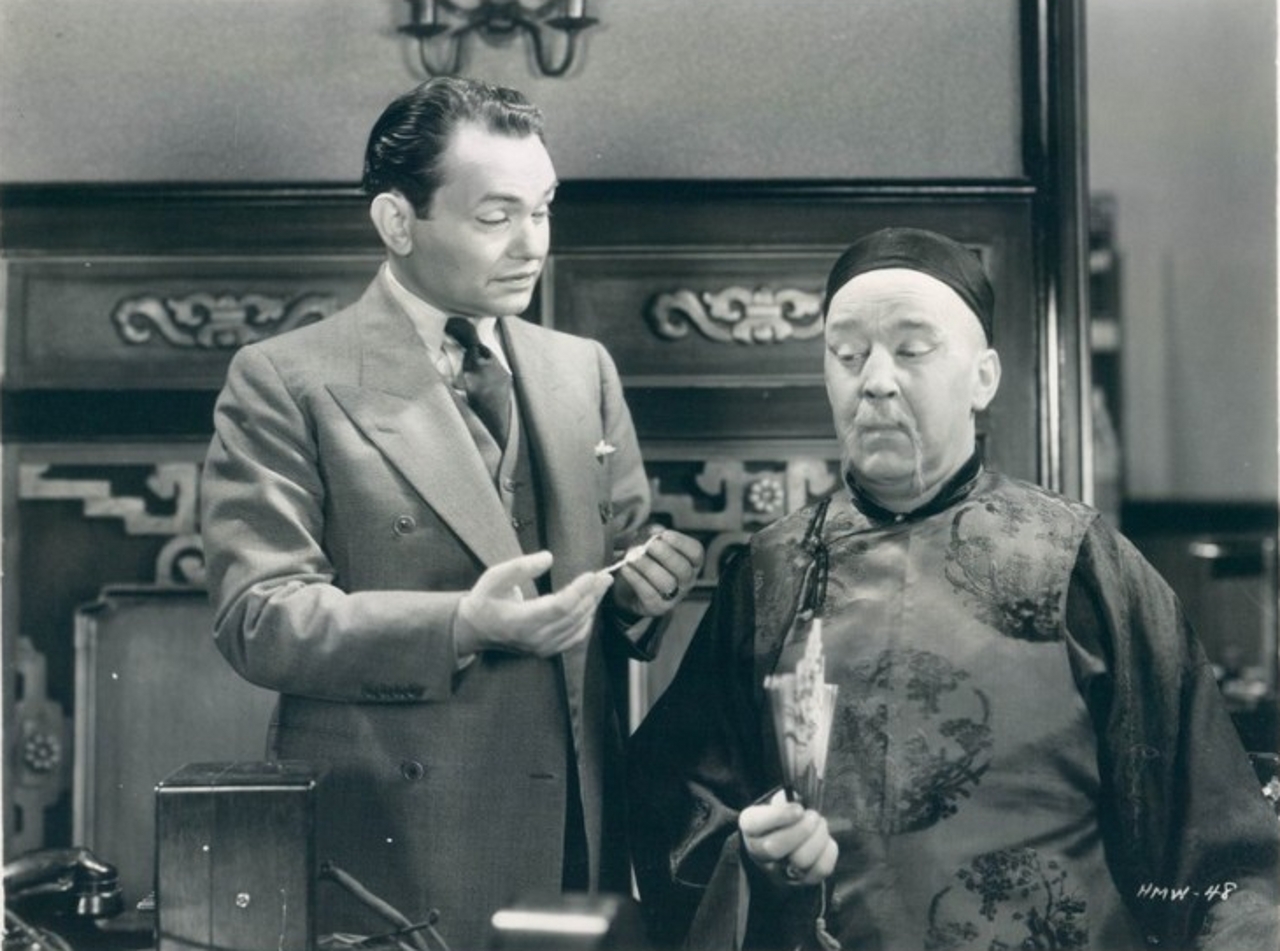
Edward G. Robinson – The Hatchet Man 1932

If it seems preposterous that Edward G. Robinson (left) would be cast as a Chinese hitman, then consider that all the leads of this 1932 film The Hatchet Man, directed by William Wellman, are Caucasian.

Robinson, seen here standing next to character actor Dudley Digges, plays Wong Low Get, an anti-hero assassin, in this story about Tong Wars in Chinatown.

The movie is occasionally shown on Turner Classic Movies (TCM) and is worth watching because Robinson turns in a fine performance, even if he doesn’t even slightly resemble someone of Asian descent.

Spotlight On “America” – A Band With A Name For Playing Live

America – Performing Live

Unfairly labeled second rate Crosby, Stills, Nash & Young imitators by many music critics, America was able to crack the music charts in the early to mid 1970’s with a string of pop rock hits. Their influences ran from The Beatles to The Beach Boys to Jackson Browne.

Guitarists, singers and songwriters all, the trio of Dewey Bunnell, Gerry Beckley and Dan Peek crafted songs that have stood the test of time. Originally staples of AM radio and now relegated to light FM and background supermarket music play-lists, the band deserves a better fate. Their tight harmonies and musical abilities are quite honestly underrated. Especially live. Continue reading

The New York Times Obituaries Occasionally Celebrates Low-Lifes, Yet Ignores Deserving Artists and Notables

Who Gets A New York Times Obituary Write-up?

What do legendary blues and heavy metal guitarist, Gary Moore, rock album photographer Jim McCrary and playwright, screenwriter, author and jazz champion Max Wilk all have in common?

When they died, the New York Times did not cover their deaths in the obituary column. We all know space is limited, but these people were significant in their artistic fields, enriching the lives of countless others.  It would be nice had the self-proclaimed “newspaper of record” recorded and noted their amazing lives. But The Times editors felt these people were not deserving.

The official policy about who the The Times decides to write up is :

When we look to see whether someone had made a newsworthy impact in some way — who “made a wrinkle in the social fabric,” — we don’t equate significance with fame. In point of fact, 9 out of 10 people we write about are indeed not household names (the 10th is — a movie star, a secretary of state). But that doesn’t negate their importance. Most made their marks in quiet ways, out of the public limelight, but they still made a mark, possibly on your life and mine.

So who is deserving?

Apparently an unremarkable low-life, graffiti tagger, StayHigh 149, a.k.a. Wayne Roberts , can get a full write-up.

Yes, Roberts definitely, as the Times puts it, “made a mark on your life and mine.”

More like a blemish.

Especially in New York City in the 1970’s when the city was bombarded with the eyesore of graffiti defacing public and private property.

As is noted in the obituary, this great man (sarcasm) in the 1960’s was working as a messenger on Wall Street and smoking about an ounce of marijuana a week, earning the Stay High nickname.

Inspired by other vandals tagging subway cars, he then began defacing public property.

Chris Pape a fellow graffiti  aficionado says in the Times obituary:

“He (Roberts) rode empty trains all day with markers in his pocket, and he wrote everywhere.” By the early ’80s, Pape said, drugs had begun to take their toll. Roberts left his World Trade Center job, and his wife, because of his drug use. “He was a functional junkie who occasionally did time in prison for stupid things,” Pape said. “He was like that for 20 years. He didn’t want to be found.”

For some reason, I can only think of the millions of wasted dollars that it cost taxpayers to eradicate the vandalism this cretin created.  As I have said before – graffiti is definitely not art.

This is the sort of person The New York Times chooses to cover in their obituaries?

For the record, when one of the most influential singers in heavy metal history, Ronnie James Dio, died on May 16, 2010, the following day The Times devoted 493 words to summing up his life.

Graffiti vandal Wayne Roberts had 838 words written about him.

Classic Hollywood #13 – Betty Grable & Marilyn Monroe

Candid Photographs of Marilyn Monroe

Instead of the typical movie publicity or glamor photographs of Marilyn Monroe, we thought we’d highlight three photographs that show Marilyn in a bit of a different light.

Betty Grable and her How To Marry A Millionaire (1953) co-star Marilyn Monroe emerge from a Hollywood restaurant. Grable who was 20th Century Fox’s blond bombshell for most of the 1940’s was being “replaced” by Monroe. Grable was relieved as she was getting tired of fighting with Daryl F. Zanuck, Fox’s studio chief. Supposedly she told Marilyn privately, “Honey, I’ve had my time in the spotlight, now it’s your turn!”

Marilyn takes a break and kneels on the steps of a brownstone while filming Billy Wilder’s The Seven Year Itch (1955).  A portion of the film was shot on location in New York City. The brownstone where the lead character, Richard Sherman (Tom Ewell) lives with Marilyn subletting the apartment above him, is located at 164 East 61st Street. The building is still there, though somewhat modified.

Marilyn Monroe with a very dour looking Joe DiMaggio in Florida in 1961. Monroe was visiting DiMaggio, who was a special instructor to the New York Yankees during spring training. After their nine month marriage ended in divorce in 1954, the couple remained friends and got closer as the years passed. There were rumors that Monroe and DiMaggio were contemplating remarrying one another when Monroe passed away in 1962.

When Lyrics Meant Something – Crosby, Stills, Nash & Young and “Ohio”

May 4th Marks the Anniversary of Four Kent State University Students Murdered For Protesting The U.S. Invasion of Cambodia and the Vietnam War

Do today’s songs have meaning?

One of the things I am confronted with in the 21st century is the degraded state of music today, especially lyrically. Do people really listen to the lyrics of songs and give them any serious thought?  Or are the majority of songs being written not worthy of deep examination?

In the 1960’s and 70’s music listeners certainly did pay attention to the words being sung. They pored over lyric sheets which were inserted into LP albums with artwork that was meant to be contemplated, pondered, discussed, interpreted and argued over. Beginning with the shift to CD’s in the late eighties with their micro-printing of lyrics Continue reading