Category Archives: Photography

Classic Hollywood #14

Edward G. Robinson – The Hatchet Man 1932

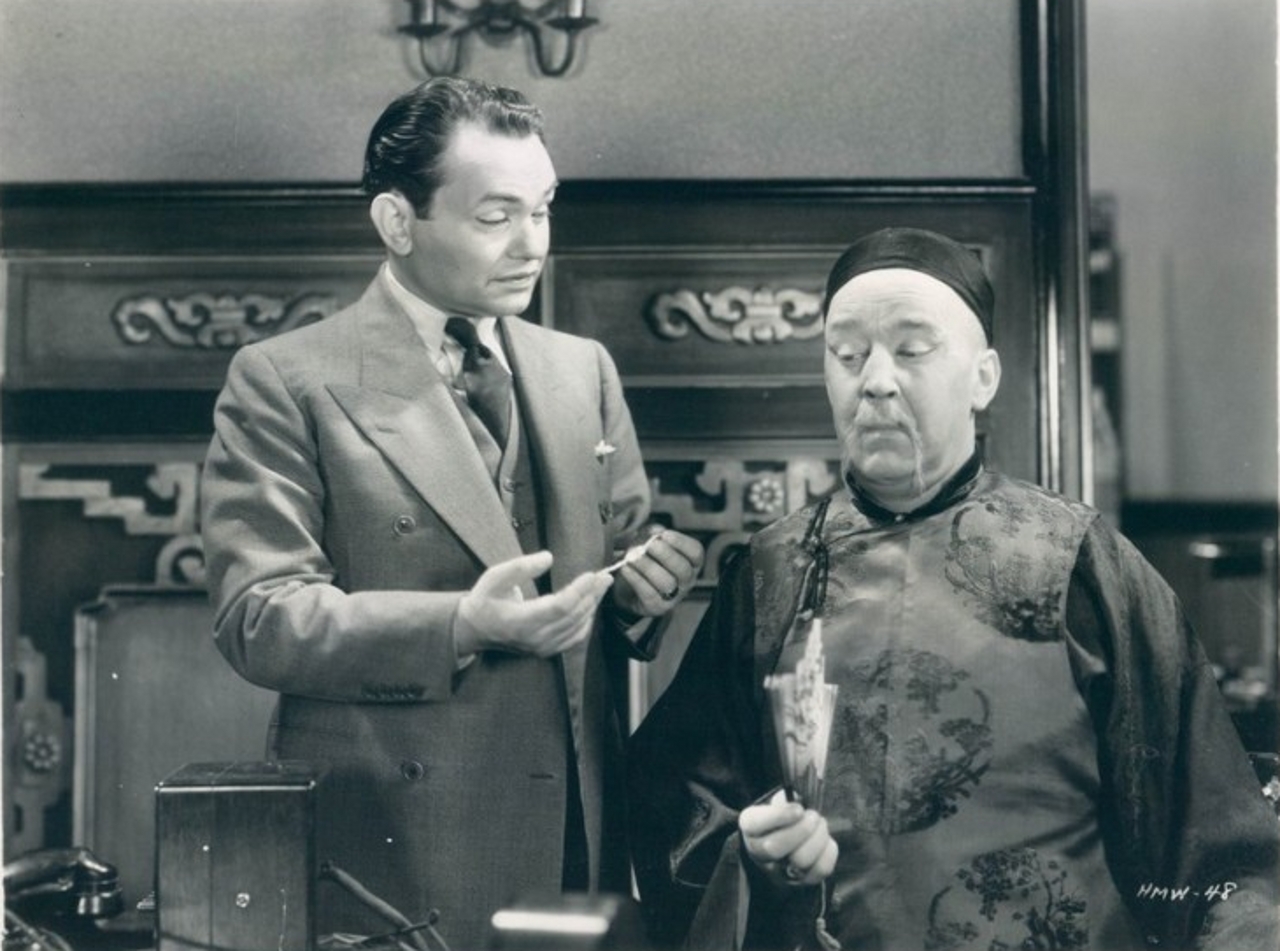
If it seems preposterous that Edward G. Robinson (left) would be cast as a Chinese hitman, then consider that all the leads of this 1932 film The Hatchet Man, directed by William Wellman, are Caucasian.

Robinson, seen here standing next to character actor Dudley Digges, plays Wong Low Get, an anti-hero assassin, in this story about Tong Wars in Chinatown.

The movie is occasionally shown on Turner Classic Movies (TCM) and is worth watching because Robinson turns in a fine performance, even if he doesn’t even slightly resemble someone of Asian descent.

Babe Ruth, Dewayne Wise And Mistakes Umpires Make

Umpires Make Mistakes: See Baseball History 101

Photo Mike Stobe / Getty Images

Everyone is in an unnecessary uproar over the  Dewayne Wise phantom catch of a baseball that disappeared into the crowd at Yankee Stadium on June 26, 2012 during a 6-4 Yankee victory over the Cleveland Indians.

The umpire, Mike DiMuro is human. He made a mistake and admitted it after the game. That was the right thing to do.

Do you want the game to stop every time there is a controversial play? Aren’t the games slow enough?

Mistakes similar to this have been happening since baseball began and have been forgotten unless they affect the pennant race or a World Series game.

One forgotten incident that occurred on August 1, 1920 was whether Joe Jackson of the Chicago White Sox actually caught a baseball Babe Ruth hit into an overflow crowd at Comiskey Park.  The aftermath of that play is shown below.

Babe Ruth & Miller Huggins argue with umpire Tom Connolly, Bob Meusel (with bat) listens © blackbetsy.com

Going into the game against the White Sox, Ruth was on a tear, having hit 37 home runs already, shattering his own record of 29 home runs set the previous year. Continue reading →

Old New York in Photos #19 – First Traffic Light Signals

First Traffic Light Signals –  Fifth Avenue and 34th Street, 1922

The Beginning of New York City’s Traffic Lights

This ornate traffic light at 34th Street, was one of seven put up in New York City on the heavily traveled Fifth Avenue in 1922.

The city had experimented with traffic signals in 1917 when a device invented by an engineer, Foster Milliken, was installed at the intersection of Fifth Avenue and 57th Street. The device was a revolving flashlight that would flash signals as red to stop and green for go.  This may sound ridiculous now, but in the early days of traffic signals there was no standard for color relating to traffic. Continue reading →

The Forgotten Brooklyn Elevated Train Crash Of 1923

June 25, 1923 Intersection of Atlantic and Flatbush Avenues

Photo © Osmund Leviness

“Those who died were fortunate it seemed to me when I looked inside the cars. As long as I live I can never forget it. All the people were in a mass there, struggling and screaming, with blood running over them. They all seemed to be bleeding or stained with blood. One woman’s head was terribly cut on top, and one jaw seemed to be crushed in. The hand of another woman was almost cut off. One woman I took out through a window died a few minutes after I carried her into the post office. I can’t forget the inside of those cars. They looked like my idea of purgatory.” –  Traffic Officer Joseph J. Ryan who was on the scene immediately after the crash.

This incredible accident happened 89 years ago, Monday, June 25, 1923  as two cars of the BMT derailed and plunged 35 feet into the street at the intersection of Atlantic and Flatbush Avenues in Brooklyn. Continue reading →

Joe DiMaggio’s Comeback 1949

The Yankee Clipper Gets Ready To Return To Play – June 21, 1949

Many who saw Joe DiMaggio play say he was the greatest all-around ballplayer who ever lived. Everything he did seemed effortless. Of course this is a huge exaggeration. Everything DiMaggio did so well required practice, patience and hard work.

When DiMaggio missed the first three months of the 1949 baseball season with a painful heel injury, many fans, players and sportswriters thought he might never play again.

So it was hush-hush when DiMaggio went to an empty Yankee Stadium to test out his heel in a full workout on June 21, 1949.

Things went well and DiMaggio returned to the Yankee line-up on June 28, 1949 at Fenway Park against the Red Sox to start a three game series. He hit a homerun in the first game which the Yankees won by a score of 5-4. The Yankees swept the series and when DiMaggio left Boston, he had hit four homeruns and driven in nine runs.

The impact of his return cannot be understated. In the 76 games DiMaggio played for the remainder of the year, he batted .346, hit 14 homeruns and drove in 67 runs. His on base percentage was the highest of his career, .459. In 329 plate appearances he struck out only 18 times.

The Yankees ended up edging the Red Sox by one game in the final season standings, propelling the Yankees into the World Series against the Brooklyn Dodgers.

DiMaggio would go on to have the worst World Series performance in his storied career, batting just .111. But the Yankees still defeated the Dodgers four games to one, starting their stretch of winning five World Championships in a row.

Old New York In Photos #18 – Henry Hudson Parkway Improvement 1937

Henry Hudson Parkway and Riverside Park December 6, 1937

Photo © Ben Heller (Underwood & Underwood)

Looking north from 72nd Street on December 6 , 1937 we see the newly opened stretch of The Henry Hudson Parkway. Continue reading →

Chimpanzees In Old News and Publicity Photographs

Monkey See, Monkey Do

People find chimpanzees amusing, especially when they are doing non-chimp activities. News organizations, on a slow news day would send a photographer to see if a good photo-op would come about. Hopefully no one had their face ripped off.

Whatever background information is known, is written below the chimp photo. (Click any photo to enlarge.)

Chimpanzee photographing swimsuit models. Circa 1960’s. (He doesn’t have the viewfinder in the right place, does he?)

Bobby John, chimpanzee tennis player, Rockledge, FL November 20, 1973

“Jiggs” the chimpanzee, on the movie set of  “Her Jungle Love” with Dorothy Lamour. 1938

Chimpanzees eating zeppoles. Circa 1950’s.

Jacko (I swear that is his name) the London Zoo chimpanzee. Circa 1930’s

“The beret hat from Northern France is becomming very popular in London and one was introduced to Jacko the chimpanzee at the London Zoo”

Chimpanzee dressed elegantly, entering a limousine. Circa 1920’s.

Tommy Dorsey Swings It For Chimps – 1939

“Philadelphia – Tommy Dorsey, band leader, gives baby chimpanzees at the zoo here an earful of his trombone music during an experiment to determine the effect of music on animals. Attending the jam session put on by Dorsey and his players were psychologists who studied the animals’ reactions but made no immediate conclusions. January 31, 1939.”

Babe Ruth’s 1920 Uniform Sells For $4.4 Million At Auction

Babe Ruth, King Of The Sports Memorabilia World

Nearly sixty-four years after his death, Babe Ruth set another record on Sunday May 20, 2012 . His circa 1920 Yankees road jersey sold at SCP auctions for a staggering $4.4 million.

Photo © SCP auctions

This eclipses the previous highest amount paid for a piece of sports memorabilia, a Honus Wagner baseball card, which sold in 2008 for $2.8 million.

To put the amount of the sale price in some perspective, Babe Ruth earned approximately $910,000 during his entire major league baseball playing career from 1914 -1935. This of course does not account for inflation. In modern dollars with inflation Ruth would have earned $15.3 million.

Also Ruth made vast amounts of money during the off-season, barnstorming and doing various product endorsements and personal appearances.

How would Ruth have felt about his uniform selling for more than he made his entire career? I’d like to think Ruth would have had a good laugh at that fact.

Babe Ruth, second from left, with his Yankee teammates, early 1920’s

Here is a photograph of Babe Ruth early in his New York Yankee career during spring training, possibly wearing the multi-million dollar uniform.

On a side note

The Kansas City Royals defeated the New York Yankees last night, May 21 at Yankee Stadium by a score of 6-0.  What made me notice this otherwise unremarkable game was what the New York Times said today in the sports section:

But the clutch-hitting woes of the Yankees — not just their wheezing All-Star first baseman — remained for another game, a 6-0 loss to the Kansas City Royals in front of 39,229 fans.

Anyone attending or watching the game on television knows the announced attendance of 39,229 was a joke. Looking at the mostly empty stadium, there were probably no more than 8,000 people attending the dreary game, which was played under a constant, steady rain.

The idea that baseball attendance is counted not by clicks of the turnstile, but by tickets sold is ridiculous. It’s another slight problem in a laundry list of things that MLB should address before baseball becomes completely irrelevant.

Squealer’s End

What Happens To Squealer’s

This is not The Sopranos or The Godfather.

75 years ago, gangsters did really nasty things to you, if you talked to the cops.

The back of this Acme news photograph sums it up:

Trussed from head to foot, the body of Samuel Silverman is examined by Deputy Medical Examiner Romeo Auerbach. The victim was found in a car parked in Brooklyn, N.Y. with three bullets in his skull. Police believe Silverman was killed for “putting the finger” on other men involved in a hold up, for which he was out on bail.  July 16, 1937

Silverman , 25, who lived at 869 Hopkinson Avenue, Brooklyn, was found in front of 324 East 91st Street, Brooklyn on July 15, 1937. The body was discovered at 5 pm by a youth who happened to glance inside the parked car.

Silverman had been arrested Continue reading →