Category Archives: Music

Clive Burr, Iron Maiden Drummer Dies At 56

Clive Burr – Iron Maiden’s Masterful And Highly Underrated Drummer Passes Away

Clive Burr Drumming 1982Clive Burr, who was Iron Maiden’s drummer from 1979-1982, died in his sleep at his home in London, England on Tuesday, March 12, 2013. He had been in ill-health for a number of years.

Burr played on the first three Iron Maiden albums, Iron Maiden, Killers and The Number of the Beast. With Iron Maiden on the verge of worldwide stardom, Burr was replaced under circumstances which remain murky to this day by Nicko McBrain for 1983’s Piece of Mind album. The official reason given was personal problems and difficulties in dealing with the heavy touring schedule.

Clive Burr Interview 1982Burr played with a string of other bands for the next dozen years, but never achieved the success he had with Iron Maiden. In the early 1990’s Burr’s musical career came to an abrupt end when he noticed tingling in his hands. He received a diagnosis of multiple sclerosis in 1994.

His former band mates held several charity events during the last decade which they called “Clive-Aid” to raise money to help Burr with his medical expenses which had left him in debt.

Iron Maiden Cliveaid 2007

Steve Harris, Dave Murray and Clive Burr at 2007’s CliveAid Concert

Iron Maiden manager Rod Smallwood said in 2002 at the first benefit, “Maiden has always been a family and even after all these years, we still consider Clive to be part of the family and as such we feel we should help him in any way possible.”

There has been a long simmering debate among hardcore Maiden fans about who was the better drummer, Burr or McBrain?

They were so different in style that a comparison is very difficult, but I always preferred Burr’s lucid, free jazz-style drumming. Burr though, was not a jazz drummer. McBrain is the one who had learned through funk and groove. Continue reading

I Hear You Knocking But You Can’t Come In

Smiley Lewis And Early Rock n’ Roll

Smiley Lewis

There are controversies over what song marks the birth of rock’ roll. Rather than engage in a protracted debate or discussion, I thought it would be good to just take a look at one under-appreciated classic R&B song that seems to qualify as one of the first rock songs.  I Hear You Knocking was written by Dave Bartholomew and Pearl King in 1955 and performed the same year by New Orleans musician Smiley Lewis.

It is definitely a lesser known progenitor of what sort of music would become  popular during the magical year of 1955 with artists such as Chuck Berry, Fats Domino, Little Richard and Elvis Presley all emerging onto a national stage performing early rock n’ roll.

Click here to listen to Smiley Lewis’ version of I Hear You Knockin’.

Few people are familiar with Smiley Lewis’ version of the song, as it was popular during a time when radio was segregated and R&B artists did not get their songs played on many stations. However the song did make it to number two on the Billboard R&B charts.

There are at least thirty other versions of the song by other popular artists, but I Hear You Knocking was really rescued from oblivion by the great Dave Edmunds when he covered the song in 1970 and it became a number one hit in the United States and England. Edmunds version is still played regularly on many classic rock stations, perpetuating the popularity of this catchy, R&B/early rock classic. Below is a video of an uncharacteristically wasted-looking Edmunds, lip-synching his hit in 1971 in front of a freaky looking audience that one youtube commenter noted, “I didn’t know the Manson Family had a variety show.”

UPDATE 2022 Unfortunately in the intervening years since this story was first written, Warner Music has pulled the video. Below is Edmunds live version, unfortunately without the 1971 stoned audience.

.

Classic Hollywood #15 – Robert Morse, Angela Lansbury & Duke Ellington

Mad Men, Murder And The Duke – 1967

Before Robert Morse became known to a generation of television viewers as Mad Men agency head Bertram Cooper, he had a distinguished stage and movie career. The Loved One (1965) a disturbing black comedy about the funeral industry has Morse at his best. Continue reading

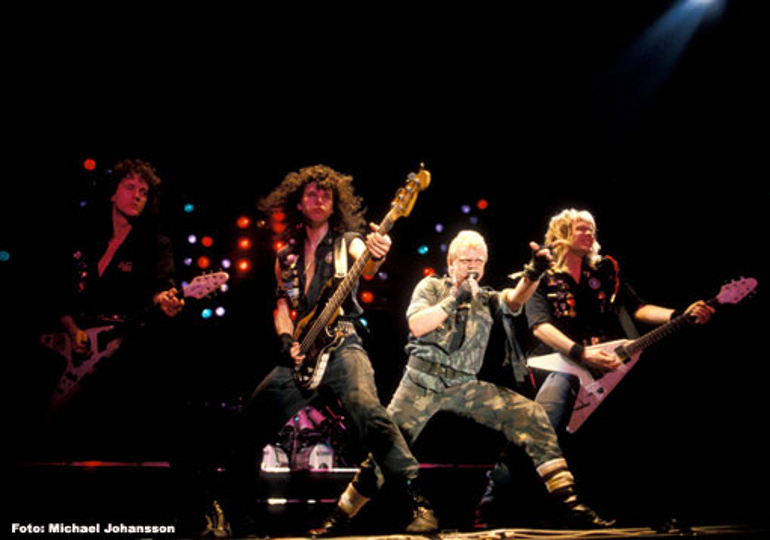
12 Great Heavy Metal Albums From The 80’s That Are Under The Radar (Part 2)

Great Metal Albums from the 1980’s That Have Been Forgotten

Continuing our article from Part 1 of twelve metal albums from the 1980’s you should check out:

1986 – Metal ChurchThe Dark (Elektra)

Metal Church put out great albums during the 1980’s and 1990’s and even opened for Metallica during their 1991 tour and this should have lead to more exposure for the band. But Metal Church never caught on with the music video generation and that may have had an big impact on sales. Continue reading

12 Great Heavy Metal Albums From The 80’s That Are Under The Radar (Part 1)

Great Metal Albums from the 1980’s That Have Been Forgotten

Still one of the most exciting things for me is to be introduced to great music that I have never heard before. It doesn’t matter if it was made this year or thirty years ago. If you haven’t heard it before, it’s new to you, isn’t it?

I started thinking about bands casual heavy metal fans may be familiar with by name, but not their work with the exception of possibly a song or two.  That lead to the creation of this list. Rather than focus on great albums from well known bands such as Judas Priest, Slayer, Megadeth, Metallica, Anthrax, Iron Maiden, Dio, Van Halen, Testament, Overkill, Exodus or any of the well known bands, these are bands and albums that may have had a brief moment in the spotlight or are known for the wrong reasons, like an MTV video.

So in chronological order, here is part one of twelve albums that you should check out.

1980 – Angel WitchAngel Witch (Bronze Records)

What a debut album should be: songs with one amazing hook after another. Angel Witch emerged from The New Wave of British Heavy Metal looking like they would rise to the top. This trio lead by Kevin Heybourne lead singer and guitarist should have conquered the world. For whatever reason it never happened.  Almost every song on here is a classic in songwriting 101. Continue reading

Deep Purple Founder And Keyboardist Jon Lord Dies At 71

Jon Lord: God Of The Hammond Organ, June 9, 1941 – July 16, 2012

More and more of the people I grew up admiring are leaving us. In the last couple of weeks actor Ernest Borgnine, Encyclopedia Brown author Donald Sobol and director William Asher died and on Monday, July 16, 2012 the announcement of Jon Lord’s sudden death really hit home.

Lord who had been battling pancreatic cancer, died unexpectedly at the London Clinic of a pulmonary embolism. He leaves behind his second wife Vickie, their daughter, Amy, and Sara, his daughter with his first wife Judith Feldman whom he married in 1969 and divorced in 1981.

I grew up admiring Deep Purple and they have always been one of my favorite bands. I had seen them perform live which was a very festive and loud experience.  After seeing them live I came away with the first hand knowledge that Jon Lord was without a doubt one of the most exciting and greatest rock keyboard players ever.

Being an extremely amateur musician myself, there are two things I wish I had the ability to do. One is to play stride style piano like James Johnson or Fats Waller and the other is to flawlessly play the guitar solo or keyboard solo to Deep Purple’s driving locomotive of a song, Highway Star.

Jon Lord was a classically trained musician and that training always came through in Deep Purple’s music. The structure of many of the bands songs are clearly classically influenced and this is due to the fact that both Lord and guitarist Ritchie Blackmore drew a lot of their inspiration from the classical realm.

(l-r) Ian Paice, Ian Gillan, Ritchie Blackmore, Roger Glover, Jon Lord

In rock n’ roll there are many talented composers that are not great performers. There are great live bands, without good original songs. Then, there are phenomenal studio bands who can’t cut it live. During the height of their fame in the 1970’s,  I don’t think there was a more talented group of individuals playing together as a band than Deep Purple. What I mean is each individual was a virtuoso in his own right, a master at their instrument. Together they were able to write great songs, record them in the studio and play them effortlessly with an edge in front of a live audience as few rock bands could. To do any one of these three things well is an accomplishment.  Deep Purple was in a rare class as they did all three. Continue reading

Spotlight On “America” – A Band With A Name For Playing Live

America – Performing Live

Unfairly labeled second rate Crosby, Stills, Nash & Young imitators by many music critics, America was able to crack the music charts in the early to mid 1970’s with a string of pop rock hits. Their influences ran from The Beatles to The Beach Boys to Jackson Browne.

Guitarists, singers and songwriters all, the trio of Dewey Bunnell, Gerry Beckley and Dan Peek crafted songs that have stood the test of time. Originally staples of AM radio and now relegated to light FM and background supermarket music play-lists, the band deserves a better fate. Their tight harmonies and musical abilities are quite honestly underrated. Especially live. Continue reading

The New York Times Obituaries Occasionally Celebrates Low-Lifes, Yet Ignores Deserving Artists and Notables

Who Gets A New York Times Obituary Write-up?

What do legendary blues and heavy metal guitarist, Gary Moore, rock album photographer Jim McCrary and playwright, screenwriter, author and jazz champion Max Wilk all have in common?

When they died, the New York Times did not cover their deaths in the obituary column. We all know space is limited, but these people were significant in their artistic fields, enriching the lives of countless others.  It would be nice had the self-proclaimed “newspaper of record” recorded and noted their amazing lives. But The Times editors felt these people were not deserving.

The official policy about who the The Times decides to write up is :

When we look to see whether someone had made a newsworthy impact in some way — who “made a wrinkle in the social fabric,” — we don’t equate significance with fame. In point of fact, 9 out of 10 people we write about are indeed not household names (the 10th is — a movie star, a secretary of state). But that doesn’t negate their importance. Most made their marks in quiet ways, out of the public limelight, but they still made a mark, possibly on your life and mine.

So who is deserving?

Apparently an unremarkable low-life, graffiti tagger, StayHigh 149, a.k.a. Wayne Roberts , can get a full write-up.

Yes, Roberts definitely, as the Times puts it, “made a mark on your life and mine.”

More like a blemish.

Especially in New York City in the 1970’s when the city was bombarded with the eyesore of graffiti defacing public and private property.

As is noted in the obituary, this great man (sarcasm) in the 1960’s was working as a messenger on Wall Street and smoking about an ounce of marijuana a week, earning the Stay High nickname.

Inspired by other vandals tagging subway cars, he then began defacing public property.

Chris Pape a fellow graffiti  aficionado says in the Times obituary:

“He (Roberts) rode empty trains all day with markers in his pocket, and he wrote everywhere.” By the early ’80s, Pape said, drugs had begun to take their toll. Roberts left his World Trade Center job, and his wife, because of his drug use. “He was a functional junkie who occasionally did time in prison for stupid things,” Pape said. “He was like that for 20 years. He didn’t want to be found.”

For some reason, I can only think of the millions of wasted dollars that it cost taxpayers to eradicate the vandalism this cretin created.  As I have said before – graffiti is definitely not art.

This is the sort of person The New York Times chooses to cover in their obituaries?

For the record, when one of the most influential singers in heavy metal history, Ronnie James Dio, died on May 16, 2010, the following day The Times devoted 493 words to summing up his life.

Graffiti vandal Wayne Roberts had 838 words written about him.

Motörhead Live In Their Prime – 1980

Concert At Nottingham Theatre Royal Is Well Worth Viewing

motorhead tour booklet photo Brian GoodmanFor those of you who are fans of Motörhead this is definitely worth watching.  If you are not a fan, then this video should help make you one. This show captures the band in full control playing a scorching set with good audio and video. The classic line-up of Lemmy, Fast Eddie Clarke and Phil Taylor perform the following set:


Overkill
Too Late Too Late
Shoot You In The Back
Step Down
Jailbait
Leavin’ Here
Metropolis
Train Kept a Rollin’
Bomber
Motörhead