Category Archives: Movies

Classic Hollywood #15 – Robert Morse, Angela Lansbury & Duke Ellington

Mad Men, Murder And The Duke – 1967

Before Robert Morse became known to a generation of television viewers as Mad Men agency head Bertram Cooper, he had a distinguished stage and movie career. The Loved One (1965) a disturbing black comedy about the funeral industry has Morse at his best. Continue reading

50 Years After Marilyn Monroe’s Death – Examining The Books That Were Written About Her While She Was Living

The Fascination With Marilyn Monroe: A Look At The First Six Books About Her

Sometime during the evening or early morning hours of August 4 or 5, 1962 Marilyn Monroe died under mysterious circumstances at the age of 36. Even after fifty years to the day that she died, Marilyn Monroe may be more popular now than when she was living. Her movies are what propelled her to fame and are the way people today primarily become familiar with Marilyn. Her image is part of our popular culture. But books about Marilyn have helped her achieve a level of immortality that is not shared by any other star.

By a wide margin no other entertainment personality has been covered in books more than Marilyn Monroe. Elvis would run a distant second. Since 1953 there have been slightly more than 200 books in English that are directly about Marilyn Monroe. There are dozens more that have been printed in other languages and hundreds of others that contain chapters about her.

Her movie career spanned from 1947-1962, yet only six books were written about Marilyn while she was living, with various levels of cooperation from the star herself.

The first book written about Marilyn was published with little fanfare on October 29, 1953. The Marilyn Monroe Story by Joe Franklin and Laurie Palmer, (1953 Rudolph Field Co.) distributed by Greenberg.  The book retailed in paperback for $1.00 and hardcover for $2.00. It is considered the rarest and most collectible book about Marilyn and very good condition paperback copies sell for upwards of $150 and hardcovers without the dustjacket fetch over $250 and with a nice dustjacket can sell for $500 or more.

So besides being the first book about Marilyn what makes it rare? In the early 1990’s I mentioned I owned a copy of his Marilyn book to author Joe Franklin and the longtime radio and television host told me quite a story about the book.

“I now don’t even have a copy of my own book,” Franklin said. Continue reading

Film Director Joseph H. Lewis On Why Films, Hollywood & L.A. Changed For The Worse

Observations On Hollywood Trash

Director Joseph H. Lewis

Peter Bogdanovich early in his career was a film writer for magazines. Over the years he interviewed many people in the film industry and continued to do so even after becoming a successful director himself.  The interviews with directors are compiled in a great book: Who The Devil Made It Conversations With Legendary Film Directors by Peter Bogdanovich (Knopf; 1997).

He interviewed director Joseph H. Lewis (1907-2000) an adept filmmaker best known for his 1950 movie Gun Crazy, a precursor to Arthur Penn’s landmark film, Bonnie and Clyde (1967).

Bogdanovich asked Lewis in 1994, to “define the change that had happened in Hollywood.”

Lewis was able to clearly answer him:

“Yes, I define it one way. When I was a little boy I worked at MGM: I loaded film; from there I became an assistant camera boy; from there, an assistant cutter; from there, the head of a cutting department; from there I became a director. These things don’t happen today. A guy comes up and, yes, he has a script- he wrote it; he’ll let them do it, providing he can direct it. And they go for it.” Continue reading

Classic Hollywood #14

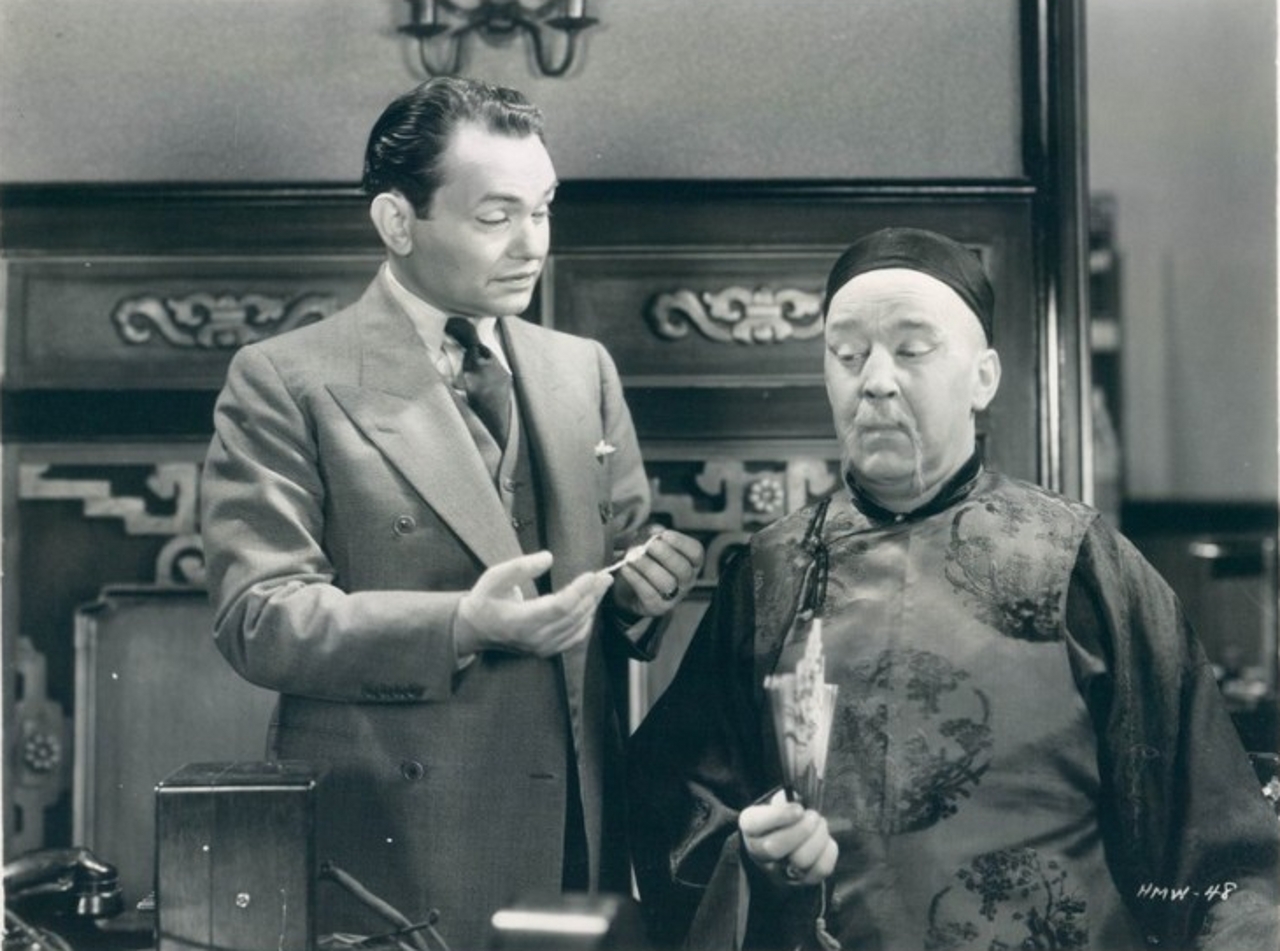
Edward G. Robinson – The Hatchet Man 1932

If it seems preposterous that Edward G. Robinson (left) would be cast as a Chinese hitman, then consider that all the leads of this 1932 film The Hatchet Man, directed by William Wellman, are Caucasian.

Robinson, seen here standing next to character actor Dudley Digges, plays Wong Low Get, an anti-hero assassin, in this story about Tong Wars in Chinatown.

The movie is occasionally shown on Turner Classic Movies (TCM) and is worth watching because Robinson turns in a fine performance, even if he doesn’t even slightly resemble someone of Asian descent.

Honoring Lou Gehrig, His Monument Unveiled – 1941

The Day The Yankees Paid Their Final Tribute To The “Iron Horse”

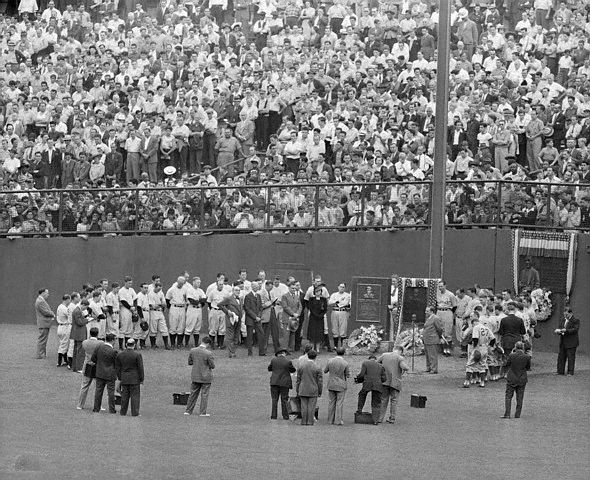
This monument ceremony seen below was supposed to take place July 4 1941, on the two year anniversary of Lou Gehrig Day in 1939.

Many baseball fans know that the New York Yankees began the tradition of Old-Timers Day with a ceremony on July 4, 1939 to honor Lou Gehrig, the “Iron Horse.” On that day, the Yankees brought together Lou’s old teammates to show their deep admiration for a man who exemplified everything the Yankees were about. At the last minute Gehrig was asked to say something to the packed house at Yankee Stadium.

The words he said, now known as, “The Luckiest Man on the Face of the Earth” speech, live on in immortality because it was completely spontaneous and from the heart.

What you may not know, is that you really have never heard or seen that speech.

You have only seen or heard small portions of Gehrig’s speech, because believe it or not, there is not one extant movie or audio recording of Gehrig’s complete speech. Only snippets.

As incredible as it sounds with all those newsreel cameras present to record the activities at Yankee Stadium, no complete version of the speech has surfaced in all these years. Continue reading

Where Did The Saying “Up The River” Come From?

A Movie Cliche’s New York Origins
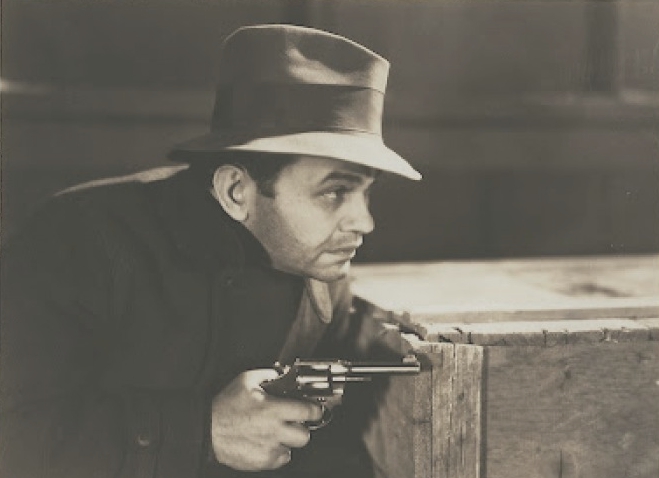
If you ever watch any gangster films from the 1930’s or 40’s, one of the lines of dialogue that always pops up is: “up the river.”

Somebody would utter it: a criminal; prosecutor; police officer; or a fellow gangster. Listen and it will be said in most of these early crime movies.

Lines like:

“Didn’t you hear, Rocky’s going up the river.”

“If you don’t talk Ike, I can guarantee you’re going to spend a long stretch up the river.”

“I’m not takin’ the fall to go up the river for a heist you did, Spats.”

The term “up the river” as most people know refers to going to prison.

So where did the saying come from?

In the 1800’s, when you were charged with a crime and sent to prison in New York City, the accused would first be taken to the prison on Centre Street in lower Manhattan which was known as “the Tombs” built in 1838.

The Tombs were so named because the original structure had large granite columns on the outside of the building which  resembled Egyptian burial architecture, a.k.a. tombs. The Tombs though, were merely a holding prison for the accused criminals awaiting trial.

After sentencing, convicts were sent to a prison on Blackwell’s Island (today known as Roosevelt Island) in the middle of the East River.

However if you were a habitual offender or committed a very serious offense, you would be sent thirty miles north, up the Hudson River to Sing Sing prison. This is the origin of the phrase being sent, “up the river.” Sing Sing separated the hardened criminals from the run of the mill pickpockets, burglars and ordinary thieves.

Even though, the term “up the river” originally referred to Sing Sing, it was eventually applied to anyone being sent to any prison.

Classic Hollywood #13 – Betty Grable & Marilyn Monroe

Candid Photographs of Marilyn Monroe

Instead of the typical movie publicity or glamor photographs of Marilyn Monroe, we thought we’d highlight three photographs that show Marilyn in a bit of a different light.

Betty Grable and her How To Marry A Millionaire (1953) co-star Marilyn Monroe emerge from a Hollywood restaurant. Grable who was 20th Century Fox’s blond bombshell for most of the 1940’s was being “replaced” by Monroe. Grable was relieved as she was getting tired of fighting with Daryl F. Zanuck, Fox’s studio chief. Supposedly she told Marilyn privately, “Honey, I’ve had my time in the spotlight, now it’s your turn!”

Marilyn takes a break and kneels on the steps of a brownstone while filming Billy Wilder’s The Seven Year Itch (1955).  A portion of the film was shot on location in New York City. The brownstone where the lead character, Richard Sherman (Tom Ewell) lives with Marilyn subletting the apartment above him, is located at 164 East 61st Street. The building is still there, though somewhat modified.

Marilyn Monroe with a very dour looking Joe DiMaggio in Florida in 1961. Monroe was visiting DiMaggio, who was a special instructor to the New York Yankees during spring training. After their nine month marriage ended in divorce in 1954, the couple remained friends and got closer as the years passed. There were rumors that Monroe and DiMaggio were contemplating remarrying one another when Monroe passed away in 1962.

Classic Hollywood #12 – Lili Damita

Lili Damita in Fighting Caravans 1931

The beautiful Liliane Marie Madeleine Carré also known as Lili Damita poses for Eugene Robert Richee, one of Hollywood’s great glamor photographers.

Lili was in the process of filming Fighting Caravans, a Western based upon a Zane Grey book, co-starring Gary Cooper.

Born in France in either 1901 or  1904 (sources are unclear), Lili was briefly married to director Michael Curtiz (Casablaca,  The Adventures of Robin Hood, Mildred Pierce, etc. ) from 1925-1926.

Lili announced her engagement on May 1, 1929 to the Crown Prince of Germany, Louis Ferdinand, who was only 21 at the time. They would be married, Lili declared “when he makes a success.” The marriage never took place.

Lili is best known today not for her movies, but for her marriage in 1935 to a then virtually unknown Errol Flynn. Lili was several years older than Errol and their marriage would be complicated, contentious and filled with wild love-making and even wilder fights. As Lili said in a 1939 interview:

“Being married to Flynn is exactly like living on top of a volcano. I like that. A volcano which does erupt. Constantly – yes, but daily! We are always just arriving or just leaving. Flynn and I. As the term is generally understood, Flynn is not a ‘good husband’ at all. But he is an exciting person to live with. And that makes him, for me, a very good husband. Because I like to live dangerously, unpeacefully.”

While Lili’s movie carrer ended in 1937, Errol’s career skyrocketed and the hedonistic Flynn was indulging just too much for Lili’s taste. After many separations and reconciliations, Lili sued for divorce on November 7, 1941.

Their only child, Sean Flynn born May 31, 1941, tried acting, became a photographer, and was captured in Cambodia in 1970 by communist guerillas. Lili spent the remaining years of her life having investigators search for her missing son. He was never seen again.

Lili married Eskimo Pie executive Allen R. Loomis in 1962. That marriage ended in divorce in 1983.

Lili Damita died in Palm Beach, FL on March 21, 1994 from complications of Alzheimers.

Classic Hollywood #11 – The Teenage Brigitte Bardot

Before Bardot Was A Sex Symbol (circa 1951)

Yes we know Brigitte Bardot is not a Hollywood fixture. She made almost all of her films in Europe but transcended borders as an international sex symbol of the 1950’s and 1960’s. So we can feature her here under the Classic Hollywood moniker. In this photo a very young Bardot wears a quasi ballet top with fishnet stocking ensemble.

Bardot had several years of dance training as a child Continue reading