Category Archives: Baseball

Players Who Could Wallop A Baseball & Rarely Struck Out

Sluggers With Discriminating Eyes

Players With 25 or More Home Runs In A Season & Fewer Strikeouts Than Home Runs

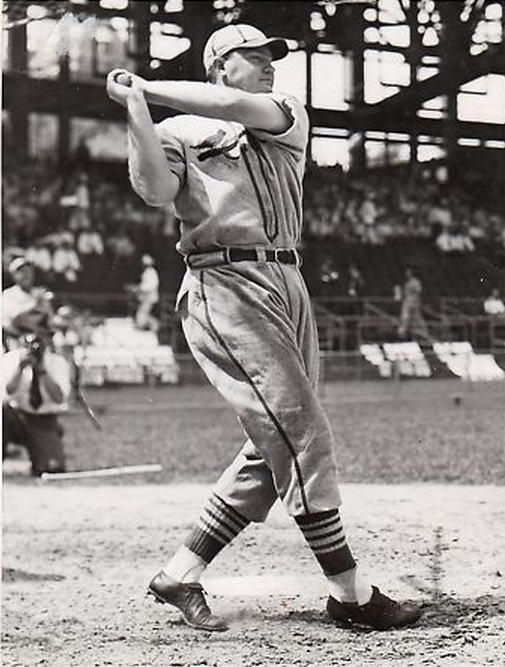
Johnny Mize hit the most home runs in a season, having more homers (51) than strikeouts (42)

As baseball commentators rave about all the power hitters with their prodigious home run numbers, few broadcasters and writers will allude to the obscene strikeout totals put up by these same power hitters.

Not that most players are capable of hitting a lot of home runs and avoiding striking out, but the great players of the past could.

This list from baseball-reference.com shows the top 37 players with more home runs than strikeouts in a season.

Rank Player HR SO Year Tm G AB H RBI BB BA
1 Johnny Mize 51 42 1947 NYG 154 586 177 138 74 .302
2 Ted Kluszewski 49 35 1954 CIN 149 573 187 141 78 .326
3 Lou Gehrig 49 46 1936 NYY 155 579 205 152 130 .354
4 Lou Gehrig 49 31 1934 NYY 154 579 210 165 109 .363
5 Ted Kluszewski 47 40 1955 CIN 153 612 192 113 66 .314
6 Joe DiMaggio 46 37 1937 NYY 151 621 215 167 64 .346
7 Barry Bonds 45 41 2004 SFG 147 373 135 101 232 .362
8 Mel Ott 42 38 1929 NYG 150 545 179 151 113 .328
9 Ted Kluszewski 40 34 1953 CIN 149 570 180 108 55 .316
10 Johnny Mize 40 37 1948 NYG 152 560 162 125 94 .289
11 Joe DiMaggio 39 30 1948 NYY 153 594 190 155 67 .320
12 Stan Musial 39 34 1948 STL 155 611 230 131 79 .376
13 Ken Williams 39 31 1922 SLB 153 585 194 155 74 .332
14 Ted Williams 37 27 1941 BOS 143 456 185 120 147 .406
15 Andy Pafko 36 32 1950 CHC 146 514 156 92 69 .304
16 Willard Marshall 36 30 1947 NYG 155 587 171 107 67 .291
17 Al Simmons 36 34 1930 PHA 138 554 211 165 39 .381
18 Ted Kluszewski 35 31 1956 CIN 138 517 156 102 49 .302
19 Joe DiMaggio 32 21 1938 NYY 145 599 194 140 59 .324
20 Lefty O’Doul 32 19 1929 PHI 154 638 254 122 76 .398
21 Joe DiMaggio 31 30 1940 NYY 132 508 179 133 61 .352
22 Yogi Berra 30 29 1956 NYY 140 521 155 105 65 .298
23 Yogi Berra 30 24 1952 NYY 142 534 146 98 66 .273
24 Joe DiMaggio 30 13 1941 NYY 139 541 193 125 76 .357
25 Joe DiMaggio 30 20 1939 NYY 120 462 176 126 52 .381
26 Bill Dickey 29 22 1937 NYY 140 530 176 133 73 .332
27 Ted Williams 28 24 1955 BOS 98 320 114 83 91 .356
28 Yogi Berra 28 12 1950 NYY 151 597 192 124 55 .322
29 Ted Williams 28 21 1950 BOS 89 334 106 97 82 .317
30 Tommy Holmes 28 9 1945 BSN 154 636 224 117 70 .352
31 Bill Terry 28 23 1932 NYG 154 643 225 117 32 .350
32 Yogi Berra 27 20 1955 NYY 147 541 147 108 60 .272
33 Yogi Berra 27 20 1951 NYY 141 547 161 88 44 .294
34 Bill Dickey 27 22 1938 NYY 132 454 142 115 75 .313
35 Johnny Mize 25 24 1950 NYY 90 274 76 72 29 .277
36 Joe DiMaggio 25 24 1946 NYY 132 503 146 95 59 .290
37 Ken Williams 25 14 1925 SLB 102 411 136 105 37 .331

It’s a rarity today to find players with a great batting eye and good power like, Joey Votto. Continue reading

In 2017 Aaron Judge Broke Another Record That No One Talks About

In 2017 Aaron Judge Became The New Single Season Strikeout King

When Aaron Judge makes contact with a baseball it can be an breathtaking sight. His home runs are the definition of tape measure shots, some balls traveling 500 feet or more. Not since Mickey Mantle has a ballplayer hit such long distance bombs with such regularity.

When Aaron Judge doesn’t make contact, the big swing breeze he creates can cool off fans in the first ten rows near the dugouts. And Judge’s propensity for striking out in 2017 was prodigious.

Last season Judge struck out 236 times, 208 strikeouts in the regular season and 28 times in the postseason establishing a new major league record for most total strikeouts in a season. No news outlet bothered to point this out.

Granted, Judge’s strikeout record gets an asterisk because of his postseason participation. Continue reading

Babe Ruth & Gary Cooper Welcome Visitors On The Set of The Pride Of The Yankees

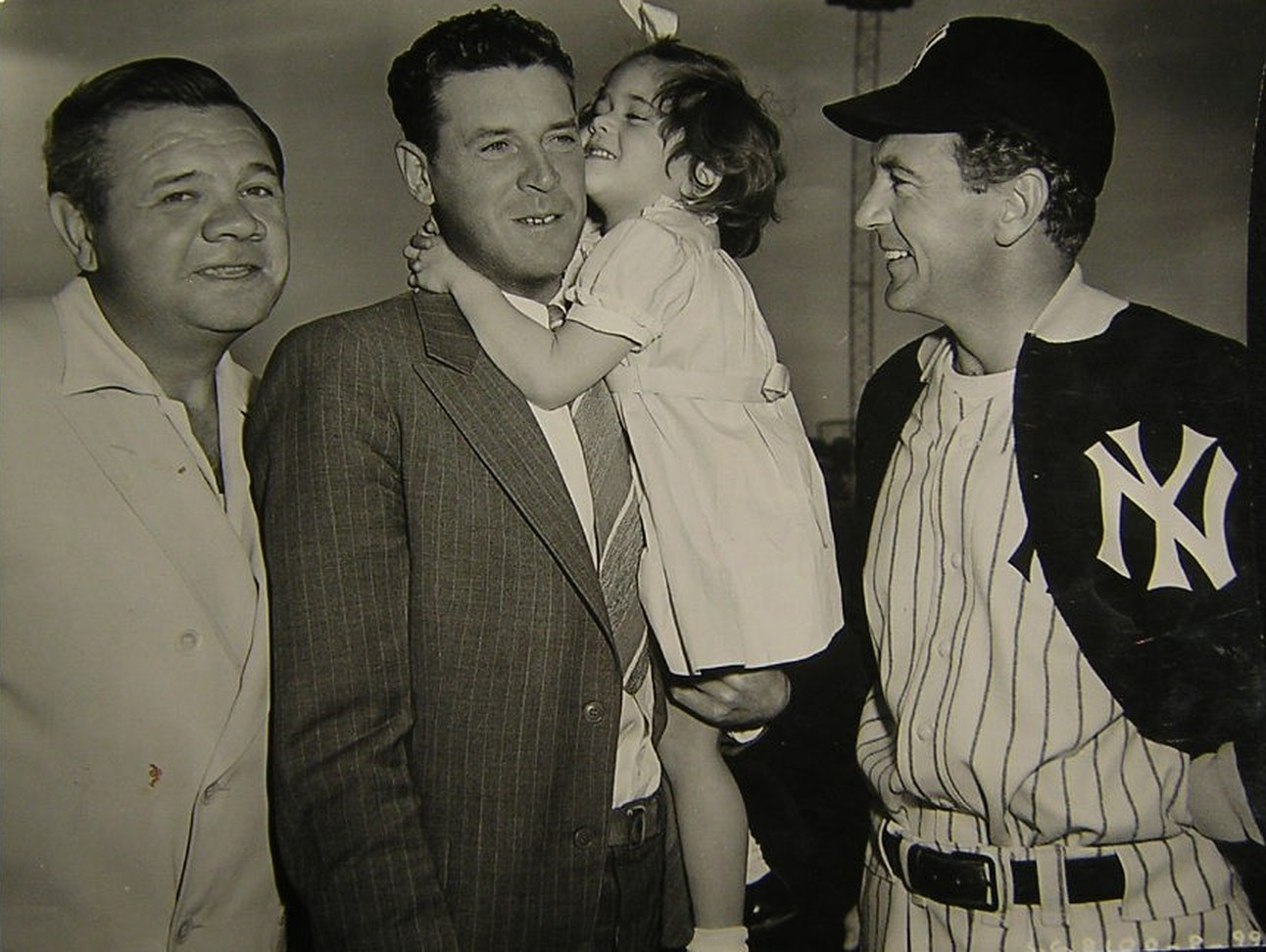
Babe Ruth and Gary Cooper Get A Visit From Former Yankee Bob Meusel & His Daughter

When Babe Ruth played himself in the classic film The Pride of The Yankees (1942) he had not played for seven years. Since his retirement, Ruth’s weight had ballooned to 270 pounds. The Babe wanted to look good for the film, not that he would ever look as svelte as Gary Cooper, starring as Babe’s teammate Lou Gehrig, but at least he tried.

Before filming began Babe went on a diet and shed over 47 pounds to look more like he did in his playing days.

Some former Yankee teammates appeared for short cameos including Bill Dickey, Mark Koenig and Bob Meusel. Continue reading

Yankee Stadium As You’ve Never Seen It – 1928

An Empty Yankee Stadium Was Used As A Filming Location For Buster Keaton’s “The Cameraman”

Here Are Some Views Of A “Different” Yankee Stadium In 1928

90 years ago, Buster Keaton made The Cameraman, a comedy in which he played a newsreel cameraman trying to get newsworthy footage. Many of the scenes were shot on location in New York City.

In one scene Keaton figures he’ll head up to the Bronx and film some baseball action sequences. He arrives at Yankee Stadium and hurries in with his camera ready to catch the Bronx Bombers, only to discover the Yankees are not playing that day.

That does not stop Keaton from indulging in fantasy, as the empty stadium looms as a backdrop to his antics.

In real life Keaton was a baseball fanatic. This was a time when many Hollywood studios had their own baseball teams and played against one another. In the written application to work with Keaton’s company, there were two questions on the form:  1. Are you a good actor? 2. Can you play baseball? If you answered yes to both you probably could get a job working with Keaton.

Yankee Stadium opened in 1923. Over the next ten years constant changes occurred to the dimensions, seating and field itself creating the classic Yankee Stadium that most fans are familiar with either first-hand or through old photographs.

Presented below are stills from Buster Keaton’s classic film, The Cameraman.

In the opening Yankee Stadium sequence Keaton enters through center field. Note the unfinished right field stands. As originally configured, straight away center field was over 490 feet away from home plate! The bleachers could hold over 10,000 fans. The flagpole was on the playing field and there were no plaques or monuments in Yankee Stadium yet, honoring the “greats.”

A locker room manager emerges from the dugout to tell Keaton, the Yankees are not at home. If you look at the “box seats” you can see that they  are really “boxed” off with movable chairs. Continue reading

Red Sox Star Bobby Doerr’s Death At 99 Ends An Era

Hall-Of-Famer Bobby Doerr Who Died On Monday November 13 Was the Last Living Major Leaguer Who Played in the 1930s

Bobby Doerr, Johnny Pesky, Ted Williams – 1963

Shades of 1946- Three stars of the last Red Sox American league championship team of 1946 (L-R)  Bobby Doerr, Johnny Pesky and Ted Williams are working together in the Red Sox 1963 training camp in Scottsdale, Arizona to bring the Red Sox back to the position where they will seriously challenge the Yankees again for the pennant. photo: Sporting News April 1963

When Bobby Doerr passed away at the age of 99 this week, he had been the last ballplayer to have played major league baseball in the 1930s. At the age of 19 Doerr debuted in the major leagues on April 20, 1937.

Think about that for a moment. That was over 80 years ago. Doerr played against Lou Gehrig, Mickey Cochrane, Rogers Hornsby, Goose Goslin, Ossie Bluege and Mule Haas.

Edde Stanky takes the throw as Bobby Doerr steals second base in the seventh inning of the 1947 All-Star game. Doerr later scored the winning run.

Doerr was a nine time all-star who had to retire prematurely at the age of 33 due to back problems. As great of a player Doerr was, he was an even better human being.

You get that assessment from the many people in and out of baseball who knew the man.

If  you love baseball and have never read David Halberstam’s book, The Teammates (Hyperion) 2003, you should. This will give you a sense of Bobby Doerr, the man.. Continue reading

Was Game 5 “Greatest World Series Game Ever?” Who Knows? The Game Ended At 1:40 A.M When Most Of The East Coast Was Fast Asleep

Was Game 5 Of The 2017 World Series The Greatest World Series Game Ever Played?

How Many Were Still Watching When The Game Ended At 1:40 am EST?

WORLD SERIES game 5 2017 1:39 A.M EST

I started watching game five of the World Series with the Houston Astros and Los Angeles Dodgers on Sunday night.

It looked like it was going to be a great game. The Astros had overcome two deficits and at 11:30 pm the score was tied 7-7 and it was only the sixth inning.

But like most people on the east coast who had to get up for work in the morning, it was getting near time to turn in for the night.

Some  children might get a pass and be allowed to stay up til midnight, but not many, because there is school the next day. And the adults? As much as they want to watch, they know they have real life obligations that require not being exhausted the next morning.

Over 19 million people watched the game but viewership peaked between 11:45  – midnight EST. After that, a steady drop-off in viewers occurred as the game went on and on.

The winning run – game 5 2017 World Series

It did not surprise me that the game ended with a dramatic 13-12 Astros extra inning victory. What was surprising was that the game lasted until 1:40 in the morning. Total time of the game: five hours and seventeen minutes!

How many millions of people missed seeing this great game because of how long it lasted and its starting time? We’ll never know. All I know is that I did not see its conclusion, nor did any of my friends.

As I will continue to point out in story after story, Major League Baseball needs to get their priorities straightened out.

Is it more important to run nonsensical advertisements featuring children “you’re a bigger fan than me? Prove it.” to sell officially sanctioned MLB garbage? Or is it more important to have that target audience watching the games?

Why a Sunday World Series game was not played during the daytime is simply because FOX TV gets to dictate the start time and derive maximum advertising revenue. Money is more important than the future of the game. Continue reading

6 Ways Television Is Helping To Make Baseball Unwatchable

How Television Has Helped To Ruin Baseball

Watching the game from center field – the only way an entire generation of TV director’s have decided to televise baseball

Here are just a few of the ways television has helped to ruin watching baseball. None of the corrective suggestions will be heeded, but someone has to point it out.

1 – The camera angles

Guess what? About 80% of the time you’re not watching baseball. What you are seeing is four guys – a pitcher’s back, a catcher, a batter and an umpire.

What kind of a lead is the runner taking? Where are the outfielders shaded? Is the overused shift in effect? Where was that ball hit? Is it going to be a hit?

How would we know? The audience rarely sees any other part of the field except from the center field camera.

Unless you attend games in person and sit in center field with a high power telescope, this is not the way anyone views an entire baseball game. Nor should it be the way to televise one.

It would be nice to see the return of the overhead mezzanine high camera from behind the catcher so we can see the whole field.

So here are two angles from behind the plate – one high and wide the other not as high. Both of these camera angles are more conducive and infinitely superior to the view you see on most broadcasts.

2- The busy screen

I don’t know about most people but I want to watch a baseball game, not be diverted by ads and a constant scroll of information.

While not every channel is guilty of the news scroll on the bottom of the screen, your view is still cluttered with unnecessary information.

Watching the World Series there are no other scores or news to scroll on the screen so you won’t see the scroll there. Yet that doesn’t stop clutter.

Showing “Fox World Series Game 1” in the upper right hand portion of the screen for the ENTIRE game? Does the score, runners on base, balls and strikes, number of pitches, pitch speed and all other sorts of information need to be shown every second of the game?

Go watch a game from the 1980’s or earlier. How did people enjoy the first 40 years of baseball telecasts with just having the game and nothing else on the screen? Quite well.

Check out a random pre-1980 baseball broadcast on Youtube to see what I mean.

3 – The damn box superimposed around home plate

With the exception of a few local broadcast outlets, most networks televising baseball have adapted their own version of a strike zone box. And it’s getting to be de rigueur instead of a special feature.

This horrible innovation that began a few years ago is an artificial rectangular box on the TV screen surrounding home plate, that supposedly identifies the strike zone and differentiates strikes from balls. Unfortunately it is in the direct line of sight of the television viewer.

The worst part about it is you can’t ignore it. Continue reading

How Baseball Fans “Watched” The 1911 World Series

Before Radio Or Television If You Didn’t Have A Ticket To The World Series – You Could Still Watch It On The Play-O-Graph

Advertisement for the “wonderful Automatic Play-O-Graph” – Philadelphia Inquirer Oct. 13, 1911

In August, 1911 with $10,000 capital, John W. Baker, Henry H. Abbott and Sumner Ford incorporated the Baseball Play-O-Graph Company in Stamford, Connecticut. The men devised a way of transmitting the actions of sporting events “live” through telephone and telegraph.

The depiction of baseball games through mechanical means had been accomplished previously, but not showing the track of the ball, which was what made the Play-O-Graph unique. The Play-O-Graph would show the action without the aid of electric lights.

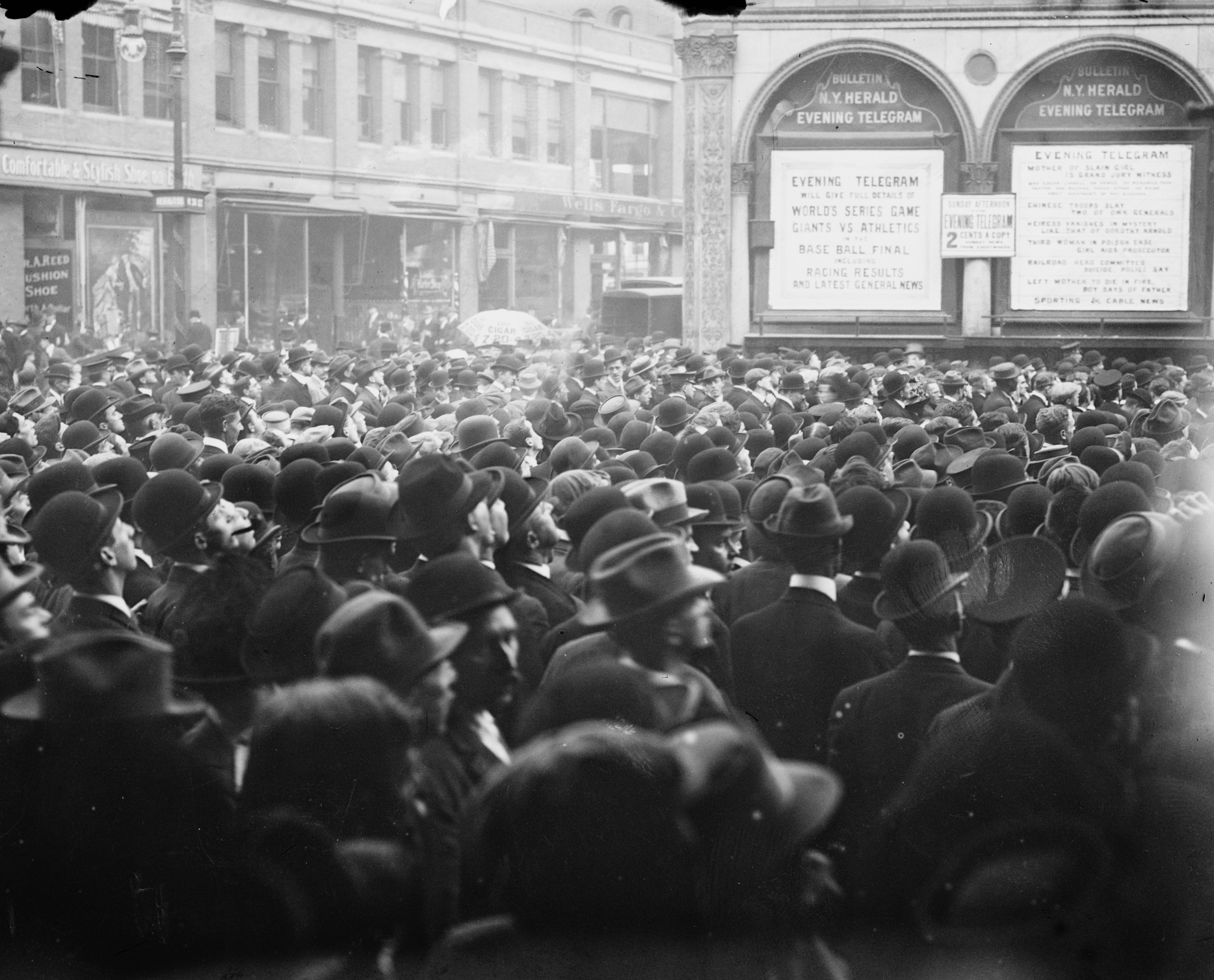
Baseball fans congregate outside the New York Herald Building during the 1911 World Series

In October of 1911 the American League champion Philadelphia Athletics lead by manager Connie Mack would play John McGraw’s New York Giants for the World Championship.
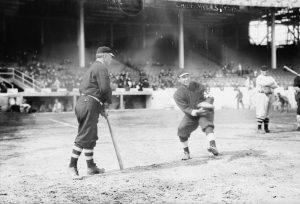
Giants manager John McGraw (l) and catcher Chief Myers (r) at Polo Grounds before 1911 World Series.

Giants manager John McGraw (l) and catcher Chief Myers (r) at Polo Grounds before 1911 World Series.

There were a couple of oddities in the 1911 World Series. Each game alternated cities with games one, three and five being played in New York and games two, four and six played in Philadelphia. The other strange occurrence was that there was a one week delay between games three and four as a deluge of rain hit Philadelphia for six straight days.

After inspecting the field for playability causing the fifth straight postponement of game four, umpire Bill Klem joked, “There was a pool around second base big enough for a diving exhibition by (swimming champ) Annette Kellerman. I was unable to locate the home plate for the lack of a diving apparatus. The outer gardens would make excellent pasturage for a herd of hippopotami.”

Both teams were considered evenly matched and felt confident they could win the series. Since 1904 each team had won three pennants.

Line outside the Polo Grounds at 7:00 am to buy tickets for game 3 of the 1911 World Series. photo: Bain

When tickets for the opening game of the World Series went on sale on Friday, October 13 at the Giants home field, the Polo Grounds all the tickets were gone within two hours. After the sell-out, the regular ticket price of three dollars shot up to five, six, seven and eventually eight dollars from speculators (scalpers) who had scooped up as many tickets as possible.

With over 38,000 fans cramming the ballpark it would be difficult to see the game without a ticket.

That would be where the Play-O-Graph would come into use. Setting up their machines at four locations in the United States, fans could see the game as it transpired.

“When the pitcher pitches the ball and when the batter hits it and when he is thrown out, is all shown upon the Play-O-Graph. Every move of the game is made clear to the spectator who watches the ball as it moves from place to place upon the board,” the company proclaimed.

The company installed two boards in New York, one in Chicago, one in Detroit and one in Philadelphia. Continue reading

The Night The Audio System Failed At Yankee Stadium

30  Minutes Of Baseball Bliss As The Audio System At Yankee Stadium Fails – September 14, 2017

9 14 17 Yankee Stadium audio difficulties signThey say if you go to a baseball game there’s always a chance you’ll see something you’ve never seen before.

But it’s not only what I had never seen before, but what I didn’t hear. What happened Thursday, September 14, 2017 during a Yankees – Orioles game was unusual.

For the first time in my life, I attended a major league baseball game and the national anthem was not played before the start of the game. No, it wasn’t the second game of a real doubleheader (remember those?)

Not only was the national anthem not played, no sound was heard in the ballpark except the cheers of the crowd, calls of the vendors and crack of the bat. Continue reading

Gene Michael Architect Of Late 90s Yankees Dynasty Dies at 79

Gene “Stick” Michael Was More Responsible For The Yankee Championship Teams In The Late 90s Than Anyone Else

Gene Michael awaits the throw to second base as Chicago White Sox shortstop Luis Aparicio makes his slide (1970).

Former Yankees shortstop, manager and general manager Gene Michael died today September 7, 2017 at the age of 79 of a heart attack at his home in Oldsmar, FL.

Michael was a slick fielding light hitting shortstop who played on Yankees teams from 1968 – 1974, that were a shadow of the former Yankee teams.  From 1921 -1964 the Yankees had appeared in 29 World Series, winning 20 of them.

If The New York Yankees futility of the late 1960s and early 1970s was epitomized by their second baseman Horace Clarke, then Gene Michael would unfairly be attached to that failure with his double play partner.  Horace Clarke, was a career .256 hitter and average fielder who hit a total of 27 home runs with the Yankees from 1965 – 1974. Because Clarke’s career coincided with that of Michael’s the two were paired together unfairly as the face of Yankee ineptitude.

But there was never any question that Gene Michael was a decent ballplayer and a great competitor.

The “Stick,” as the six foot two skinny shortstop was nicknamed, had baseball smarts and could execute the plays a lot better than an average player. That is what kept Michael on the team. A .229 lifetime average usually won’t ensure your spot on a major league roster unless you can hit thirty or more home runs a year. Yet Michael was valued by teammates and some fans as a hard-nosed, crafty ballplayer.

One thing that Michael did that you rarely see anymore was pull the “hidden ball trick.”Michael said he would only pull it if his pitcher was in trouble.

Michael would have the ball in his glove as the pitcher would be getting ready to pitch and Michael would sneak up on an unsuspecting runner as he began to take a lead off second base and apply the tag. It’s called a bush league play today. Completely unprofessional. I disagree. It showed smarts and initiative to pull it off and I question why it is not tried more often today. I once witnessed Michael do this in person and didn’t realize what had happened.

Michael was smart in other ways. In a May 25, 1973 game against the Texas Rangers Continue reading