Jefferson Market Courthouse, Greenwich Village – 1885
An 1897 book, The Greater New York Guide Book, Manhattan Historic and Artistic by Cynthia M. Westover Alden described the Jefferson Market Courthouse quite simply as “an irregular but unique and handsome structure, built of red brick and sandstone, in the Italian Gothic style.”
In 1885 at 9:25 in the morning according to the clock in its tower, James R. Osgood photographed the Jefferson Market Courthouse for American Architect and Building News.
Since originally being published, this crisp and clear photo has remained unseen for over 130 years.
This view looking southwest is one that has changed in 130 years. but would still be recognizable to any resident of Greenwich Village today. The courthouse still stands on its irregular plot of land at the intersection of Sixth Avenue and 10th Street and is the pride of Village residents.
When completed in 1877 by architect Frederick Clarke Withers, the Jefferson Market Courthouse was the epitome of stylish Victorian design. As can be seen in the photograph, surrounding the courthouse along 9th Street, Greenwich Avenue and part of 10th Street was the original Jefferson Market, which began functioning in 1832. The group of buildings housed butchers, fish peddlers and produce dealers. Over the years however, the market became home to a magistrate’s court, a women’s court and a series of cells to temporarily hold women prisoners.
The Jefferson Market was demolished in 1929 for a building that would become the Women’s House of Detention. While excavating on the site for the prison, the workers hit upon the Old Minetta Creek. A 25 foot diameter space quickly filled with 10 feet of water and several pumps were needed to drain the site. Continue reading →
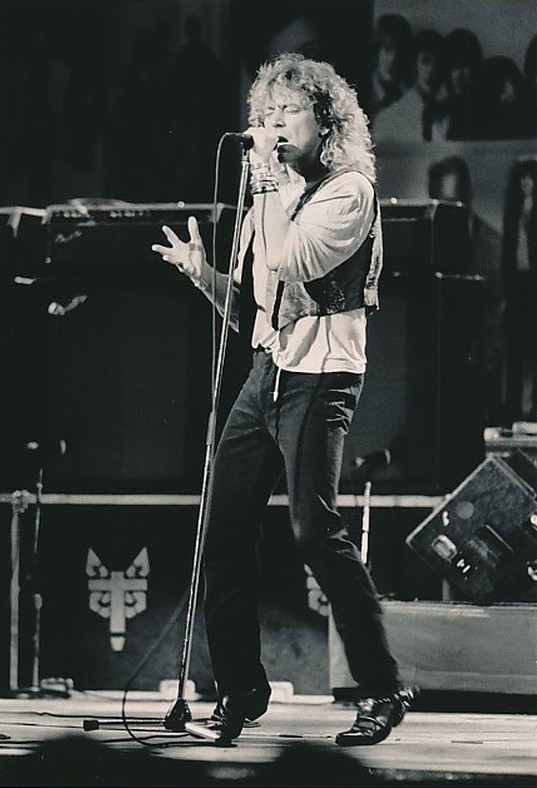
Robert Plant Finally Performs The Iconic Song “Kashmir” As A Solo Act At The Royal Albert Hall in London Tuesday March 14, 2017
Kashmir, the name itself conjures up grandiose images of the mighty Led Zeppelin at their peak of performance.
But for whatever reason former Zeppelin vocalist Robert Plant refrained from performing the song without co-writer and Zeppelin guitarist Jimmy Page, that is until Tuesday night, March 14, 2017.
In a performance with two members of Plant’s solo band The Sensational Space Shifters, Plant joined famous violinist Nigel Kennedy at the Royal Albert Hall in London..
For the first time since 2007 when Led Zeppelin reunited at the O2 and played Kashmir, Plant decided it was time to play the song on his own. Every other live performance of Kashmir by Plant had been alongside Jimmy Page, whether it was in the 1990’s on the Page/Plant tour or with Led Zeppelin in the 1970’s.
With a full orchestra backing Plant, he starts off Kashmir in a dirge-like manner. You immediately think he has turned Kashmir into a slow whispered lament. Finally after the initial introduction to the haunting first phrase of lyrics, Plant and the band kick off a powerful performance of a revised version of Kashmir.
6 Drawings Of New York Unseen For Over 100 Years By Vernon Howe Bailey
Times Square The Great White Way (1911)
Obscure publications can yield hidden gems. These drawings by famed artist Vernon Howe Bailey appeared in the Illuminating Engineer in 1911 and as far as can be determined have not been reproduced since then.
Vernon Howe Bailey (1874-1953) was a prodigious illustrator whose work appeared primarily in newspapers and magazines.
He eventually made his way to the New York Sun newspaper in the 1920s where he captured New York’s architecture and streets with exquisite on-the-spot illustrations.
Eventually a good deal of Bailey’s New York City work was compiled in a book called Magical City. These illustrations were not included in that book. So for the first time in over 100 years here are Vernon Howe Bailey’s renderings of New York City in 1911.
Looking North on the Speedway to the Famous High Bridge (1911)
As these illustrations were intended for a magazine promoting electric lighting, you will notice that electric light fixtures appear rather prominently in each illustration.
The Harlem Speedway, where wealthy New Yorker’s used to take out their horse drawn carriages for a spirited run, was eventually incorporated into the highway that became the Harlem River Drive. Continue reading →
To call George Carlin a comedian would be a narrow definition of who he was. My best description would be: a brilliant social commentator with observations wrapped in comedy aimed at the masses to induce critical thinking with laughter.
Normally we abstain from profanity on this web site. You can say a lot without having to resort to vulgarisms. But integral to George Carlin and his performances was his use of profanity. If the truth is wrapped in profanity, then the truth will be voiced here.
Here is the late George Carlin’s explanation of who runs America and reminds us that we are not members of “the club.”
MLB About To Introduce Two Ridiculous Rule Changes To “Speed Up” The Game.
Why The Changes Are Bad And What They Should Do Instead.
These fans watching baseball in the 1940s don’t look bored at all. That may be because the average length of a 9 inning baseball game in the 1940s was about 2 hours and 15 minutes.
Baseball is a slow and boring sport. The games are too long. There is not enough scoring.
These are some of the complaints that have been lodged against the National Pastime.
The only part I’ll agree with is that the games are definitely too long.
MLB executives and the players union are trying out two changes this year in the minor leagues to speed up the game. After trial periods, it is likely these changes will be permanently adapted in the major leagues. They may indeed speed up games by a few seconds. For the vast majority of games these changes will have little effect and do more damage than good to the overall structure of baseball.
There are other changes that would be more practical and easy to implement to dramatically shorten all games without changing baseball itself. I’ll discuss that after we review the two proposed MLB rule changes.
The first proposed rule change is that a team will be able to declare an intentional walk without the pitcher throwing any pitches. The pitcher’s manager will just signal for an intentional walk and the batter will go to first.
The second rule change is even sillier. In extra inning games, starting in the tenth inning each team when they come to bat will start the inning with a man already on second base.
So why are these changes beyond foolish?
Let’s look at the first proposal, the announced intentional walk. Although it sounds like an easy strategy to walk a batter intentionally, it is sometimes not so simple to throw four balls that are nowhere near home plate.
There are pitchers, such as the Yankees Dellin Betances, who when called upon to execute an intentional walk, every ball they throw can be an adventure. A wild pitch is always a possibility. Lobbing the ball to the catcher is hard for some pitchers. There are also quite a number of pitchers who throw the ball too close to the plate, so the batter can swing at the ball. Every now and then you’ll see something that you rarely see. Here are just two recent examples.
Miguel Cabrera drives in a run on an intended intentional walk.
Gary Sanchez of the Yankees nearly hits a home run on a pitch that was meant to be a ball.
As I pointed out many pitchers really have a hard time throwing a ball intentionally outside of the strike zone when the situation is called for. This is far more common than you might imagine. Wild pitches can change the outcome of a ballgame, especially with runners on base as seen here in multiple cases:
Then there is the opposite effect, where the defense pulls a tricky play.
In the early 1970s I recall seeing Reds superstar Johnny Bench get fooled at the plate. It happened on the biggest stage possible; game three of the 1972 World Series.
Bench had a 3 and 2 count when A’s manager Dick Williams paid a visit to the mound. Williams talked with pitcher Rollie Fingers and catcher Gene Tenace and made it seem like Williams told Fingers to intentionally walk the dangerous slugger. Because as Tenace returned to the plate to await the next pitch from Fingers, Tenace, stood up, put his hand out calling for an intentional ball four.
And guess what? Tenace jumped right back behind the plate and Fingers threw a slider for strike three, stunning Bench and everyone watching. It was a deft move you don’t see very often.
I couldn’t believe that I found the moment on YouTube.
In 1996 Dennis Martinez and Tony Pena of the Indians, successfully pulled the same move on Blue Jays star John Olerud.
It’s true, these flubs are extremely rare, but they do occur. The automatic intentional walk is a shortsighted rule change and ends up removing strategy from the game.
One other thing: how does the new rule go down in the record books? Will the pitcher be credited with four pitches thrown? What happens when you are at three balls and one strike, do you just declare the walk when you want to intentionally pass a batter or does the pitcher still have to throw a pitch?
The second rule change of starting the inning of an extra inning game with a man placed on second base to begin the inning is simply ludicrous.
No nail-biters anymore, no strategy – it’s just get this game over with. This is what MLB is saying.
Joe Torre, MLB’s Chief Baseball Officer, is in favor of bringing the rule to the major leagues if the minor league experiment works.
Torre said, “Let’s see what it looks like. It’s not fun to watch when you go through your whole pitching staff and wind up bringing a utility infielder in to pitch. As much as it’s nice to talk about being at an 18-inning game, it takes time.”
Really Joe? How many games went to 18 innings or more in the past ten years? How many times did a manager use their whole pitching staff?
In the entire history of Major League Baseball there have only been 46 games that have gone more than 19 innings. On average less than 10 games per year last 15 innings or more. If a manager goes through his entire pitching staff, well he’s not a good manager. Believe it or not many fans enjoy marathon games. It’s the time of those exciting games that gets people sleepy, not the number of innings.
If you want to ruin baseball then this rule change is perfect.
By the way: how would the scoring work for putting a runner on second? Idiotically.
The pitcher didn’t allow the runner on, so why penalize him and the team when a ground ball to second for an out advancing the runner to third and then a fly ball can result in a run. The pitcher and the team was essentially defensively effective, but could lose the game.
This rule is MLB being lazy and coming up with a dumb solution just to shorten games and appeal to younger fans with limited attention spans. It’s like MLB took a page out of the NHL rule book with hockey’s overtime shootout to decide tie games. That adjustment has been horrible for hockey and its fans.
Now what are the ways to speed up baseball games significantly?
Change # 1 – Enforce rule 5.07 (c) of the Major League Baseball rule book which states: “When the bases are unoccupied, the pitcher shall deliver the ball to the batter within 12 seconds after he receives the ball. Each time the pitcher delays the game by violating this rule, the umpire shall call “Ball.”
The 12-second timing starts when the pitcher is in possession of the ball and the batter is in the box, alert to the pitcher. The timing stops when the pitcher releases the ball. The intent of this rule is to avoid unnecessary delays. The umpire shall insist that the catcher return the ball promptly to the pitcher, and that the pitcher take his position on the rubber promptly. Obvious delay by the pitcher should instantly be penalized by the umpire.
Did you realize rule 6.02a (8) says:
If there is a runner, or runners, it is a balk when: The pitcher unnecessarily delays the game;
Have you ever seen that enforced? I haven’t. But I’ve seen pitchers call the catcher to the mound six separate times for one batter or take over 30 seconds between each and every pitch.
I’ve noticed and counted the time between pitches in many games. Most pitchers take between 22 -27 seconds to throw a pitch after receiving the ball back from the catcher. Some pitchers are agonizingly slow, like the Dodgers Pedro Baez (over 30 seconds between pitches) and Kenley Jansen (27 seconds between pitches). There are many hurlers who can transform their own fielders into a trance-like state with all that inactivity.
There’s no excuse for this. Watch R.A. Dickey or Mark Buehrle pitch and the game moves at a brisk pace. Unfortunately they are the exceptions. Most pitchers take wayyyyy too long between pitches. Put up a pitch clock and give the pitchers a little leeway- 15 seconds and have them throw the pitch or call it a ball. Figure saving at least 5 seconds per pitch with 260 total pitches being thrown. total time shortened per game: minimum 26 minutes Continue reading →
From An 1892 Guidebook – 10 Things You Didn’t Know About New York
14th Street between Fifth and Sixth Avenues in 1892 photo: KIng’s Handbook of New York
The old New York City guidebooks always contain interesting information. These facts are from an 1892 guide.
The New York Post Office handled over 600,000,000 pieces of mail matter annually. That may not be so amazing. What is amazing is that they had an annual profit of $3 million dollars!
Trinity Church is part of Trinity Parish. The Parish was the richest in America. Income from its real estate and other holdings amounted to over $500,000 annually
It was free to walk over the 9-year-old Brooklyn Bridge. Vehicles had to pay a toll of 3 cents each way.
At Centre and Franklin Streets stood the City Prison, better known as The Tombs, because of the architectural resemblance to Egyptian tombs. Before the death by electrocution law went into effect in 1889, all condemned murderers sentenced to death by the New York courts were executed in the Tombs. Continue reading →
While researching last week’s story about the 1904 record 6 1/2 hour automobile drive from Los Angeles to Santa Barbara, there were numerous advertisements that caught my eye in Motor World Magazine.
America’s passion for cars dates back over 120 years. How they were advertised in 1903 is fascinating to see.
What manufacturers choose to highlight in their offerings are sometimes very practical features, other ads feature the bizarre.
You will recognize only a few brands that survived the auto industry’s infant years. Most of these automobile names were eliminated from the market so quickly that many people living at the turn-of-the-century would not have known them.
Take a close look at this Northern Mfg. Co. car. There is no steering wheel. The car was steered by a tiller.
And you thought electric cars were new? Many companies had electric cars back in 1903 including Studebaker. The company touts that “no expert chauffeur is needed,” and is, “a successful hill climber” with its “perfect spring suspension” and “reliable brake control.”
Studebaker started as a wagonmaker in the 19th century and produced its last automobile in 1966.
Haynes – Apperson had a 12 horsepower Phaeton that apparently won some car races. Would that influence a potential buyer?
Packard produced this car marketed for “Physicians and Others.” With room for five people, this Packard would set you back $2,500. To give you some perspective $2,500 was about half the price of a new, modest three bedroom home. The Packard Motor Car Co. produced its last automobile in 1962.
The Autocar is a “Harmonious Whole.” Autocar is still in business and is run by the GVW Group LLC.
Conrad Motor Carriage Co. had a car for every price range, from $750 – $1,250. The $1,250 model got you three speeds sliding gear transmission with 12 horsepower.
I love the name of this car – The Chainless Cudell. One of the few cars advertised that had a roof! Continue reading →
6 ½ Hours From L.A. to Santa Barbara (And That’s With No Traffic!)
What has four cylinders, 24 horsepower, weighs 2300 pounds and gets you from Los Angeles to Santa Barbara in just under 6 ½ hours?
A 1904 Peerless automobile. Future millionaire Norman W. Church took out this ad for Peerless in the Sunday, June 5, 1904 Los Angeles Times.
For a trip that today can take three hours with moderate traffic, 6 ½ hours in 1904 is a miracle. The “roads” in 1904 were in a primitive state to say the least. Rural roads were frequently dirt paths filled with rocks and sand. Many times you’d have to drive through a field to get from place to place. Paved roads in California were a rarity, usually found in cities.
The interesting thing about the ad is that the Peerless will make the trip “without a single mechanical adjustment.” That indeed was a rarity as automobiles were constantly being tinkered with. You had to be your own mechanic or bring one with you, as breakdowns were frequent.
You may be wondering if the Los Angeles to Santa Barbara trip took six and a half hours, how quickly in the early 1900s could you drive from Los Angeles to San Francisco? Continue reading →
Two Views of New York’s Historic Madison Square Taken From the Flatiron Building 1903 & 1958
The New York Daily News used to do a feature, where they showed an old photograph of New York and had a modern photograph of the same scene.
From the newly completed Flatiron Building, here is Madison Square from about 1903.
Madison Square Garden and its tower are in the center of the photo. Brownstones and mostly low-rise buildings surround the Madison Square neighborhood. There are so few tall buildings that you can see the East River off in the distance. The building with the columns at the bottom of the photo is the Appellate Division courthouse. A small corner of Madison Square Park can be seen in the lower left,
Fast forward about 55 years and the changes are dramatic.
Daily News photographer David McLane had access from a similar vantage point in the Flatiron Building to take this photograph circa 1958. Continue reading →
New York City Souvenir View Book Covers From 1911 – 1919
New York of To-Day published by L.H. Nelson 1913
According to NYC & Company over 58 million people visited New York City in 2015. Many of them possibly bought a keepsake to bring back home; a t-shirt, mug or some other knick-knack.
Souvenirs have remained a constant in the world of tourism. Since about 1880, view books have been one of the souvenirs that appealed to visitors of New York City. With everyone now having a camera to photograph where they were and sights they have seen, view books are pretty much on their way to becoming extinct.
During their heyday from the late 1800s until the 1940s view books were a popular and inexpensive souvenir choice. Most view books ranged in price from a quarter to a dollar. They generally contained anywhere from a dozen to 400 photographs of buildings, tourist sights and attractions. Many had plain covers, while others had covers to attract the eye.
Going through my collection, I selected a few view books that date between 1911-1919.
These examples are relatively common for collectors. When they were new I think would have caught the eye of a visitor, because they are still striking today.
Scenes of Modern New York published by L.H Nelson 1911. A nice cover featuring The Williamsburg Bridge (completed 1902), The Fuller Building aka Flatiron (completed 1902) and The Subway (opened 1904).
New York Illustratedpublished by C. Souhami 1914. A colorful panorama of lower Manhattan taken from the Brooklyn tower. On the left is the tallest building in the world, The Woolworth Building (completed 1913). To the right is the 40 story Municipal Building (completed 1914). On the waterfront, South Street with its docks and shipping activity was still the hub of maritime New York. Continue reading →

 An 1897 book, The Greater New York Guide Book, Manhattan Historic and Artistic by Cynthia M. Westover Alden described the Jefferson Market Courthouse quite simply as “an irregular but unique and handsome structure, built of red brick and sandstone, in the Italian Gothic style.”