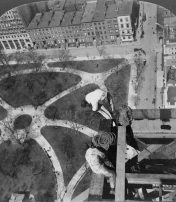
Metropolitan Life Insurance Building & 23rd Street – 1900
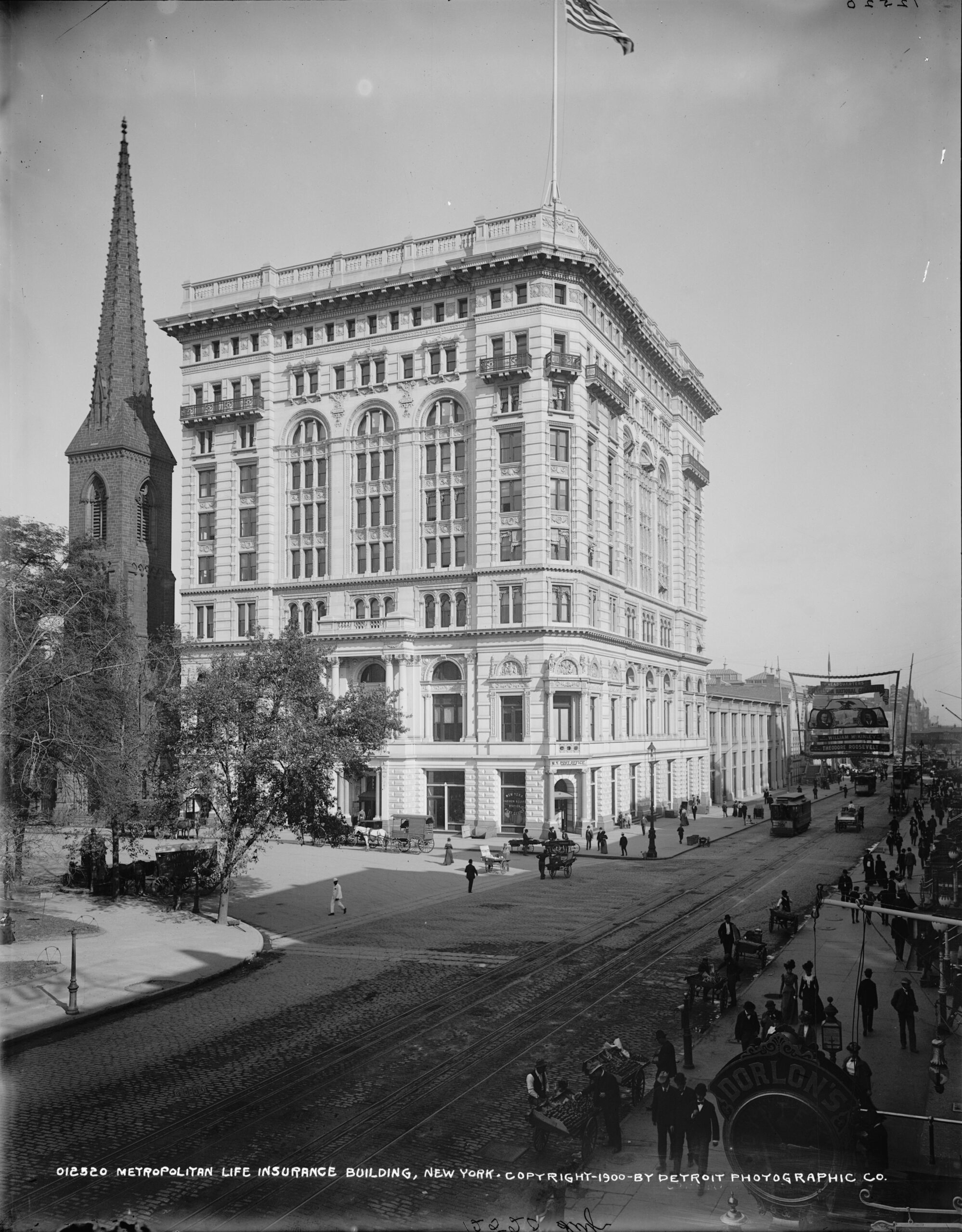 This Detroit Publishing Company photograph is from 1900. We are looking east along 23rd Street. The corner of Madison Avenue and Madison Square Park is visible on the left.
The 11-story building completed in 1893 is the home office of The Metropolitan Life Insurance Company.
To the left of Metropolitan Life is the Madison Square Presbyterian Church. The church was led from 1880-1918 by Dr. Charles Parkhurst, a vocal foe of municipal corruption, vice and human suffering. The Metropolitan Life Building would be expanded (1906-1909) by constructing a tower north of the original building.. The tower portion of the Metropolitan Life Building was built upon the site of Parkhurst’s church. The congregation would hire the architectural firm of McKim, Mead and White to build a new church in 1906 on the adjacent corner of 24th Street and Madison Avenue.
But with land being so valuable in the Madison square area, the new church was sold and demolished in 1919.
There are a few things in this photograph that might escape your notice with just a quick glance.
Some Details
In the background, a large banner stretches across 23rd Street.
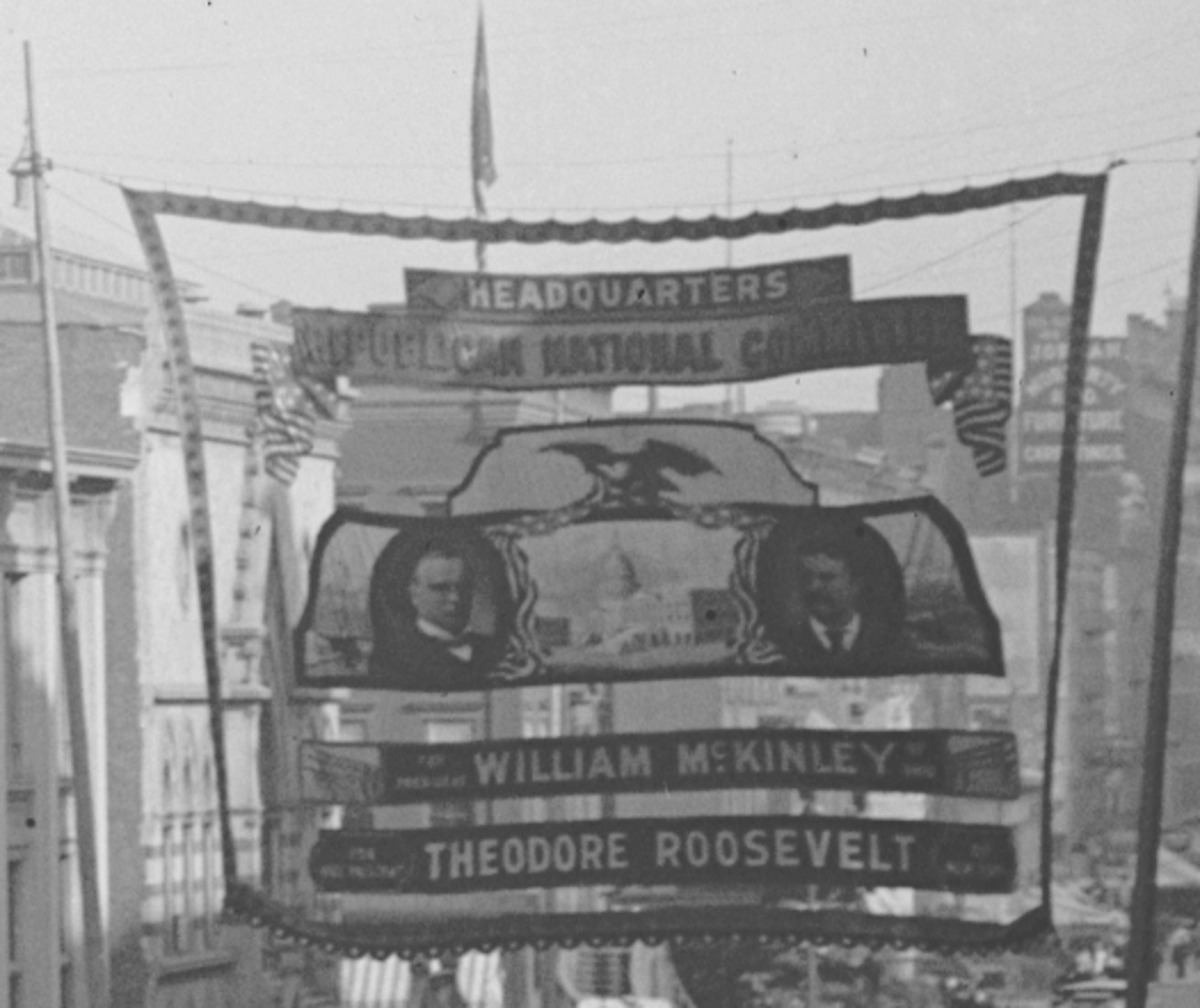 The sign promotes the headquarters of the Republican National Committee. The ticket of President William McKinley and New York Governor Theodore Roosevelt would prevail in the 1900 election.
In the foreground is a street clock with advertising. Written atop the clock is “Dorlon’s” and the bottom reads “6 & 7.”
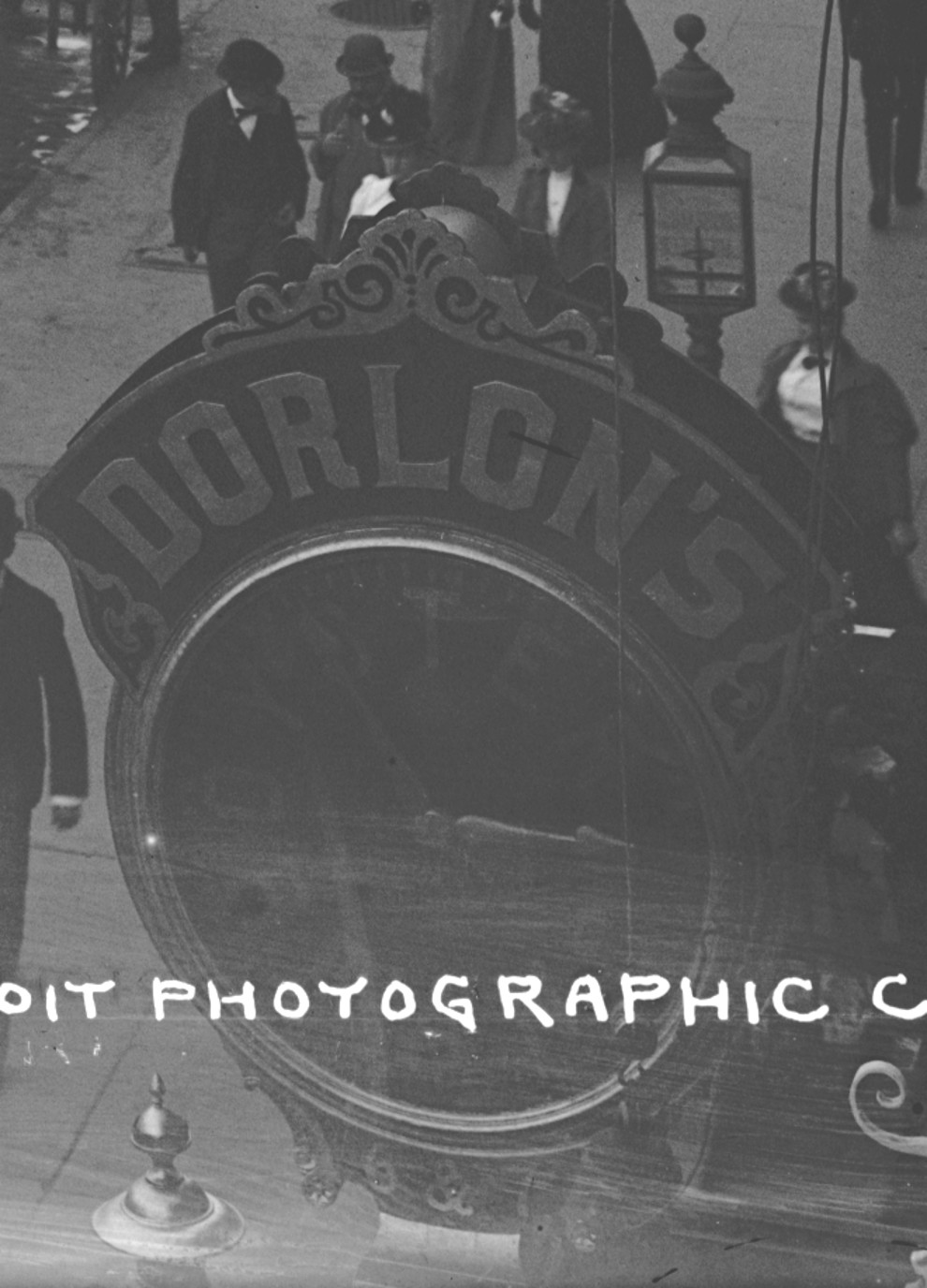 Dorlon’s was a popular oyster restaurant at 6 & 7 East 23rd Street with wholesale operations at Fulton Market as well as mobile oyster stands operating throughout the city. Barely visible on the clock’s face instead of numbers it spells out – OYSTERS.
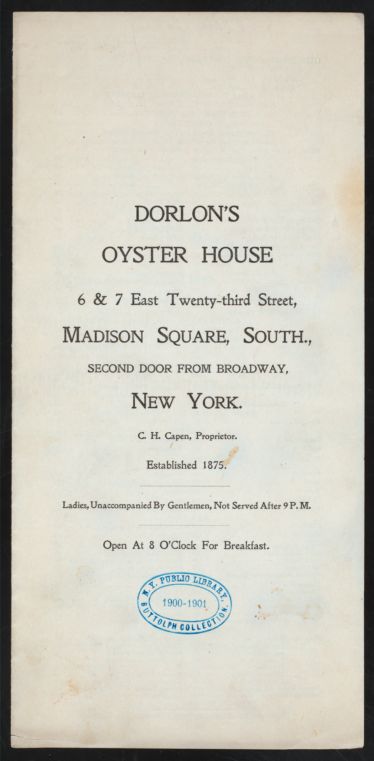 Dorlon’s menu from January 10, 1900 gives an idea of the fare served. The prices for oysters are by the dozen,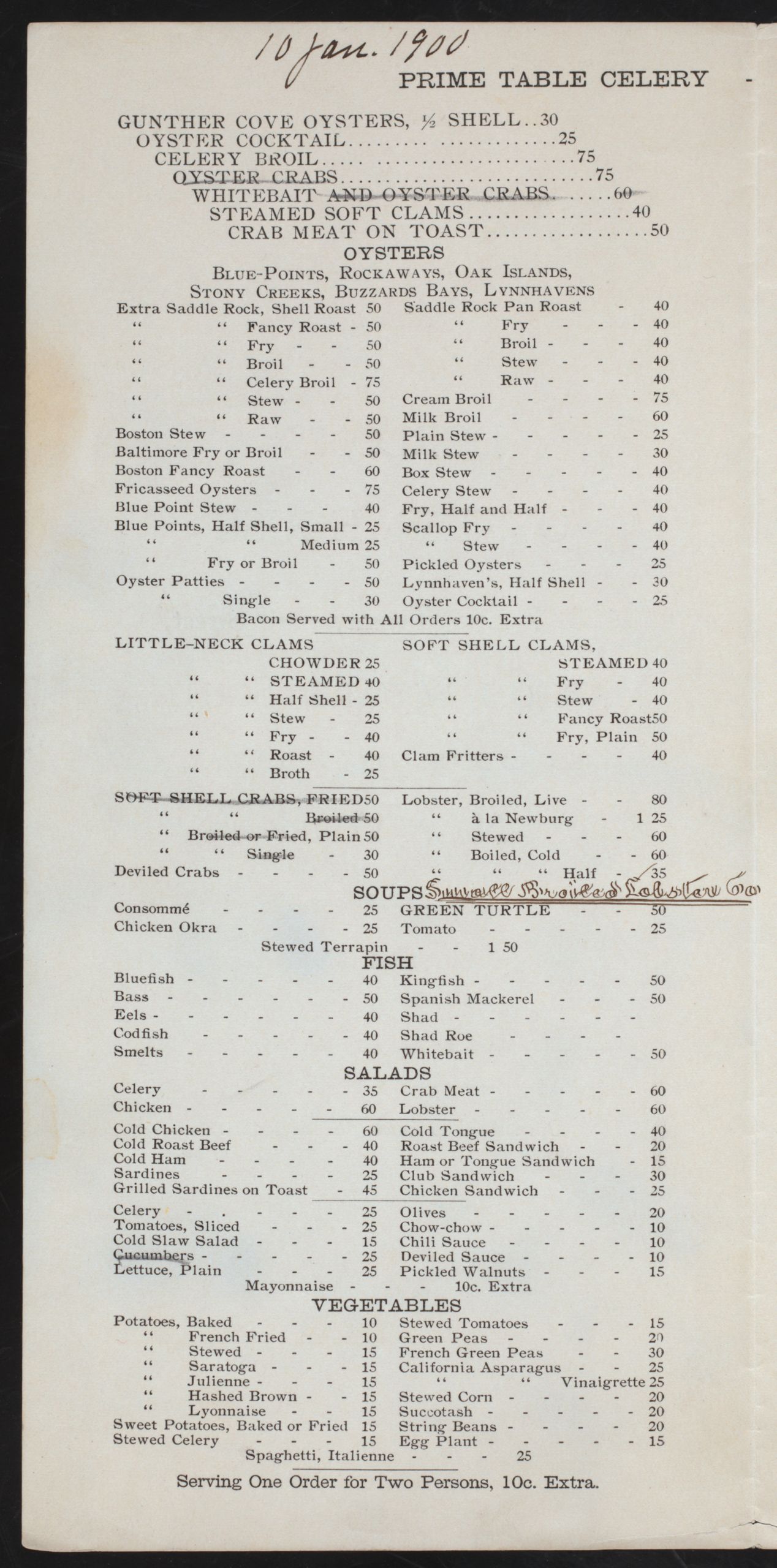
There are a number of vendors along the curb near the clock and several more vendors in front of the Metropolitan Life Building. The corner of Metropolitan Life houses the Madison Square Station of the New York Post Office, insuring a steady flow of potential customers.
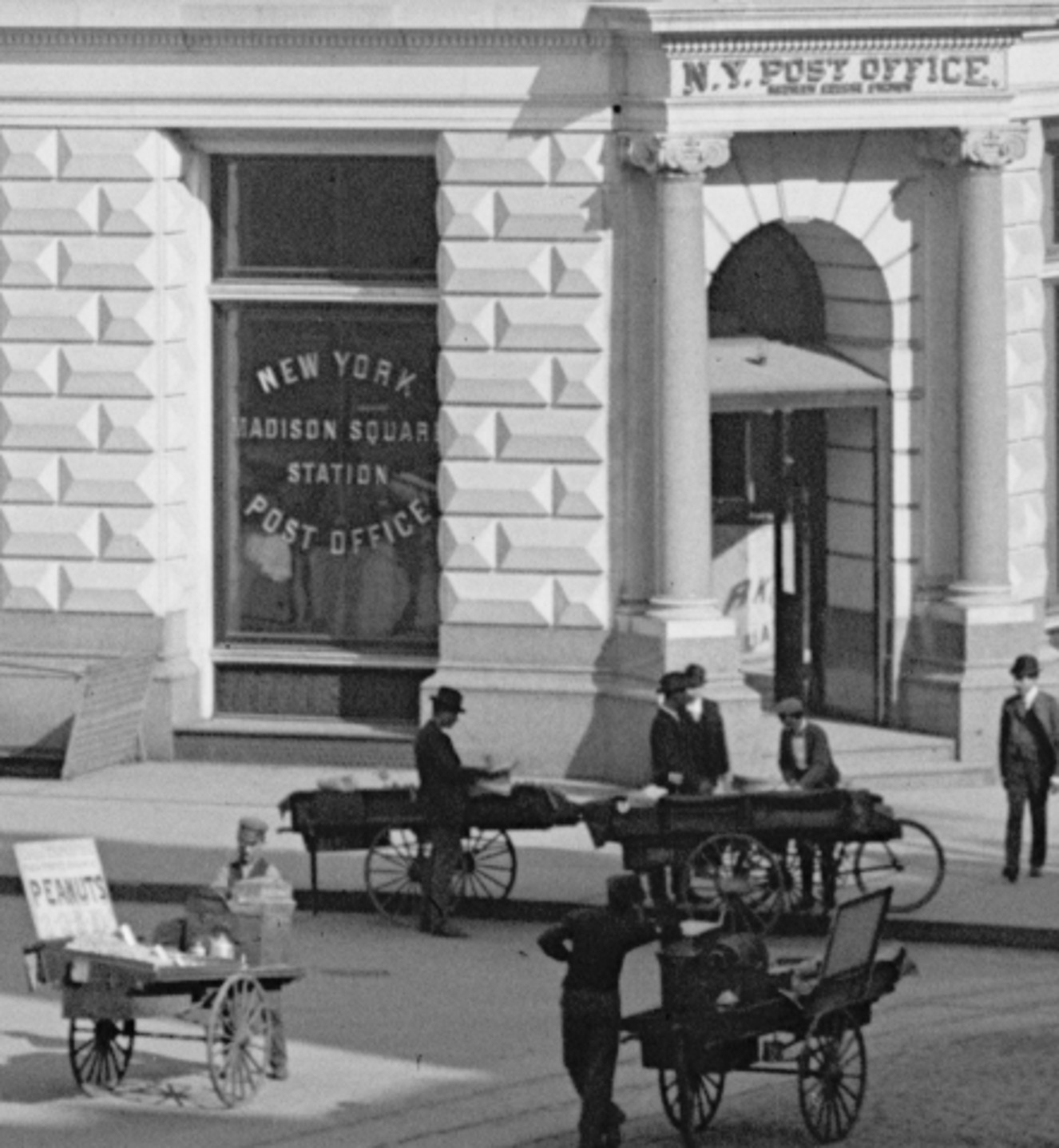 Similar to modern street vendors these manual pushcarts are offering various food items. Clearly one man is selling peanuts.
Finally, a delivery cart and hansom cab wait in front of the main entrance of Metropolitan Life.
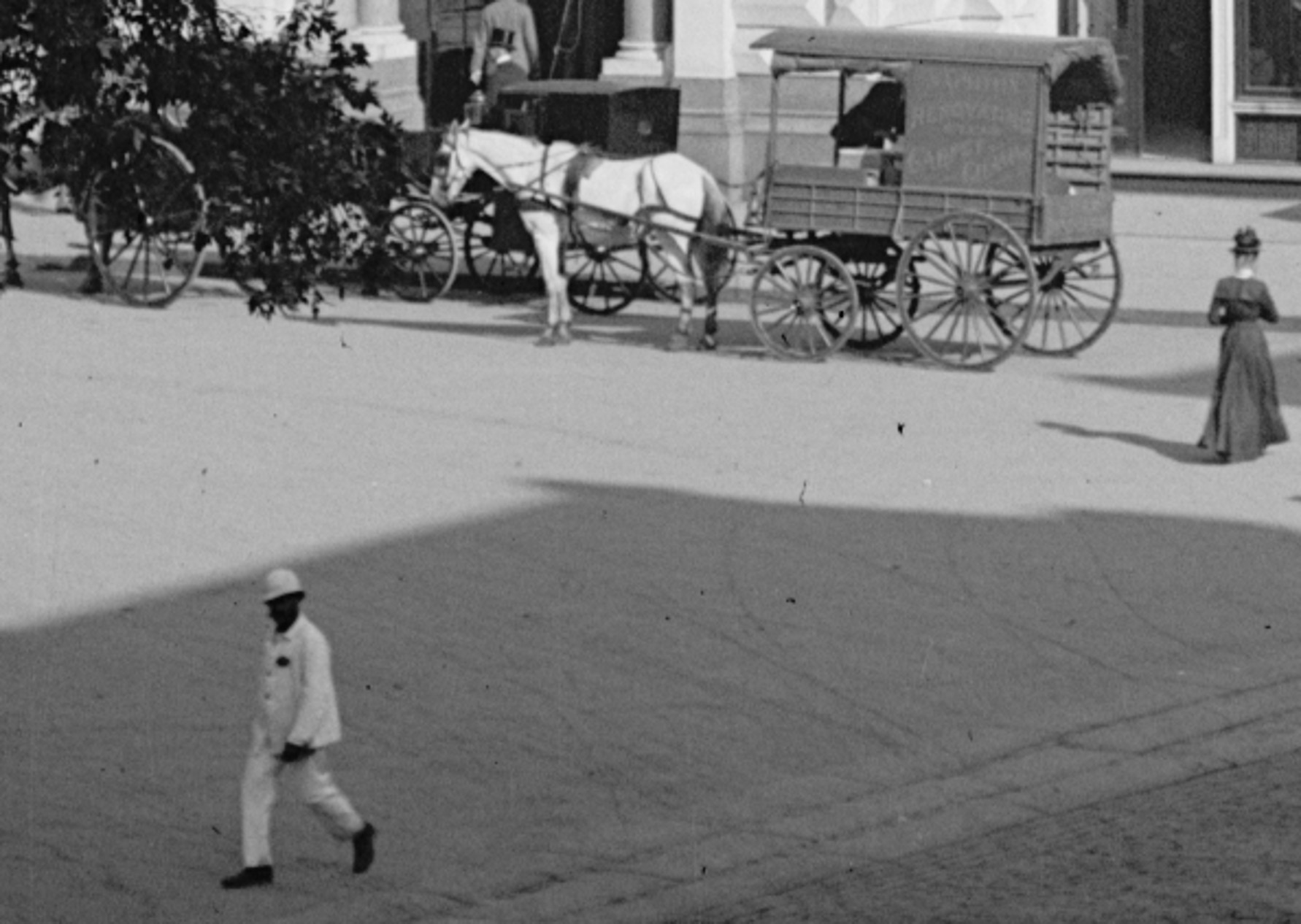 Crossing the street is a man dressed all in white with a pith helmet. Believe it or not he is a member of New York’s Sanitation Department. The “White Wings” as they were called because of the distinctive uniform, was the creation of Colonel George Waring (1833-1898). a sanitary engineer, who in 1896 would establish a modern street cleaning department for the city. The White Wings efforts dramatically improved the city’s cleanliness.