
Many Colonists Did Not Want To Break With Great Britain
“Loyalists” Were Merely On The Losing Side Of History Says John Hyde Preston
We all know the saying that history is written by the victors. But, as the United States celebrates America 250 on July 4, we don’t acknowledge an overlooked fact.
There were a great number of colonists that did not want to be free of England. These were the Loyalists; those remaining faithful subjects of King George III. And the Loyalists were the losers.
Many colonists had grievances with the King of England. But they did not necessarily wish to dissolve ties with Great Britain. As far as government, a great number of the colonists did not wish to “alter or to abolish it, and to institute new Government,” as the Declaration of Independence states.
Most Americans today assume the revolution was inevitable due to British oppression. They assume most colonists were rabid patriots starving for liberty and those loyal to the King were a small minority.
That is not the truth.
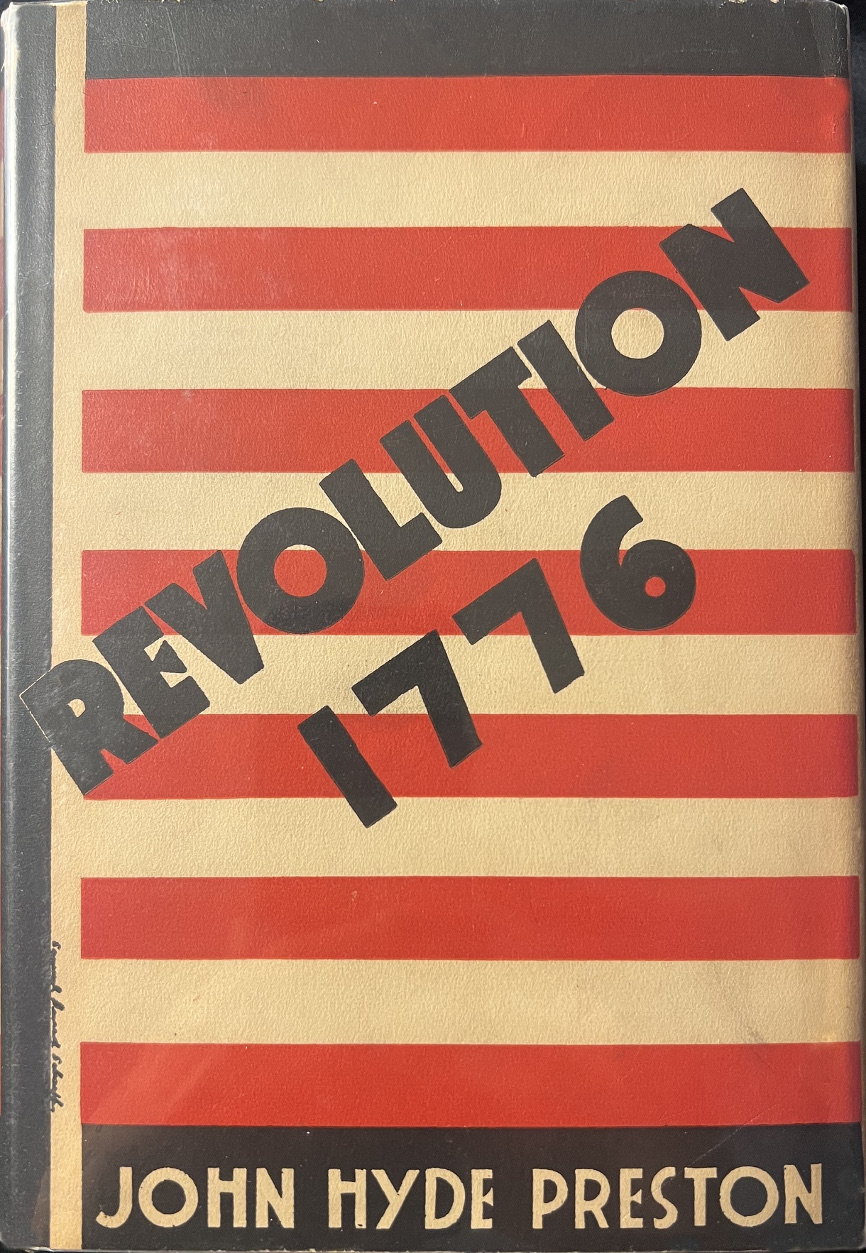
John Hyde Preston’s dynamic, yet forgotten history of the Revolutionary War, Revolution 1776, Harcourt, Brace and Company (1933), delves into the topic of the numbers when it comes to “Patriots” during the rebellion.
In two short passages, Preston lays out a fascinating analysis, parsing out which side the colonists were on. Revolution 1776 is long out of print. That is a shame because Preston’s writing is highly entertaining with its short, snappy prose.
Preston’s final words on the subject of “which side would you choose” are prescient, with the rise of today’s socialist / communist “revolutionaries.”
From Revolution 1776:
Part IX
It is rather breath-taking now—after all the bunk about unanimous resistance that our school histories choked down our young throats—to realize that 40 per cent of the population of the colonies was flamingly pro-British. Let us pause a moment for figures.
The total population of America on the day that Washington took command of the army at Cambridge was approximately 2,500,000. Let us say, generously, that half this total were women. That leaves 1,250,000 males. In the Revolution there was no age limit.
Men from sixteen to sixty fought side by side in the rebel army. Consequently—considering the appalling child mortality, which cut down most children before they reached sixteen—about five out of every seven males were within the limits of a draft. That leaves perhaps 892,850 effectives, But from this we must subtract the 40 per cent who were loyalists. 535,700 remain.
Now we must remember the element that were neither loyalist nor patriot. We must remember the lukewarm, the neutrals who trembled between the two extremes, vacantly waiting to see which side would win out. When the war was over and America triumphant, these people claimed to have been as patriotic as the rest. But during those seven soul-harrowing years these lukewarmers numbered about 25 per cent—or over 300,000—of the male population.
After all these eliminations, about 225,000 remain as the potential military equipment that Washington ought to have been able to rely upon. As things turned out, he never once had an army of over 25,000 men, and most of the time, straggling and bedraggled, it numbered between 3,000 and 15,000. The 15,000 at Brandywine was the largest force Washington ever took into the field for a single engagement.
It is hard to reconcile these cold facts with our pink and white American traditions of “The Spirit of 1776.”
Part X
The American army held the loyalists in fear and hatred. After the Revolution was over this hatred was so magnified by “patriotic” historians that these British sympathizers emerged as great hairy monsters crushing a delicate young virgin named Liberty. They have since been so reviled and muddied that we have forgotten that they numbered among them some of the most patient, wise, and wholly admirable men in this country. They merely made the mistake of being on the losing side. The irony of history has it that you may be as fine and honest and sincere as any man in the world, but if your side loses in a great struggle, to posterity you automatically become a frenzied tyrant and a gorgon.
Before we condemn the loyalists of the American Revolution let us wonder that, considering the supposed hopelessness of the patriot cause, there were not more of them. And let us reflect, too, how today the majority of us would be “loyalists” just as ardent if our present government were threatened or if we were suddenly plunged into the midst of a Communist revolution.


One of the more prominent royalists was the son of Benjamin Franklin. Must have made for interesting dinner conversations.
You forgot to mention that after the war the loyalists who did not leave the new USA voluntarily were deported as a threat to national security. Yes, they were technically citizens, but national security came first.