The End Of Baseball’s Take-Out Slide?

Mickey Mantle Breaks Up A Double Play – 1961

Is The Take-Out Slide About To Be Made Illegal?

Mickey Mantle Breaking up double play May 13 1961New York – May 13 – ON THE DOUBLE – Mickey Mantle of the New York Yankees is force out victim at second base and Detroit Tigers’ shortstop Chico Fernandez gets off throw to first to complete double play in fourth inning at New York’s Yankee Stadium today. Behind Mantle is Tigers second baseman Jake Wood, who fielded Bill Skowron’s grounder and started the twin killing by tossing to Fernande. Tigers won 8-3 (AP Wirephoto – 1961)

This is a play you may never see again.

Mickey Mantle is nowhere near second base and certainly does not look like he is sliding. No, the Mick is definitely trying to take out Chico Fernandez and stop a double play. It was a legal play in 1961, but soon it may not be.

After the 2015 playoff injury to the Mets Ruben Tejada when the Dodgers Chase Utley steamrolled him in a violent collision, Major League Baseball decided to review the rules governing taking out a fielder during a slide. There is a strong possibility of introducing a rule in the near future to stop a runner from barreling into a fielder.

There is already a rule in the books, Rule 5.09(a)(13), which states:

A batter is out when — A preceding runner shall, in the umpire’s judgment, intentionally interfere with a fielder who is attempting to catch a thrown ball or to throw a ball in an attempt to complete any play.  Comment: The objective of this rule is to penalize the offensive team for deliberate, unwarranted, unsportsmanlike action by the runner in leaving the baseline for the obvious purpose of crashing the pivot man on a double play, rather than trying to reach the base. Obviously this is an umpire’s judgment play.

I don’t believe that any player should intentionally hurt another player in sliding, but taking out the fielder who is trying to complete a double play should not be made illegal or penalized with the threat of suspension if the fielder gets hurt. Continue reading →
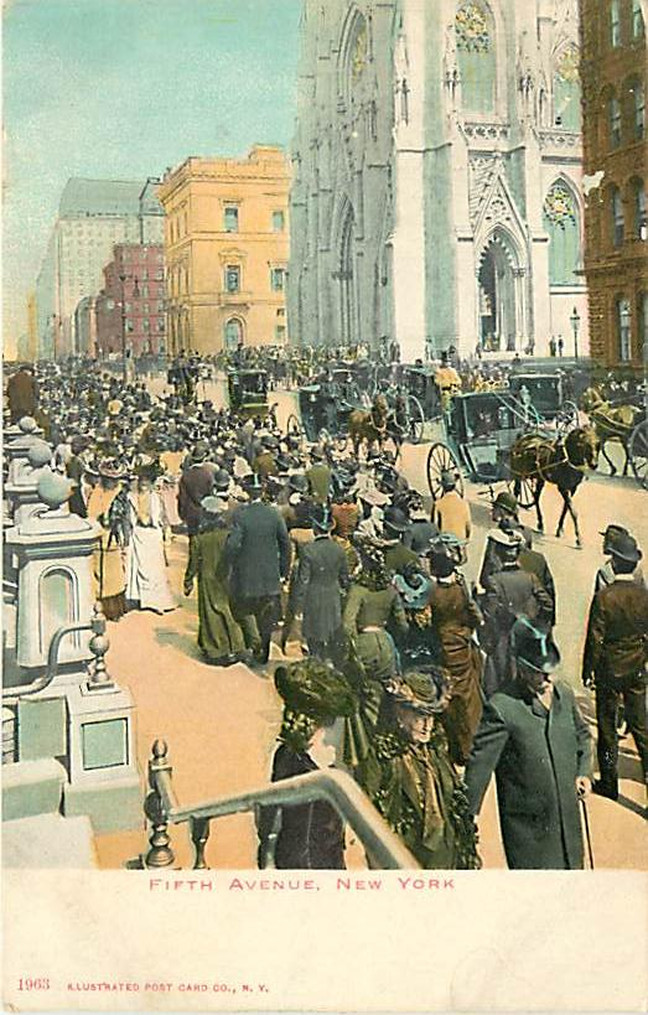
Old New York In Postcards #13 – Fifth Ave From 31st – 59th St.

10 Postcard Views Of Fifth Avenue From 31st -59th Street

postcard Fifth ave street sceneLet’s have a look at ritzy Fifth Avenue. All the postcards depict scenes from about 1900 – 1935. Fifth Avenue has a long association with wealth and privilege. Several of these postcards  capture the shifting tide of commercial intrusion into a neighborhood once dominated by  private residences.

As we look over the avenue, the one thing you will notice is how much traffic, both pedestrian and vehicular, increased after the 1920’s.  We’ll start south and work our way north.

postcard Fifth Ave from 32nd St Waldorf AstoriaThis photo postcard taken around 1915 is looking north on Fifth Avenue from 32nd Street. The turreted Waldorf-Astoria Hotel with its American flag raised on the roof is the focal point of this scene. There are no traffic signals to interrupt the  vehicular traffic on the avenue. People cross the street with little difficulty as the traffic is light.

postcard Fifth Ave 34th St 1936In just 20 years Fifth Avenue has changed dramatically. Looking south on Fifth Avenue from 34th Street in 1935, the Waldorf-Astoria is gone and the Empire State Building is in its place. The Empire State is directly behind the double deck Fifth Avenue bus. Pedestrian and vehicular traffic is substantial and in front of the bus a policeman deals with the congestion. Continue reading →

When Rent Cost $10 Per Week In New York City

The Cost of Apartment Living In New York In 1892

Lexington Avenue and 64th Street - typical turn of the century brownstones

Lexington Avenue and 64th Street – typical turn of the century brownstones

New York has always had a wide range of housing choices. But the gulf in living conditions between rich and the poor remains vast. If you have a lot of money, your housing choices are unlimited. If not, you are hard pressed to find anything decent. As Kansas gunslinger and New York journalist Bat Masterson observed in his final column, “Everybody gets the same amount of ice — the rich get theirs in the summer and the poor get theirs in the winter.”

The lowest of New York's living quarters: the 7 cent per night lodging house

The lowest of New York’s living quarters: the 7 cent per night lodging house

Over time when it comes to housing a lot of things have changed, others have not. In 1892 living conditions for the very poor in New York were abysmal. Maybe not as bad as they are now, but pretty close. The majority of New Yorker’s were not living in poverty, but were just plain working people at various income levels; some struggling to survive and in many cases raise a family.

Which brings us to the question about living in New York in 1892 – just what sort of housing did you get for your money?

Kings Handbook of New York coverThe fabulous King’s Handbook of New York City, (1892), delves into everything related to New York, including home life, and answers the question.

One chapter in the book devotes itself to the types of housing available in New York.

The mansions, high class homes, bachelor apartments, middle income flats, boarding houses, tenements and lodging houses are all covered.

The most surprising thing is that you could live in a relatively decent neighborhood with room and board for about $10 per week. Realize of course that an unskilled laborer might barely earn that amount of money and paying room and board put them at the the precipice of poverty. For those people it typically meant finding lodging at a $2 per week boarding house.

152nd Street Riverside Drive Onondaga Apartments postcardThe wealthy, professional and merchant classes could afford to choose their housing according to taste and preferences with a good deal of flexibility. The middle class also had choices which varied widely. So when you read about what you got for your money at $50 or more per month, you cannot help but feel envy for Gotham’s dwellers of the past. You come away with the feeling that New York was a much more affordable city 123 years ago. The prices quoted may have you looking for a time machine.

From King’s Handbook, a selection from the section on housing: Continue reading →

Horror Movie or Hockey Player?

Who’s Behind This Mask?

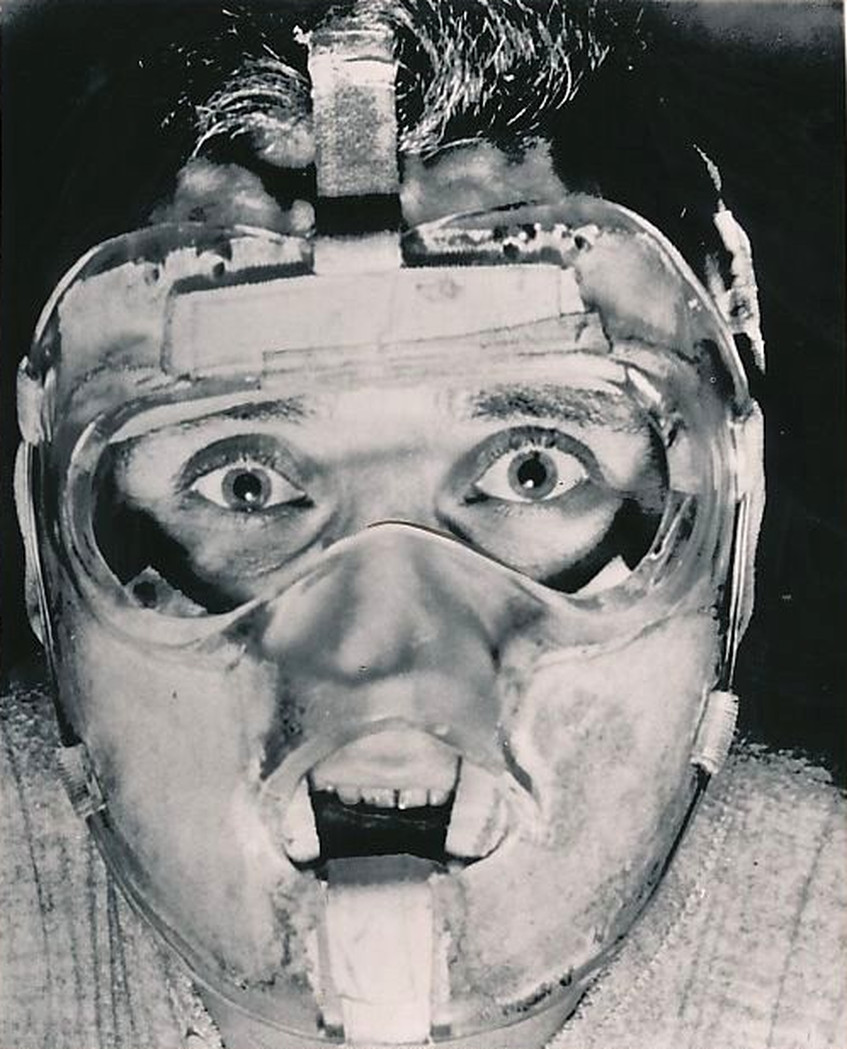
Jacques Plante 1st mask 1946 1 23Though your first guess of who might be behind this frightening mask may be Hannibal Lecter,  Jason or Leatherface, it is actually hockey player Jacques Plante.

The legendary Montreal Candiens goalie was not the first to use a mask for protection, but Jacques Plante was the player to introduce the goalie mask as everyday equipment. Before Plante, the only goalie previously to wear a mask was the Montreal Maroons’ Clint Benedict who wore one briefly in 1930 to protect a broken nose.

This Associated Press photo was taken January 23, 1948 when Plante was just 19-years-old. He was playing organized hockey for the Quebec Citadelles and was still five years away from his NHL debut with the Canadiens.

This leather and fiber mask Plante wore in 1948, was used only in practices because there were so many pucks coming at him at once.

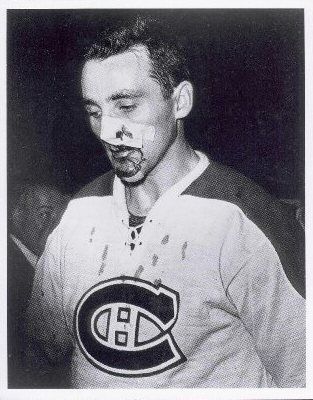
photo via sb nation habs eyes on the prize Plante hurtPlante first donned a mask in a game on November 1, 1959 against the New York Rangers at Madison Square Garden. Plante was struck on the left side of his  nose and upper lip in the first period on a shot from Andy Bathgate. The game was delayed 20 minutes as Plante left the ice, received seven stitches and returned wearing a plexiglass mask (not the one seen in the photo above).

photo via sb nation habs eyes on the prize Plante bloodiedMontreal coach Toe Blake, a traditionalist, had been an ardent opponent of Plante wearing a mask. Continue reading →

Old New York In Photos #56 – View From Madison Square Garden Tower 1893

Manhattan Looking North & West From Madison Square Garden Tower – 1893

view North and west from Madison Square Garden Tower 1893This photograph taken by the firm of H.N. Tiemann shows the emerging profile of New York around 1893. The tallest structures visible are mostly steeples of the many churches that are spread throughout Manhattan.

We are looking north and west from 26th Street between Fourth and Madison Avenues from the tower of Madison Square Garden, designed by architectural giants McKim, Mead & White in 1890.

Scottish Rite Hall photo Kings Handbook of New YorkBesides churches, there are two buildings that are prominent in the photo. One was a former church, in the center lower portion of the image, the Scottish Rite Hall with the steeple tower at the corner of 29th Street and Madison Avenue. The building Continue reading →

Unusual News Stories From A Small Town Newspaper in 1881

A Horse Commits Suicide, A Man Falls 60 Feet From A Building And Is Uninjured & Instructions On How To Wash Your Face

lowville times bannerInteresting “News” From The Lowville Times In The Summer of 1881

photo: Yester-Images of Lowville NY on postcards by Larry Myers

photo: Yester-Images of Lowville NY on postcards by Larry Myers

Lowville is a sleepy town in Lewis County, upstate New York, about 40 miles east of Lake Ontario and about 90 miles north of Syracuse. Just under 5,000 people call this town home. The most famous person associated with Lowville is probably Peter Ostrum, who played Charlie in the original Willy Wonka and the Chocolate Factory. Peter is a veterinarian at Countryside Veterinary Clinic in Lowville.

lowville new york map circa 1870sThe town was founded in 1797 and by 1881 had a population which was a tad over 3,000 people, mostly comprised of assiduous  farmers and merchants.

Like most aspiring small towns across America, Lowville had their own newspaper, a weekly journal comprised of four pages called the Lowville Times which existed from 1876-1884. It featured a smattering of national and international news, but the main feature for the citizens of Lowville and the surrounding towns of Copenhagen, Carthage, Constableville, Martinsburgh and Boonville, was the “local matters” section on page three.

It featured not so much news as it did gossip, illnesses, births, deaths, religious revivals, calls for temperance, arrivals and departures of visitors, and rumblings about town and other community news from larger towns around New York State.

An accurate statement in the newspaper of August 25, 1881 read “A stranger visiting Lowville on Wednesday, the day of the Band Boys’ excursion would have pronounced it a dull place.” What the paper doesn’t say is that this was probably true 360 days out of the year. But in the 19th century it was a beautiful town, with hills and rolling meadows. The pace of life was slow and hard work was rewarded with leisurely pleasures, like regular town picnics featuring music and refreshments.

Besides reporting local mundane items like, ” The picnic was well attended on Saturday last,” and “R.J. Richardson and Frank Doig killed 17 woodcock on Tuesday,” there are stories that are succinct, unusual and interesting.

Here are a selection of short news items with some editorial flair from the summer of 1881:

June 23 – Mr. Albert Eldridge, foreman in the Lowville Manufacturing Co.’s saw mill had a tussel with a hand spike, and we should judge by the looks of his eye that he got the worst of the bargain. Continue reading →

Gangster Al Capone Goes To A Baseball Game

Hall-of-Famer Gabby Hartnett Signs Autographs For Al Capone and His Son – 1931

Al Capone sees a Cubs game with son as Gabby Hartnett signs autograph 1931 9 10Associated Press Photo From Chicago

Al Capone takes his son to the ball game surrounded by his watchful lieutenants. Chicago’s gang chief and his 12-year-old son, Al Jr., get Gabby Hartnett of the Cubs to autograph a baseball just before the Cubs defeated the White Sox, 3 to 0, in a charity game before 35,000 spectators at Comiskey Park, Chicago, Sept. 9. Pictures of Capone before the public are not frequent, and a pose with his son is rare. He affectionately calls the boy “Sonny.”

Note the watchfulness of one of his bodyguards directly behind him. A pop-corn vendor evidently rubbed his shoulder and he looks ready to protect his chief. 9-9-31

This photograph made me wonder if Al Capone’s bodyguards were licensed to carry firearms and if they were packing heat when they visited Comiskey Park? It certainly looks like the bodyguard is reaching into his jacket to pull out his “roscoe” or maybe it was his wallet to pay for the popcorn.

One other thing to note: “Sonny,” does not look thrilled to be at the ballpark, much less getting an autograph from Gabby Hartnett.

Sean Connery On James Bond

Quotes From Sean Connery About James Bond

Sean Connery and the women of Goldfinger

Sean Connery and the women of Goldfinger

The most recent double oh seven Daniel Craig has talked about getting typecast as secret agent James Bond. Craig doesn’t seem to view typecasting as a problem. With the recent blockbuster opening of Spectre, the latest installment of the Bond series, Craig is probably laughing all the way to the bank if he has indeed been typecast.

With the man who played James Bond originally, it is hard to gauge what his true feelings are towards the character.

Sean Connery greeting press August 1965 photo Apis Paris

Sean Connery & the press – August 1965

Sean Connery has always been protective of his private life and after he gained worldwide fame playing James Bond, he developed a justifiable, deep suspicion of the fourth estate.

Connery has said he intensely dislikes intrusions by the press “Particularly, the critical personality profiles that run in magazines and newspapers. The actors utter these inanities, then go to some movie set and pose for pictures in some mock-up kitchen. The article will then read: ‘Here’s Sean Connery, a real homebody, frying eggs in his own kitchen.’ “

Because he had to answer the same insipid questions thousands of times, Connery, quickly built up a resentment around all the publicity surrounding James Bond and the Interchangeability of himself and the character.

Therein lies the complex love/hate relationship between Connery and the character that made him one of the world’s biggest movie stars.

The following quotes from Sean Connery about the character of James Bond were all made from 1963 -1972 when he was playing 007. The source is listed before the quote.

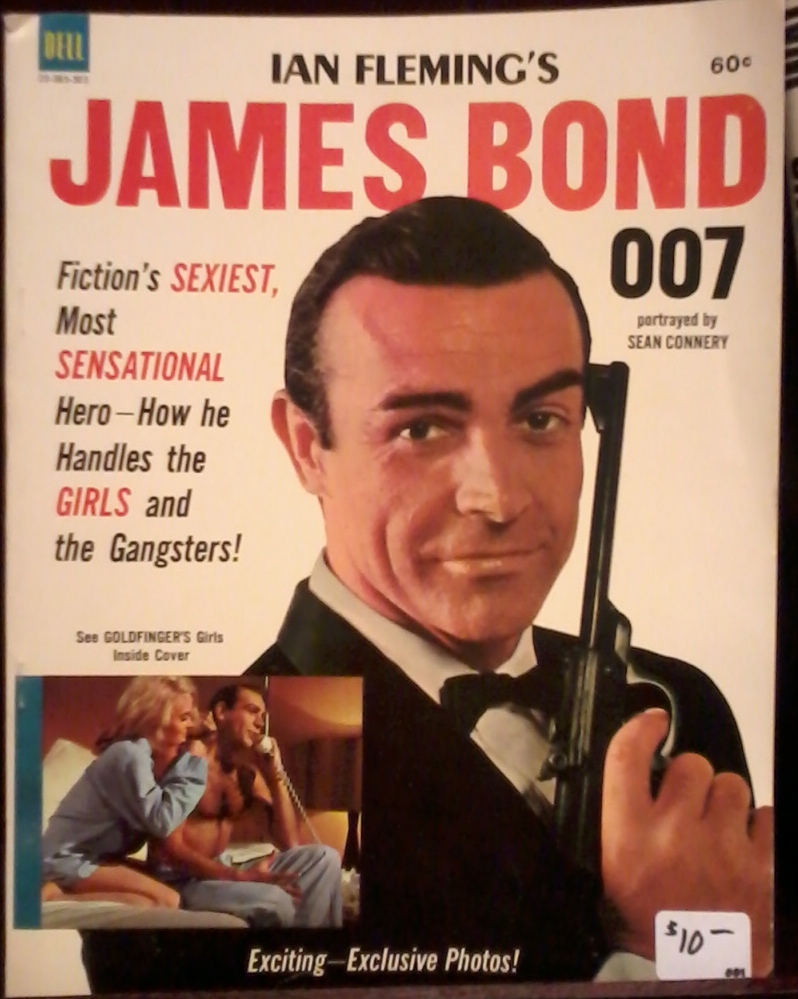
James Bond magazine Sean ConnerySydney Morning Herald, 1963 –

After the first Bond film Dr. No was released:

“I’ll be honest with you. There’s not much of James Bond in me.”

“The only real difficulty I found in playing Bond was that I had to start from scratch. Nobody knew anything about him, after all. Not even Fleming. Does he have parents? Where does he come from? Nobody knows. But we played it for laughs, and people seem to feel it comes off quite well.”

“I’m grateful to the film for giving my career a lift like this, but I must be careful not to get too typed. I hope to make a completely different type of film.”

Elizabeth Trotta, Newsday, 1963-

On being similar to the Bond character –

“Yes, I do identify with him. I too enjoy drinking, women, eating the physical pleasure – smells and tastes living by my senses, being alive.  And as far as Bond is concerned, he has no past.”

Anthony Carthew, New York Times, 1964 –

After Goldfinger completed filming.

“I don’t really suppose I’d like Bond if I met him. He’s not my kind of chap at all.”

Sean Connery From Russia With Love“Bond makes his own rules, and that’s fine as long as you’re not plagued by doubts.” “But if you are—and most of us are—you’re sunk. That’s why Bond is so attrac­tive to women. By their na­ture they’re indecisive, so a man who is absolutely sure comes as a godsend.” Continue reading →

50 Years Ago – New York’s Big Blackout Of 1965

Tuesday, November 9, 1965 – The Night The Lights Failed

Blackout Grand Central stranded 1965 11 10Nov. 10, 1965 – New Yorkers During Blackout – People sleep sitting up and lying down in New York’s Grand Central Terminal early today during the power failure. This area is lit up with emergency lighting. (AP Wirephoto)

In the past 50 years New York has experienced three huge blackouts; August 14, 2003; July 13-14, 1977; and the first large scale blackout that affected much of the northeast, November 9-10, 1965.

30 million people were affected when the electricity went off, cascading from Ontario to Buffalo to New Hampshire and on through to New York City where at 5:40 pm the power failed, plunging the city into darkness. Trains, elevators, traffic lights and all electric ceased to function as many New Yorkers were literally stopped in their tracks.

Blackout: Using a candle for a light passengers look at another passenger sleeping on the floor of a stalled subway train during power failure. November 10, 1965 (AP Wirephoto)

Blackout: Using a candle for a light passengers look at another passenger sleeping on the floor of a stalled subway train during power failure. November 10, 1965 (AP Wirephoto)

There was no looting Continue reading →

What Presidents Cleveland, McKinley, Roosevelt, Taft & Wilson Sounded Like

Rare Audio Recordings of the Presidents

Would you vote for any of these men based upon their photographs (or voices)?


Let’s not generalize and say modern Americans are shallow, but research confirms that public image and to a lesser extent how someone talks, does influence the electorate.

One classic, yet apocryphal example, is the first televised presidential debate in 1960, in which supposed surveys showed people listening on the radio thought Richard Nixon was the clear winner of the debate, whereas people watching on television thought John F. Kennedy was the victor.

Today we are bombarded by media 24/7. It has becomes a challenge to capture anyone’s attention. The current presidential debates have devolved into images and soundbytes that convey little when it comes to substantive ideas and solutions for making our country functional. The public and media analyze Donald Trump’s hair;  if Hillary Clinton has “had work done” or why Ted Cruz “talks weird.”

So now, imagine life 100 – 125  years ago. Most Americans never ventured more than a few miles from where they were born. There was no internet, television or radio. Images were viewed in newspapers and magazines. If you heard a politician speak, it was, in person addressing an attentive crowd.

The technological revolutions around the turn of the century were stunning to the masses. The development of motion pictures, x-rays, electric appliances (beginning with the toaster), airplanes and audio recordings astonished people.

Maybe you’ve seen grainy silent films of the men who served as presidents of the United States at the turn-of-the-century. They are silent, stoic and graven in image. What did they sound like? How did they talk?

Most people do not realize that these early president’s voices were recorded and preserved for posterity, usually by the Edison Company on wax cylinder disks. The following recordings are part of the Vincent Voice Library at Michigan State University. It is very interesting to hear what these men sounded like.

Based upon their photographs and voices, could any of these men be elected today?

Grover Cleveland photo locFirst we have President Grover Cleveland (the 22nd and 24th president 1885-1889 & 1893-1897) the only man ever to be elected twice in non-consecutive terms.

Cleveland was mayor of Buffalo and governor of New York before becoming president. In 1884 a book was published called Off-hand Portraits of Prominent New Yorkers by Stephen Fiske.  The coda to the profile on Cleveland accurately predicted “If he shall make the same sort of a Governor as he has a Mayor, the road to the White House is open to him, and this sketch may yet be entitled the portrait of President Cleveland.”

Grover Cleveland’s voice, recorded during a campaign speech in 1892 is a bit hard to hear with all the static, but is comprehensible.

The way most politicians in the 19th century wrote, is the way Cleveland speaks. Cleveland puts out his speech with melodrama and clear diction.

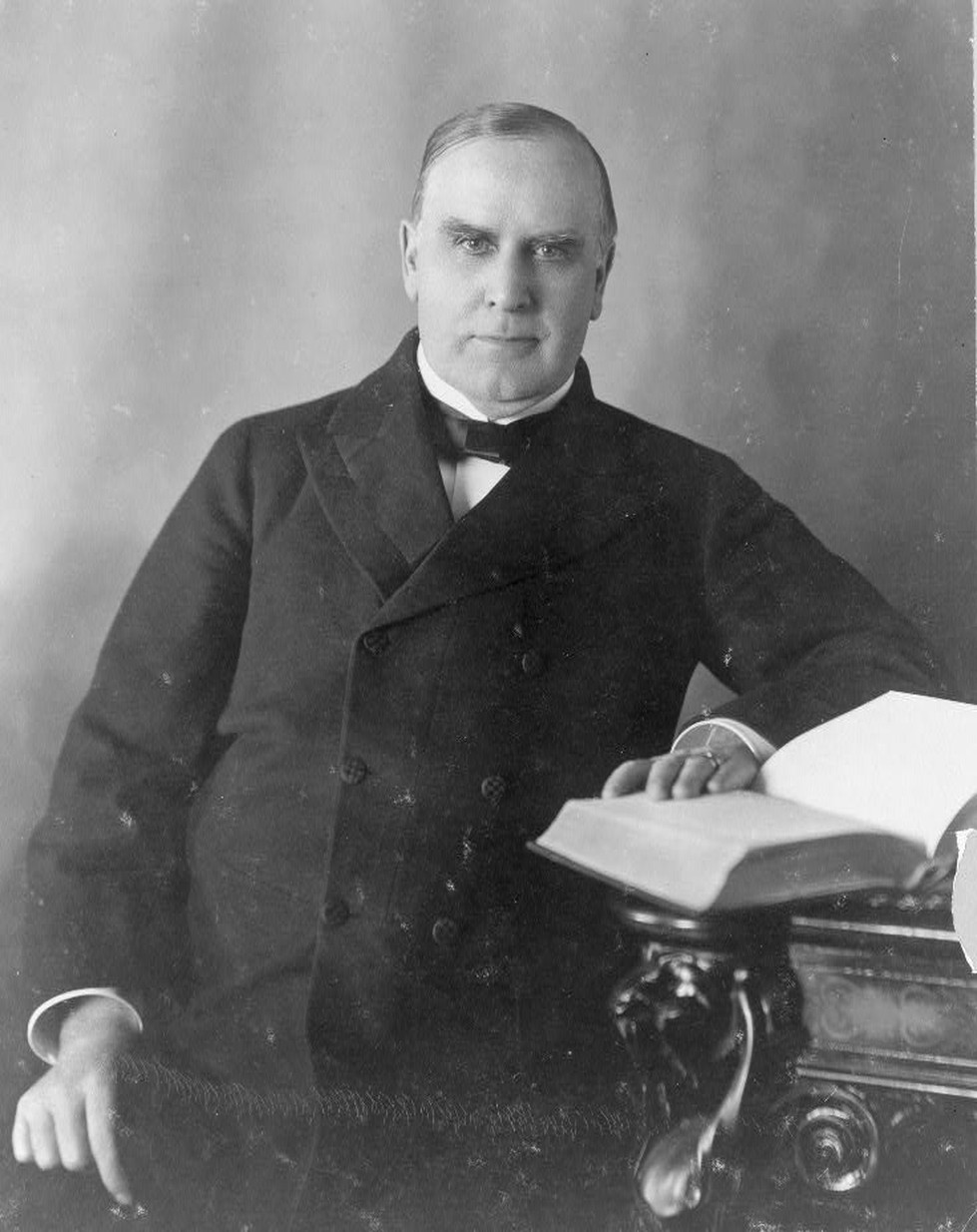
William Mckinley photo locNext, the 25th President William McKinley (1897-1901) who never left his front porch at his home in Ohio to campaign. McKinley was assassinated by an anarchist in 1901, which put Theodore Roosevelt into the executive office.

McKinley on this recording from 1896, talks about the Republican platform. Similar to Grover Cleveland, McKinley speaks the way you’d imagine a 19th century politician would talk. McKinley’s speech pattern  epitomizes the 20th century movie portrayal of 19th century diction, emphasizing certain words, and like Cleveland, drawing out his syllables.

Theodore Roosevelt photo locTheodore Roosevelt Continue reading →