Category Archives: Baseball

Ty Cobb In Chicago At Southside Park – 1907 And 1908

The “Georgia Peach” Ty Cobb, Plays In The Windy City

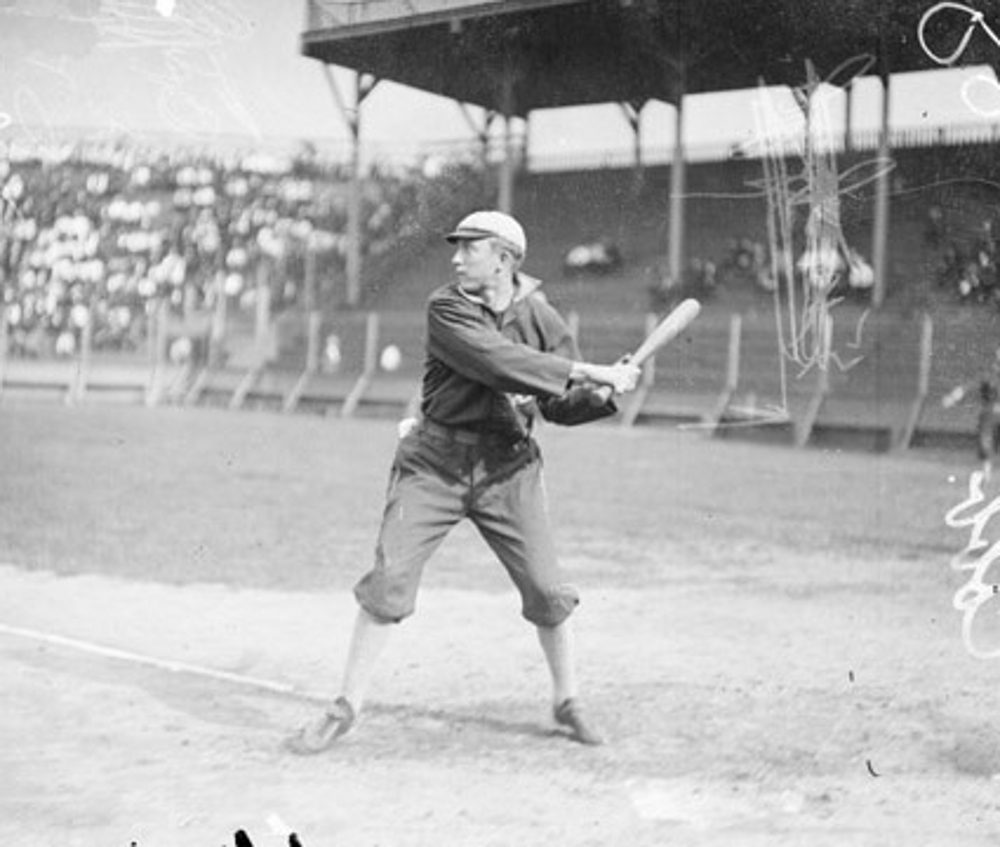
Ty Cobb 1907 Southside Park Chicago Daily News

I wonder if baseball fans recognize greatness early on in a player’s career? Ty Cobb started his major league career with the Detroit Tigers in 1905 and had his first breakout season in 1907 at the age of 20 when he led the American League in hits, stolen bases, RBI’s and a .350 batting average.  The photograph above is from 1907, taken at Southside Park in Chicago, home to the White Sox from 1900-1910. So did the fans in Chicago realize they were watching a player who would electrify baseball for the next twenty years?

One thing you notice by looking at Ty Cobb is that he had a unique batting stance. His legs and feet would many times be planted way ahead of home plate and his hands spread apart on the bat. It enabled him to spray balls all over the field and get to the pitch before it could do what the pitcher wanted it to. He hit .366, the highest career batting average ever by a major leaguer.

Ty Cobb 1908 Southside Park Chicago Daily News

Here Cobb plays against the White Sox in 1908 at Southside Park in front of a packed house.  Once again notice how far ahead Cobb is standing in front of the plate. One criticism of Cobb besides his nasty disposition, was that he didn’t hit a lot of home runs like Babe Ruth. Cobb bristled at that comparison, saying anyone could hit home runs, it took talent to be a spray hitter like he was.

On May 5, 1925 visiting St. Louis against the Browns, Cobb told a reporter in the dugout that “today for the first time my career I’m going to go for home runs.” The comment is apocryphal, but that day Cobb went six for six.  Home runs? He hit three.

Collision At Home Plate – Red Sox Billy Klaus Crashes Into Yogi Berra 1955

Billy Klaus Takes Down Yogi Berra, Ted Williams Picks Up 2,000th Hit – 1955

Yogi Berra Billy Klaus Red Sox Aug 11 1955 1 © Daily News Yogi Berra Billy Klaus Red Sox Aug 11 1955 2 © Daily News

Yogi Berra Billy Klaus Red Sox Aug 11 1955 3 © Daily News Yogi Berra Billy Klaus Red Sox Aug 11 1955 4 © Daily News

Yogi Berra Billy Klaus Red Sox Aug 11 1955 5 © Daily News Yogi Berra Billy Klaus Red Sox Aug 11 1955 6 © Daily News

In this series of photographs from August 11, 1955 at Yankee Stadium, Red Sox shortstop Billy Klaus smashes into Yankees catcher Yogi Berra.

The play unfolded in the fifth inning after Klaus singled and Ted Williams hit a ground-rule double advancing Klaus to third. Norm Zauchin then hit a fly ball to right and Hank Bauer made a great throw to Berra.  Klaus barreled into Berra knocking the ball loose.

What I like about the photograph besides the action, is that umpire Jim Honochick looks on rather passively not moving very far from where he calls balls and strikes, to make what should have been a very close call at the plate!

The Red Sox would lose this game 5-3. After the game with an ice bag pressed to his face Berra was sore and said, “I don’t know what he hit me with, but I hurt all over.”

One very important event happened in the game, Ted Williams became the 96th player in major league history to record 2,000 hits. He picked it up on a bloop single in the first inning that fell in left center between Phil Rizzuto, Mickey Mantle and Elston Howard. When Williams reached first he jokingly commented to Yankee first basemen Moose Skowron, “What a smash.”

With the hit, Williams became one of only four active players to be in the 2,000 hit club, the others being Stan Musial, Enos Slaughter and Mickey Vernon.

Two Baseball Greats Pass Away- Stan Musial & Earl Weaver – Remembering An Infamous Interview

Cardinals Superstar Stan Musial Dies At 92, Orioles Manager Earl Weaver Dies At 82

Plus One Very Dirty, Funny Radio Show Featuring Earl Weaver

If you are like me, Saturday, January 19, 2013 will be remembered by baseball fans as a very sad day because two Hall of Famers died.

Stan Musial was one of the greatest players to ever play the game and was a gentleman on and off the field.

Earl Weaver was supposedly a gentleman off the field. On the field he could be a terror to the umpires.

I’ll leave the comments of greatness to others on both of these legends. While both of these men will get accolades and fond remembrances in the obituary pages, few will mention the outtake reel from “The Manager’s Corner” with Earl Weaver and Tom Marr. Continue reading

Lou Gehrig Plays Sandlot Baseball 1927

The Iron Horse Takes Some Time To Play With The Boys

After the New York Yankees swept the Pittsburgh Pirates in the 1927 World Series, Babe Ruth and Lou Gehrig went on a barnstorming tour across the country.

This news photograph’s caption reads:

Back To Sandlot Days

Los Angeles- Lou Gehrig, Yankee slugger, is shown here at bat during a sandlot game between kid teams. On his barnstorming trip with Babe Ruth, Lou finds himself as much an idol with the kids as the great Bambino himself. And look at the kid behind the plate, ready to help his pitcher strike out Lou. ——11-2-27

How To Throw A Spitball

Burleigh Grimes Demonstrates How To Throw A Spitter – July 12, 1929

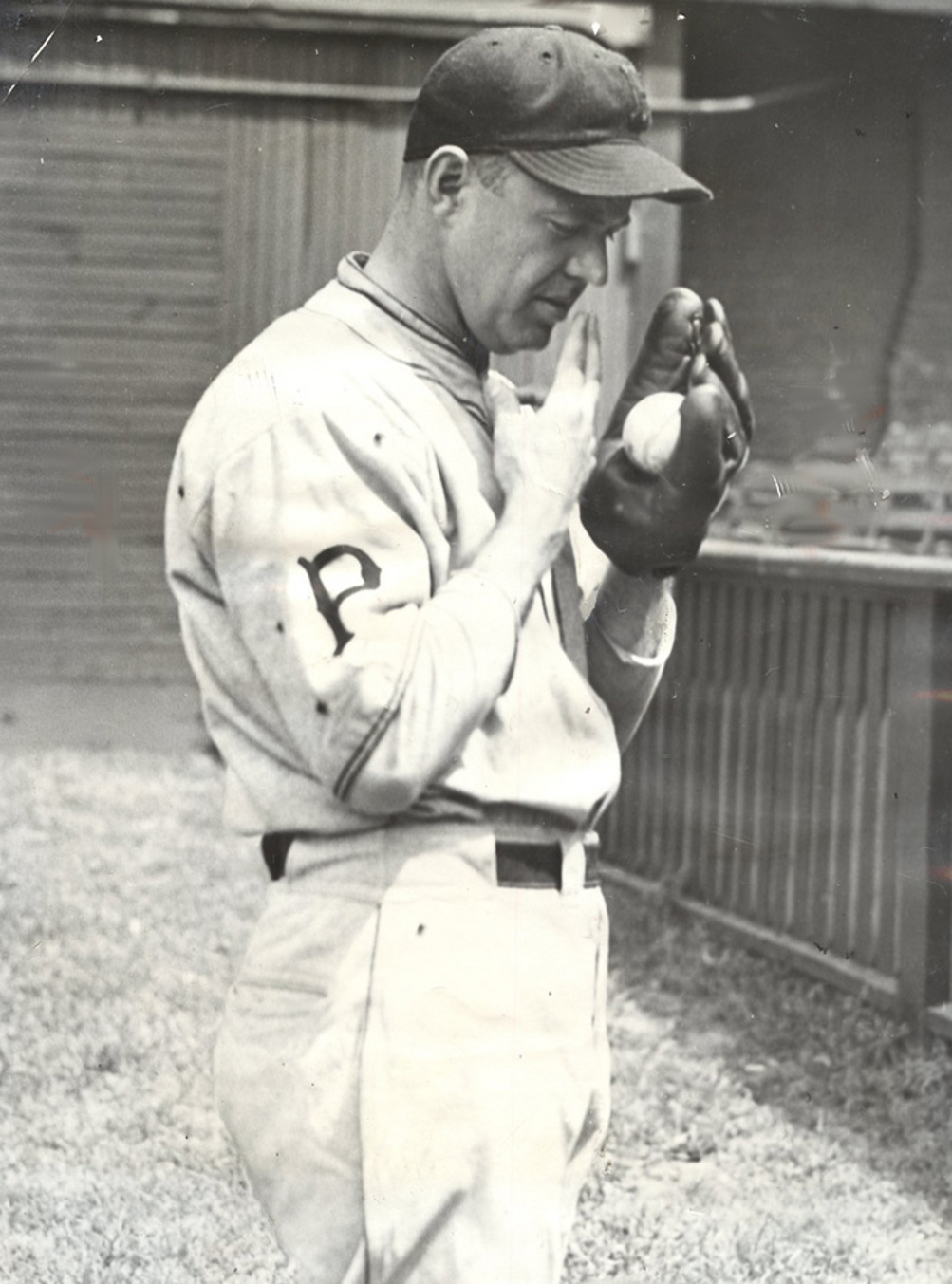
The spitball was officially banned from baseball in 1920. Existing spitball pitchers were grandfathered to be allowed to legally throw the pitch. Hall of Famer Burleigh Grimes was the last of these legal spitball pitchers playing when he retired in 1934 after winning 270 games over 19 seasons. Grimes pitched for nine teams during his career and is one of only fourteen players to play for all three New York teams: the Brooklyn Dodgers, New York Giants and New York Yankees.

In this news photograph, which looks like it was taken in a backyard rather than a ballpark, Grimes demonstrates his method for throwing the spitter.

The news caption reads:

World Wide Photos

The National League’s Leading Hurler

Philadelphia, PA. – Burleigh Grimes veteran spitball pitcher of the Pittsburgh Pirates, who is leading the National League throwers with 14 wins and one defeat, demonstrates how he starts to throw his famous ‘spitter’ 7/12/29

illustration New York Times

Grimes won only three more games for the rest of the year and ended up with a 17-7 record. The Pirates finished in second place, ten and a half games behind the Cubs.

The object of the spitter is to have it sink. You first apply a good amount of saliva to an area of the ball. The two top fingers go over the wet part of the ball. The rest of the hand grips the ball tightly. You control the direction of the drop by tilting the top of the fingers slightly to the left or to the right. In order to be effective, your wrist must be straight and rigid when releasing the ball. This combination will give the ball a reverse spin. Controlling the location of the pitch is difficult and that is why when it was outlawed in 1920 there were only 17 pitchers using it effectively and they were grandfathered to keep using it.

Even though it has been banned for over 90 years, there are still many managers and batters who swear there are pitchers who throw the illegal pitch. In a 1967 Sports Illustrated article it was estimated that approximately 25% of pitchers were throwing spitballs.

A Rose By Any Other Name

The Aaron’s, Clemente’s and Mays’ Of A Lesser Ilk

Roberto, Willie and Hank

In major league baseball history there was only one Ruth, Gehrig, Koufax, Medwick, Seaver and Carew. You know who is being referred to when you hear the name Mantle.

Yet there have been several Robinson’s, Johnson’s, Ryan’s and Smith’s of varying playing ability. Some were great, some were good, and others were let’s just say, not so great. If you say, “Robinson was a fantastic player,” you usually have to clarify which- Jackie, Frank or Brooks.

What if you were a professional ballplayer and your last name happens to be Jeter, but your first name is not Derek?

Sharing a baseball great’s last name can sometimes be a drag because comparisons may be drawn to your famous counterpart. You can be sure that with the exception of your family and close friends, most references by the baseball loving public to your last name, go to the superstar.

So as a professional ballplayer if you share that famous last name but you never achieved super-stardom, at least you can always say you had your name on a baseball card.

So which baseball card would you rather have?

Hank Aaron or….

Tommie Aaron?

Derek Jeter or…

Johnny Jeter? Continue reading

Yes, He Really Plays Baseball

Dave Ricketts, St. Louis Cardinals, Topps Baseball Cards 1968 & 1969

It is an unfair characterization to say Dave Ricketts could have easily been mistaken for a high school biology teacher rather than a major league catcher. Players who wore eyeglasses in the 1960’s were still very much a rare breed. When I was a kid, every time I looked at these two baseball cards, I thought that Dave Ricketts never really got to play, but just posed for the card.

Ricketts did play sporadically, appearing in 130 total games for the St. Louis Cardinals from 1963-1969 and the Pittsburgh Pirates in 1970 and ended up with a .249 career batting average and one home run.

After his playing career ended, Ricketts became a fixture in the Cardinals organization mostly as the bullpen coach and minor league manager. Ricketts by all accounts was an excellent coach and had a large influence upon other players.  Derrick Goold of The St. Louis Post-Dispatch wrote about Ricketts after he passed away:

“I’m here because of him,” Yadier Molina said. “He made me into a catcher. I wasn’t a catcher when I got here. I learned a lot from him. He was like my dad, there for me since I was 17. He meant so much to me.”

“I’ve never seen a coach who has worked harder for whatever team he’s involved with than Dave Ricketts. Ever,” former Pittsburgh Pirates pitcher Steve Blass said. “Totally dedicated. … He had a zest for life that was part of his personal life, and, thank goodness, we are better because it spilled over into his professional life.”

“Sometimes the word ‘great’ gets overused, and it’s a shame,” manager Tony La Russa said. “There have been some truly great Cardinals who have come through the organization, but I don’t know anyone greater or more beloved than Dave Ricketts.”

Dave Ricketts died in St. Louis at the age of 73 on July 13, 2008 of renal cancer.

The Day Brooklyn Will Never Forget – October 4, 1955 The Brooklyn Dodgers Become World Champions

Johnny Podres Shuts Out The Yankees to Win Game 7 of The 1955 World Series

Cover Daily News Oct 5 1955

The Brooklyn Dodgers had appeared in seven World Series previous to 1955. They had lost all of them. But on Tuesday, October 4, 1955, a magical afternoon (yes the World Series was always played in the daytime until 1971) occurred at Yankee Stadium in front of 62,485 fans. Amazingly the game was not sold out.

Johnny Podres, after winning game three of the World Series, was matched up in game seven against Yankee veteran Tommy Byrne. An interesting side note: Byrne rode the IND subway from 59th Street to Yankee Stadium unrecognized by anyone. Podres ended up pitching the game of his life – an eight hit, 2-0 shutout. The Dodgers had finally vanquished the Yankees who had beaten them in five previous World Series.

The Dodgers played without Jackie Robinson who was nursing a strained Achilles tendon. And the Yankees were equally handicapped without Mickey Mantle, who, even though he pinch hit in this game, missed most of the Series with a torn leg muscle. Other Yankees and Dodgers stars like Duke Snider and Hank Bauer played despite being injured.

First pitch of Game 7, 1955 World Series Yankee Stadium. Tommy Byrne throws a strike past Jim Gilliam

The Dodgers scored one run in the fourth when Roy Campanella doubled and a single by Gil Hodges drove him home. The Dodgers added a run in the sixth with Hodges hitting a sacrifice fly to drive in Pee Wee Reese.

Sandy Amoros Catch 10 4 55

The acknowledged defensive play of the game was made by Dodgers left fielder Sandy Amoros.

Continue reading

Game 1 Of The 1957 World Series Yankees vs. Braves

Action At Second Base, Fifty Five Years Ago Today

Don’t let anyone tell you that the players of yesteryear weren’t as good as today’s players.

They were.

And they played as hard then as they do now. Considering an average player’s salary was around $15,000, the World Series provided extra lucrative income for ballplayers, many of  whom worked at regular jobs in the off season. The winning player’s share of the 1957 World Series was $8,924, the losing player’s share was $5,606.

This news photograph captures the Milwaukee Braves Wes Covington sliding hard into second base to break-up a double play. The news photo is captioned as follows:

Got One, Trying For Two

NEW YORK: New York Yankees second baseman Jerry Coleman leaps to get off the ball (lower center) to first after putting out sliding Milwaukee Braves’ Wes Covington on a force play at second in the fifth inning of the first World Series game of 1957 here at Yankee Stadium October 2nd. Bill McKinley umpires.  McDougald took Crandall’s bouncer and threw to Coleman. The Yanks missed a double play when Elston Howard dropped Coleman’s throw for an error. The Yanks took this opener, 3-1.

United Press Photo      10/2/57

The Braves would end up coming back to win the Series in seven games. Braves right-handed ace Lew Burdette won three games.

1955 World Series The Brooklyn Dodgers Win Game 3 Behind Johnny Podres

Johnny Podres, The Birthday Boy, Wins A Critical Game 3

This news photograph’s caption reads as follows:

NEW YORK; SEPT. 30 — VICTORY ON HIS BIRTHDAY

Johnny Podres kicks, fires and follows through — with eyes on ground — during third World Series game against New York Yankees at Ebbets Field in Brooklyn today. Johnny celebrated his 23rd birthday with an 8-3 victory over the American League champs. Slender lefty thus put Dodgers back into contention for Series. (AP wirephoto)

The New York Yankees looked like they were on their way to beating their crosstown rivals the Brooklyn Dodgers once again in another World Series. The Yankees had taken the first two games of the 1955 World Series by scores of 6-5 and 4-2. Continue reading