Author Archives: Max

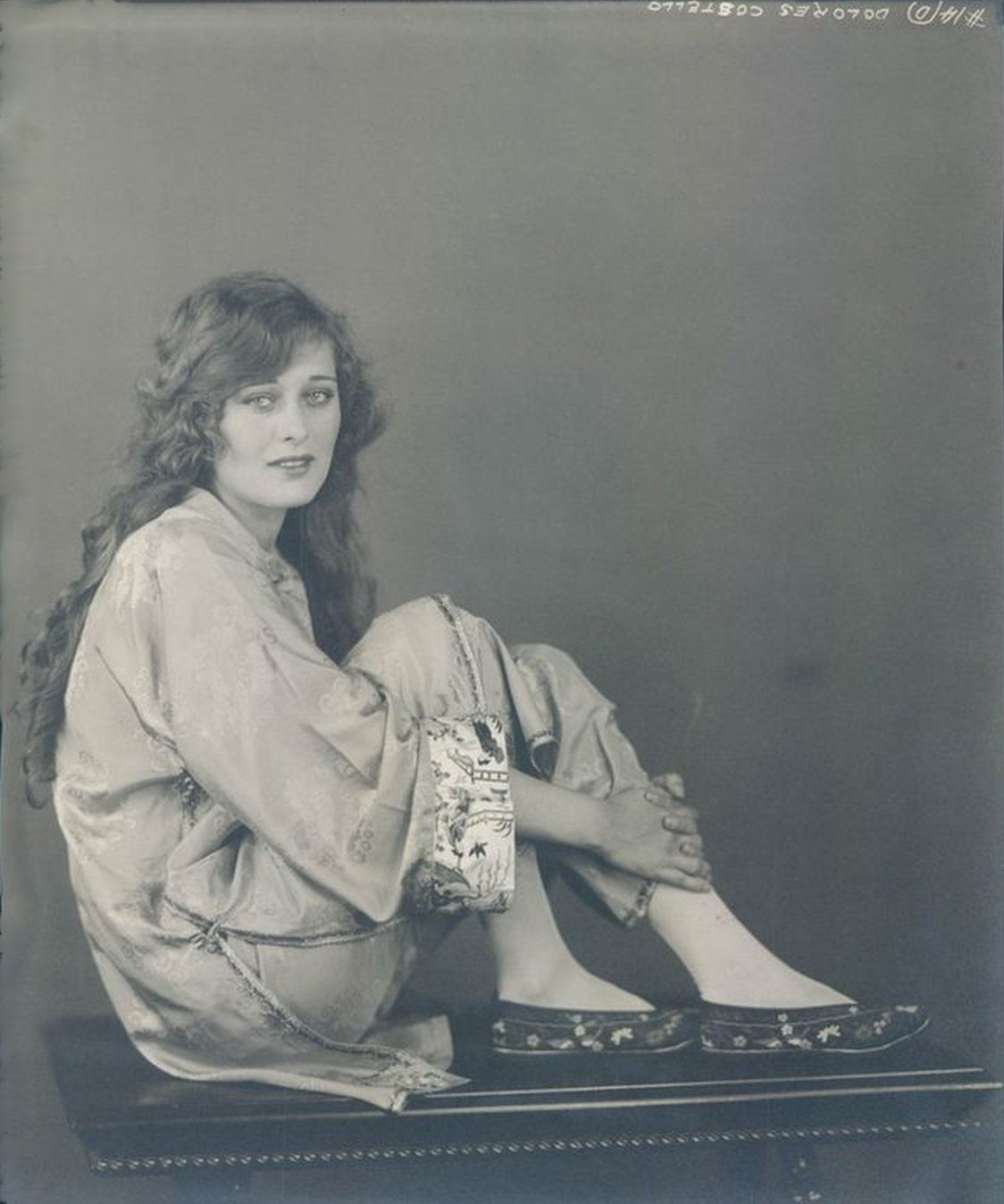
Classic Hollywood #25 – Dolores Costello

Dolores Costello

Dolores Costello

The beautiful Dolores Costello (1903-1979) was nicknamed “The Goddess of The Silent Screen.”

Dolores’s father, Maurice Costello was a Broadway stage and early silent screen star, and her mother was stage actress Mae Costello. With that parentage, and her natural beauty, Dolores had access to enter motion pictures in New York at the age of six in 1909. After 1915 she took a break from films for the next eight years. She did some modeling and appeared on the stage. Famous illustrator James Montgomery Flagg who had used Dolores as a model described her beauty as the most perfect for his illustrations. Dolores returned to the screen briefly for some bit parts in 1923.

Dolores had a fairy tale rise to stardom after being “discovered” in Chicago in April 1925 by Jack Warner of Warner Bros., who was sitting in the audience watching Dolores in the chorus of George White’s Scandals.  A screen test followed, and she was signed to a motion picture contract.

In just under eight months after her arrival in Hollywood, Dolores appeared in a few supporting roles and then landed a big starring role opposite the legendary John Barrymore in The Sea Beast in 1926.

John Barrymore reportedly said of Dolores, “I have just seen the most beautiful woman in the world. I shall not rest or eat until I have seen her again.”

Barrymore and Costello appeared in a couple of films together and were married in 1928. The couple had two children, John Jr. and Dolores. Their marriage was tumultuous and they divorced in 1935.

Even though she had a lisp, Costello made a successful transition to sound films. Her most notable starring role was as Isabel, the widowed mother in Orson Welles 1942 drama, The Magnificent Ambersons. Her final film appearance was in 1943. Dolores spent the remainder of her life running an avocado ranch in Fallbrook, CA near San Diego.

Old New York In Photos #31 – Garbage Strike 1911

The Garbage Strike of 1911

boys chase garbage carts Nov 13 1911

This photograph shows First Avenue and 50th street looking north. A policeman is running after boys who were harassing and chasing a garbage truck (to the left of the trolley) driven by a strike-breaker (now what would be termed a scab) in November 1911.

On November 8, 1911 New York City’s garbage collector’s went on strike demanding better working conditions. The ashcart men did not like working at night when seeing dangerous items deposited in the trash and obstacles on the street was difficult, so they wanted to work only during the daylight hours when it was warmer and safer. Another complaint the union lodged was having only one man to lift trash cans that sometimes weighed over 200 pounds.

City officials were irate and refused to give in. Earlier in July during a smaller garbage strike, Mayor William Jay Gaynor warned that every worker who did not report to work would be fired. Continue reading

Art Donovan, A True Character and Football Great Dies At 89

Baltimore Colts Tackle, Football Hall of Famer, Art Donovan Passes Away

On Sunday, August 4, 2013 Art Donovan, one of the greatest tackles to ever play in the NFL died at the age of 89 of a respiratory ailment at Stella Maris Hospice in Timonium, MD.

The New York Times obituary summarizes Donovan’s interesting life appropriately. I’ll just say that professional athletes like Donovan are a rare breed today; talented, honest, humble and funny.

I remember the many classic Miller Lite beer commercials that Art Donovan appeared in. Unfortunately none are currently available for viewing.

This video clip below from 1988 is a classic. Art Donovan is promoting the paperback release of his autobiography “Fatso” on Late Night with David Letterman.

Letterman brings up the fact that when Donovan was on the show previously promoting the hardcover release of the book, Donovan admitted he had not read it.

Letterman asks, “now that it is out in paperback have you read it?”

Donovan shakes his head and says, “Uh, no David I can’t say I have. I know all the stories, so why should I waste my time reading the book!”

Exactly.

Woodlawn Cemetery Memorial Tells A Coney Island Story Of Unusual Death

Brighton Beach Lightning Strike Felt By Thousands, Kills Six – July 30, 1905

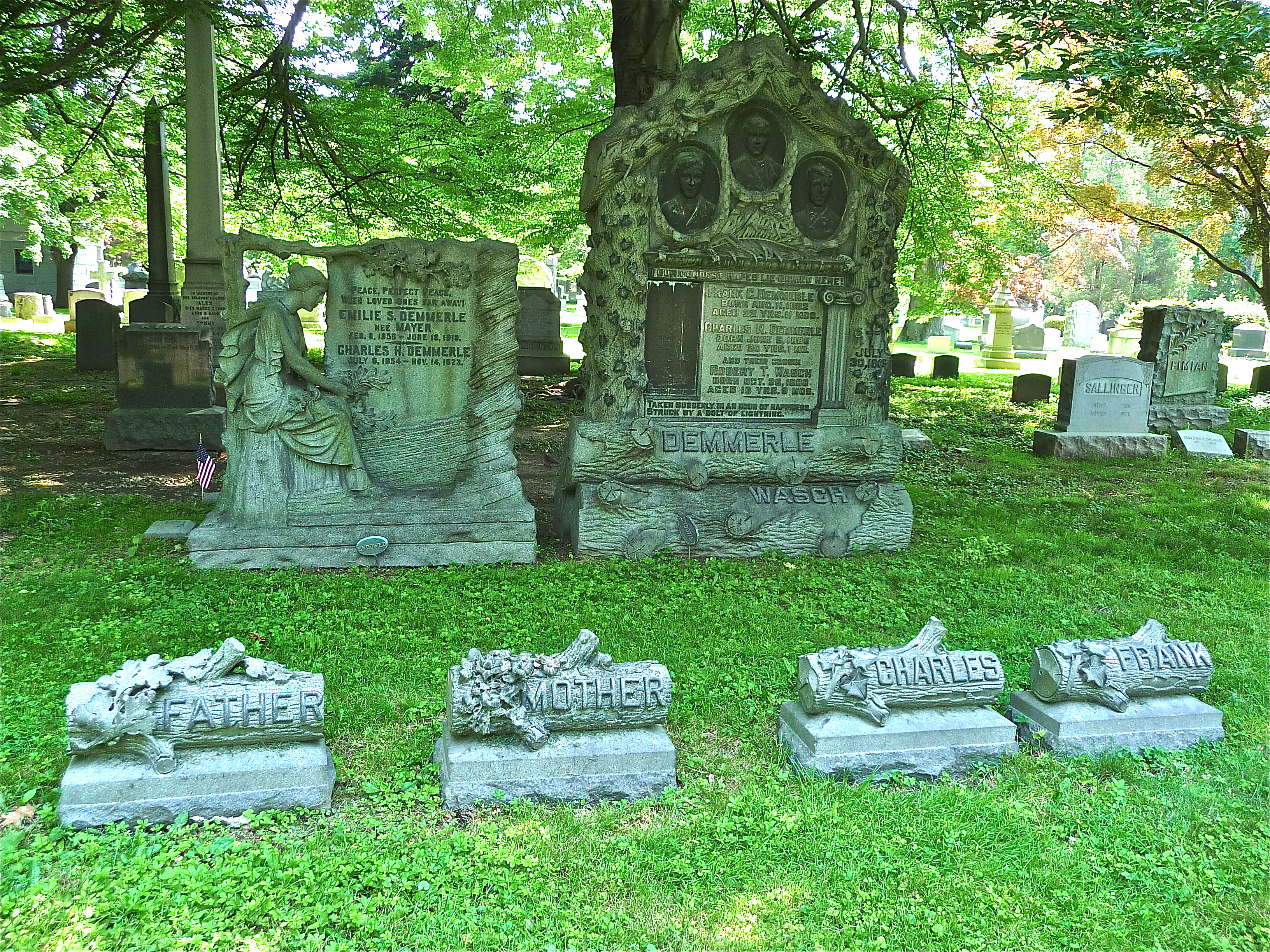
When walking through Woodlawn Cemetery in the Bronx, you can come across fancy mausoleums and simple grave markers of the famous and infamous. F.W. Woolworth, Fiorello LaGuardia, Duke Ellington, Bat Masterson and Herman Melville are among the half million souls interred in this historic place.Demmerle Memorial

Then out of the blue you may stumble across the lives of ordinary New Yorker’s memorialized in an extraordinary way. Such is the Demmerle monument.

Unlike many other tombstones which record a name and birth and death years with a short epitaph, the Demmerle memorial is an ornate series of carved monuments which tells and shows the story of one family’s tragedy.

Demmerle Charles and EmilieSunday July 30, 1905 started out as a beautiful, sun-filled, hot day Continue reading

Gil Coan Washington Senators Outfielder

Gil Coan May 29, 1948

Gil Coan 5 29 1948

Gil Coan turned 91 on May 18, 2013. The North Carolina native started his major league career in Washington in 1946 at the age of 24.

The speedy left fielder had a few good seasons on some unspectacular Washington Senators teams. Though he hit only .254 for his career, Coan finished in the top ten in stolen bases in the American League six times and hit .303 in consecutive seasons, 1950 and 1951.

The Trade

No one could possibly foresee that the trade Gil Coan was involved in would turn out to be one of the most one-sided in baseball history. Continue reading

An Incredible Babe Ruth Accomplishment

The Babe Hit Homers, But Didn’t Give Them Up

Babe Ruth 1916 at Comiskey Park LOC 2When I’m asked who was the greatest baseball player of all-time, I never hesitate in my answer that it was Babe Ruth. For the few people still living who saw Ruth play, they will attest to his skills as not just a great hitter, but an excellent fielder, surprisingly fast base runner (excepting his 1926 World Series blunder) and of course a dominant pitcher.

In 1916 with the Boston Red Sox, Ruth did something that only five other pitchers in the modern era have accomplished. Ruth pitched over 300 innings (324) without allowing a home run. Can you imagine that? Even in the deadball era when home runs were tough to come by, this is still an amazing achievement and one that will likely never be done again.

Starting pitchers today do not come close to pitching 300 innings, let alone not give up homers. The last pitcher Continue reading

Old New York In Photos #30 – Cooling Off During Heat Waves

Heat Waves In New York And Children Cooling Off

NYC Kids Playing at Hydrant

As New York City endures a heat wave this week, realize that for the majority of the 20th century there was virtually no air conditioning in most homes. The streets provided the easiest and most accessible way for children to cool off.

In New York, it is only recently that a heat wave has been defined as at least three straight days with temperatures reaching 90 degrees or more. Who decided this I do not know. Every region of the world has their own definition of what comprises a heat wave. Years ago, any sustained combination of high heat and humidity used to qualify as a heat wave.

This undated photograph above from the mid-1940’s shows city children on a Manhattan street playing and wallowing in the water. I like the fact that some of the people are looking directly at the photographer who is perched high above the street capturing the scene.

Cooling off Harlem 1933

This photo shows a Harlem street in 1933 with children gathering around a center stand sprinkler connected by a hose to the fire hydrant.

A four day heat wave in New York City that began June 7, ended on June 10, 1933 with a violent thunderstorm which dropped the temperature down to 86. The day before, the thermometer in the city reached the mid 90’s and reportedly hit 120 degrees in Hammonton, NJ, wilting strawberries right on the stem.

Joe Funranolla and Ray Bardini beat the heat by diving into the river July 22 1955

As unthinkable as it is now, for decades up until the 1970’s, to cool off many children would swim in the polluted East and Hudson Rivers. With the FDR Drive and the United Nations Secretariat Building in the background Joe Funranolla and Ray Bardini beat the heat by diving into the East River July 22, 1955. The temperature hit 96 that day.

It was the eighth day in July 1955 that the mercury went above 90 degrees. According to the New York Times, the record up to that time for 90 degree days in July was ten, which was accomplished in 1876 and 1952.

Boys Swimming East River 1937

This 1937 photograph shows teen boys making daring dives into the East River. The Williamsburg Bridge is in the background. I wonder how long it took to get back up to where they were diving from?

Hell Gate Bridge bathers Astoria Pool 1937

One thing has remained the same over the years: if they can get to one, kids still flock to the city pools. In this 1937 photograph the Astoria Pool entices a huge crowd, while the Hell Gate Bridge looms in the background.

The current heat wave will soon be over and when winter arrives, you can bet your bottom dollar many New Yorker’s will be saying they can’t wait for the warm weather.

Classic Hollywood #24 – W.C. Fields In Color

W.C. Fields In A Rare Color Photograph Circa 1940

WC Fields color

W.C. Fields or Bill Fields to his friends, was one of the most talented comedians of the first half of the 20th century. He began his show business career in vaudeville as a juggler and worked his way up to top billing in the Ziegfeld Follies for a ten year stretch. From there he went on to become a major film star during the 1930’s and early 1940’s. Today, upon viewing his films, many people do not understand why he was considered funny. But I assure you there is a subtle brilliance in Fields’ portrayals of the henpecked husband, disreputable man and misunderstood misanthrope.

One of the more popular, yet apocryphal stories about Fields, was that he had hundreds of bank accounts spread across the country, many under ridiculous pseudonyms such as Otis Criblecoblis; Mahatma Kane Jeeves; Aristotle Hoop; Ludovic Fishpond; Figley E. Whitesides and so on. After Fields died in 1946, his mistress Carlotta Monti claimed that there was over $1.3 million in unclaimed funds in banks under the fake names. An assistant hired to solve the dilemma of Fields estate found only 24 accounts all under Fields real name. Continue reading

Before They Were Famous…

The 4 Nightingales – “Big Hit Everywhere”

4 Nightingales

This rare trade card from 1908 – 1909 advertises a vaudeville group known as “The Four Nightingales.” Two of them went on to worldwide fame. Can you guess who they are?

Scroll down for the answer.

A huge clue is “Minnie Marx Manager”

It is The Marx Brothers. From left to right: Milton “Gummo” Marx, Adolph “Harpo” Marx, Julius “Groucho” Marx and Lou Levy.

Gummo Marx Continue reading

Frank Chance, Chicago Cubs Player-Manager circa 1912

Frank Chance, Subject of Baseball’s Most Famous Poem

Frank Chance 1912These are the saddest of possible words:

“Tinker to Evers to Chance.”

Trio of bear cubs, and fleeter than birds,

Tinker and Evers and Chance.

Ruthlessly pricking our gonfalon bubble

Making a Giant hit into a double –

Words that are heavy with nothing but trouble:

“Tinker to Evers to Chance.”

Just what is a “gonfalon” anyway? It is a pennant or a flag.

When columnist Franklin P. Adams wrote the poem “That Double Play Again” (later retitled “Baseball’s Sad Lexicon”) in 1910, Frank Chance was the manager and first baseman of the Chicago Cubs. With double play partners Johnny Evers and Joe Tinker, the three would be immortalized first in the popular poem and later in the Baseball Hall of Fame.

Chance played for the Cubs from 1898 -1912 and was claimed off waivers by the Reds after the 1912 season. A month later he was claimed off waivers again from the Reds by the Yankees. In 1913, Chance became the manager of the New York Yankees and played a few games at first base.

He managed the Yankees for two seasons, leading the team to 7th place in 1913 and 6th place in 1914.

Frank Chance died at the age of 48 on  September 15, 1924. He was elected to the Hall of Fame in 1946, 22 years after his death by the Old Timers Committee.