
New York City Says No To Coal Or Oil Burning Trains – 1934
 In the 1970s practically every apartment building had an incinerator to burn its trash. New York City’s sky had a constant haze of air pollution from a variety of smog producing outlets.
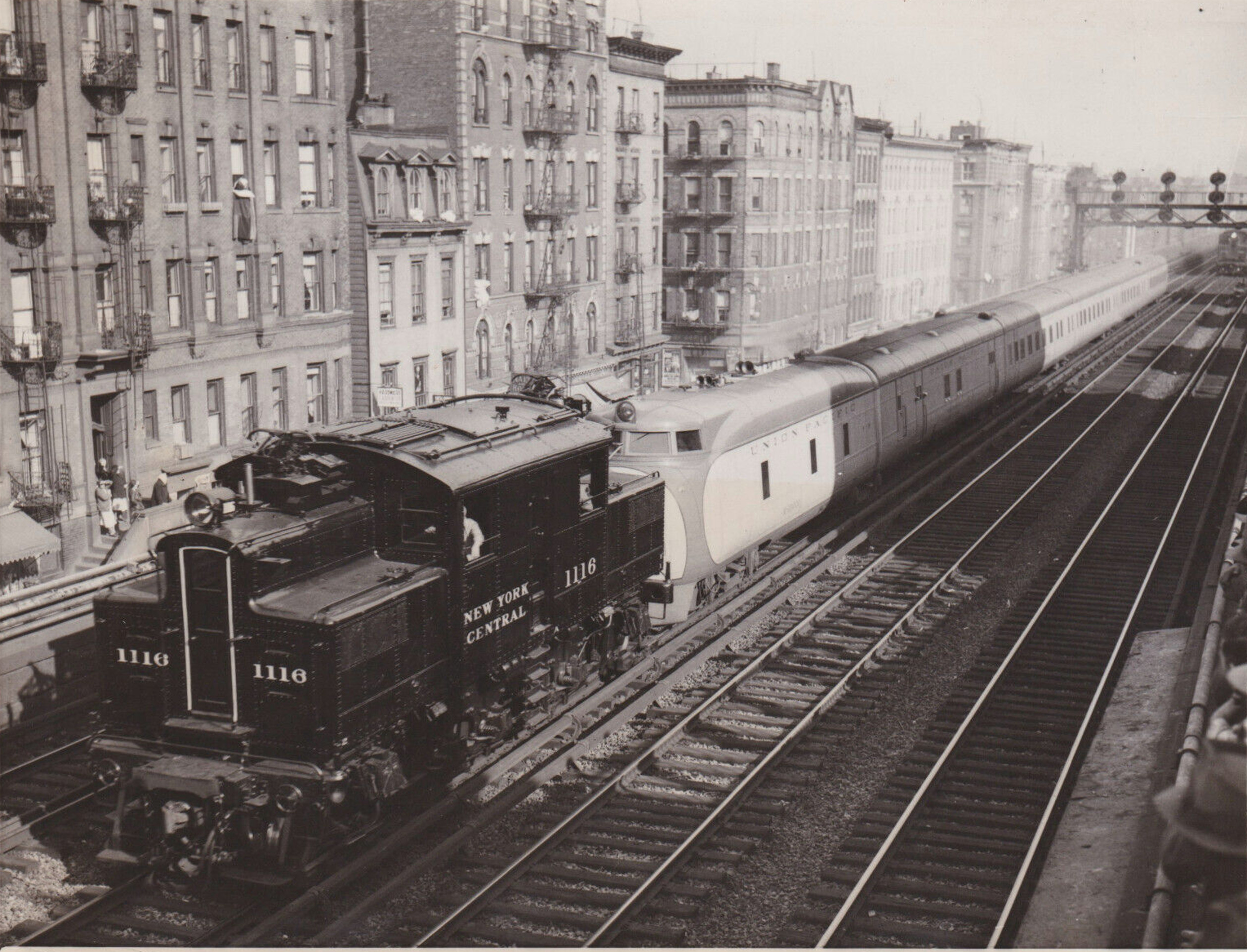
So it may be surprising to realize that New York did have concerns about air pollution in the 1930s. This photograph with the news slug explains:
An Electric Locomotive Draws The Record-Breaking Coast To Coast Train
New York – A scene on the Park Avenue elevated tracks in New York, showing the Union Pacific “Bullet Train” being drawn by an electric locomotive into Grand Central Terminal at the end of the 56-hour, 57-minute record breaking journey from Los Angeles. The locomotive was attached at Harmon, New York to conform with the law which prohibits a coal or oil burning engine o go through New York. The stream line train is an oil burner. photo: International News 10-25-1934
Union Pacific’s Bullet Train official name was the M-10001. The train also had the nickname “The Zip”. It shattered the previous cross country record set in 1924 by 13 hours and twenty nine minutes. At one point during the journey, the train hit a speed of 120 miles per hour.
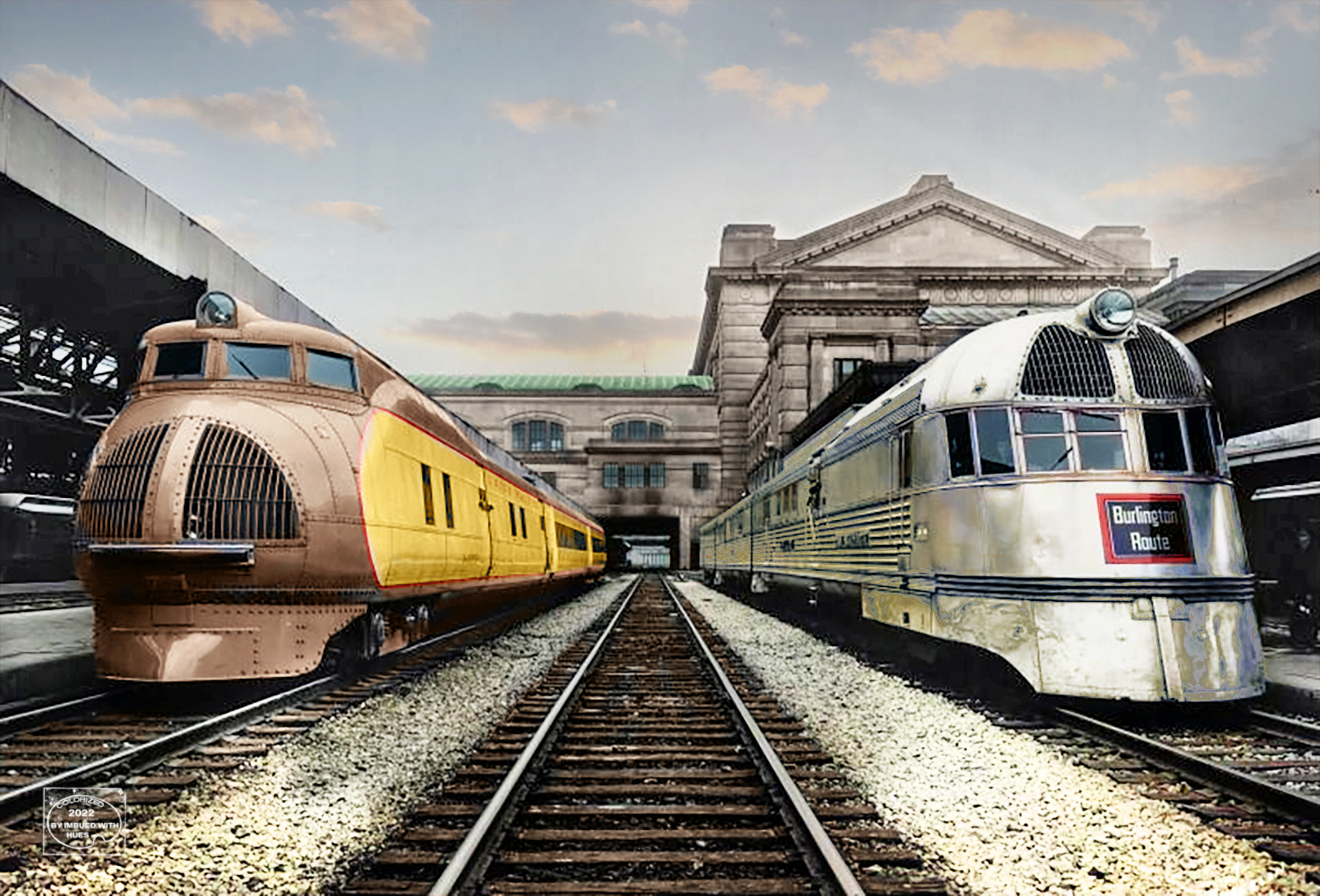
Postcard showing Union Pacific Bullet Train (L) Burlington Route Zephyr (r) 1934
For Union Pacific the six car train was extremely economical. The Bullet Train ran 1.4 miles on a gallon of diesel fuel oil costing four cents. The total cost of fuel for the 3,334 mile trip was about $95.
More than a thousand train enthusiasts met the Bullet Train at Grand Central when it arrived on track 17. Over the next couple of days 55,570 visitors would wait at Grand Central in long queues, three abreast, to inspect the Bullet Train, both inside and out.
The $500,000 streamline train won over the public even if few visitors could ever afford to travel on it.
The Bullet Train was rebuilt in 1935 when it was found the engine was overtaxed and the cars had unstable oscillations at high speeds. The Bullet Train was sold for scrap in 1941.
Pollution
There was recognition that dust, soot and smoke of industry in New York was not healthy, but it was an accepted part of life. Smoke pouring from chimneys was a sign of prosperity. New York’s Smoke Abatement Commission could make little headway in battling noxious emissions polluting the air.
With factories producing all sorts of products, the industrial sections of New York City and the surrounding areas gave no thought to what they were spewing into the air.
Across the Hudson River in Bayonne NJ, one factory was disposing into its smoke stacks ten tons of sulfur dioxide gas per day. Wind would carry that air over New York. When the sulfur dioxide gas met with moisture in the air, the rain it would produce was essentially sulfuric acid.
As far as the railways were concerned, once electrification of the rails began around 1900, rules about pollution would evolve. After some cajoling, the railroad companies agreed not to bring coal and oil burning locomotives within the city limits. It wasn’t as hard as you might believe to convince the rail owners. There was an economic benefit for the railroads to switch to electric.
But similar to the current power situation: just how do you generate the electricity necessary to run an electric vehicle? The smoke problem was transferred from the railroads to the public utility companies to supply electric power. And railroads that did not buy their power had to generate their own electricity through private power plants.
The quandary remains the same today.
We deceive ourselves we are solving one problem by creating another.


