
15 River Views Of Lower Manhattan 1900-1920

The lower Manhattan Skyline from Jersey City circa 1914 showing (l-r) Municipal Building; Woolworth; Hudson Terminal; City Investment; Singer; West Street; Trinity; American Surety; Bankers Trust; U.S. Express and Manhattan Life. by H.H Tammen Co., New York
The thrill of viewing New York from the water was once a daily occurrence for hundreds of thousands of people. Until 1903 when the Williamsburg Bridge opened the only bridge crossing to lower Manhattan was the Brooklyn Bridge. The subway would open in 1904.
The majority of people arriving from New Jersey, Staten Island or Brooklyn would take a ferry boat. As building technology advanced, the view from the New York Bay, the East River and The Hudson was rapidly changing.
Over a 40 year period from 1892 -1932 with the building of skyscrapers, the lower New York skyline would become an instantly recognizable view featured in art, photographs and motion pictures.
Here are some postcard river views of the city. All cards were scanned at 600 dpi.
The Emerging Skyline
 This card “New York From Hoboken” is not that sharp in detail but clearly shows two of the city’s tallest buildings circa 1900. Slightly to the left of the sailboat in the center the building with the turrets is The Park Row Building (1986-1899) and to the right The St. Paul Building (1895-1898). Each was the tallest building in the world upon completion. Skyscraper development is still in its infancy and lower Manhattan still has notable gaps between tall structures.
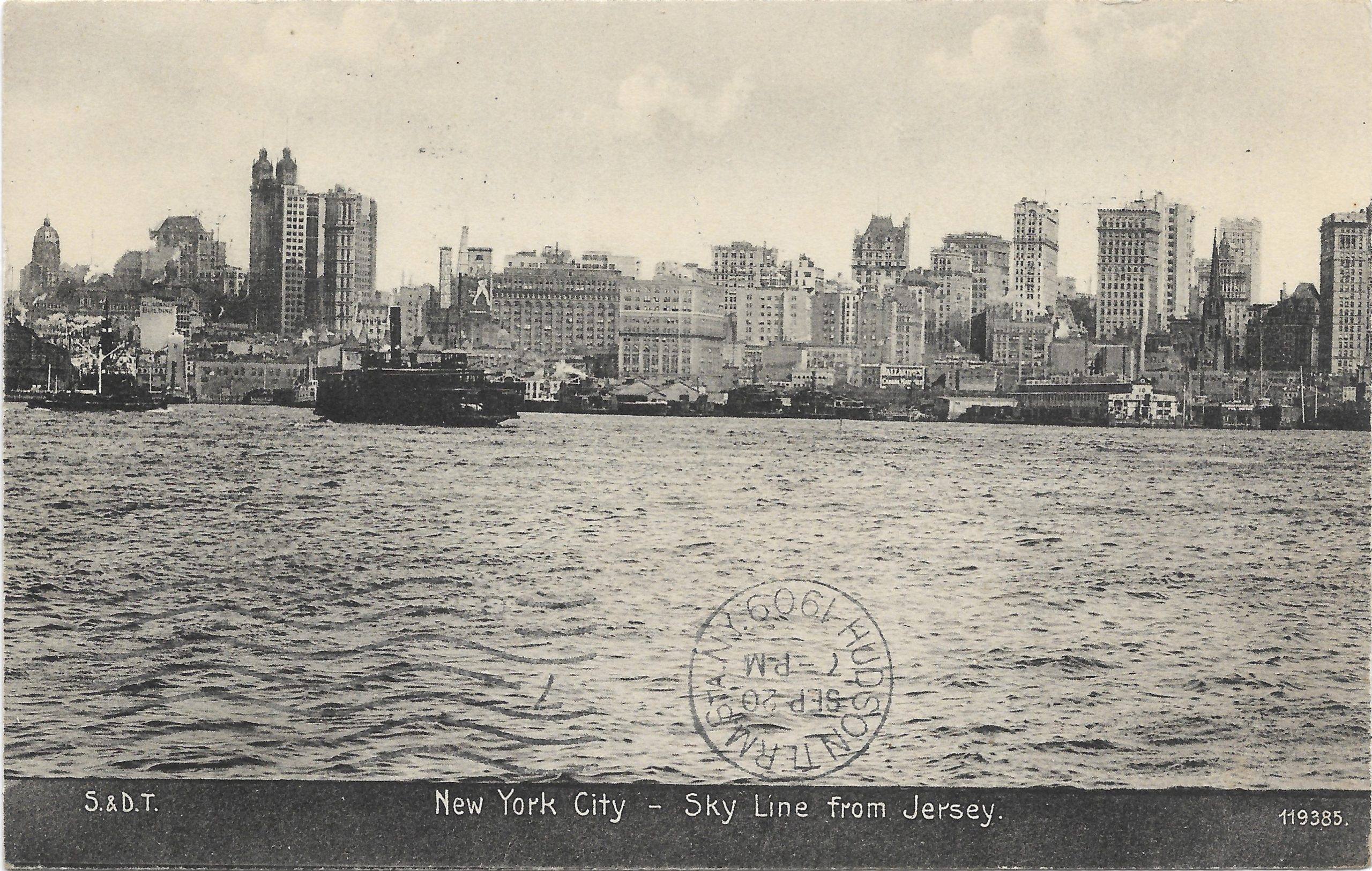 Despite the canceled postal mark of 1909, this view of “New York City – Sky Line from Jersey” is from circa 1904. The publisher is S &D.T. Schaar and Dathe manufactured in Trier Germany. The Park Row Building at left is much clearer in this postcard. The dome of The New York World Building (the tallest office building in the world in 1890) can be seen at extreme left.
More Buildings 20 Stories & Higher
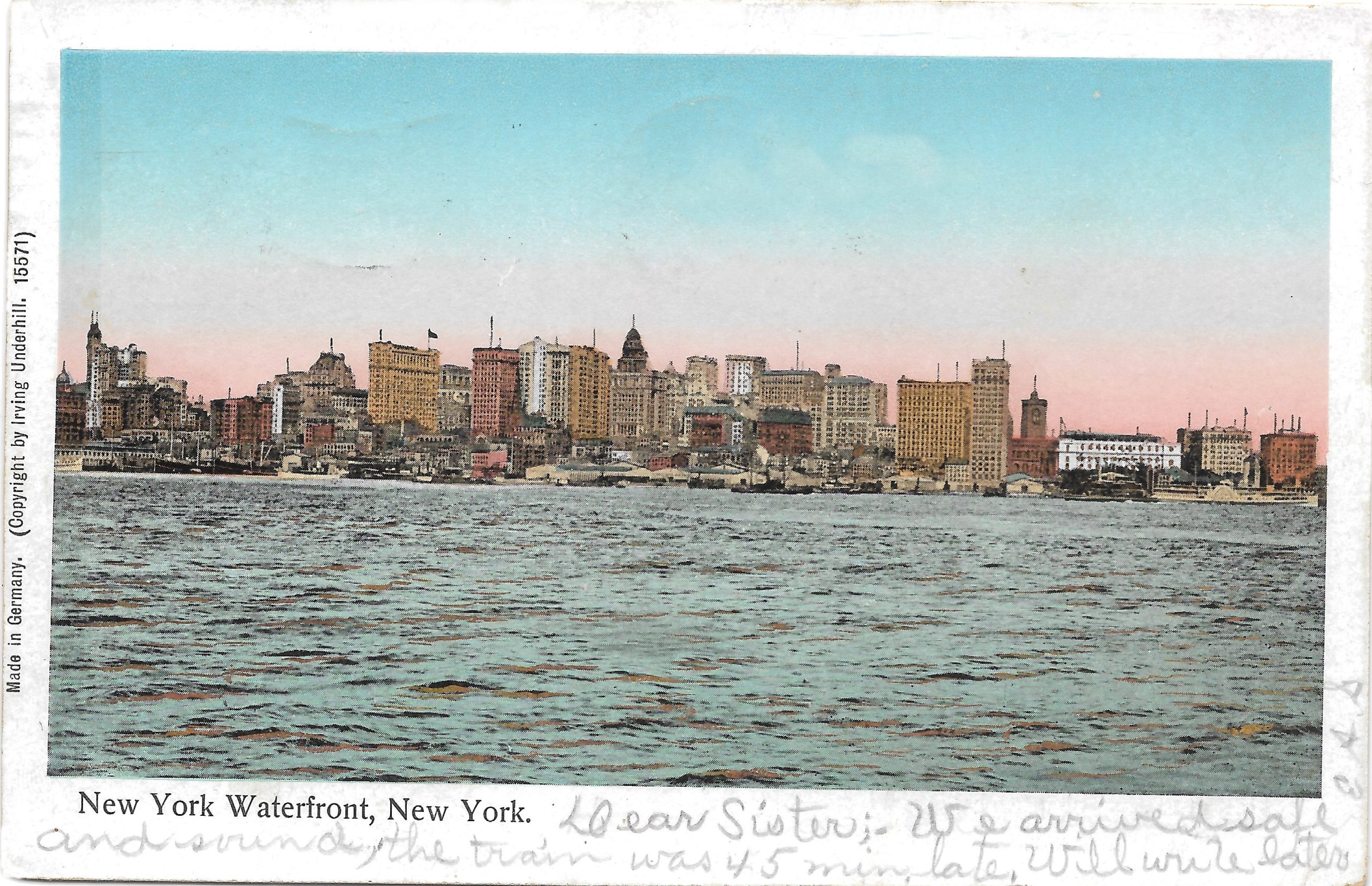
This view from New Jersey titled “New York Waterfront” has a wide panorama than the previous two cards, stretching from The Battery to the Park Row Building. The card was made by Reichner Bros. in Munich, Germany from an Irving Underhill photograph. No building is as high as the Park Row Building – yet. But during the 1900s architects and developers would keep erecting taller buildings, successively breaking height records.
Postcards were the Instagram / twitter -X of their day. A postcard sent in the morning from a major city would reach its destination within a day or two as there were as many as five mail deliveries per day in many places. To mail a postcard cost one penny.
For those who appreciate a brief window to a moment in time we offer the following. This card was sent to Miss Albertine Gervais at 22 Paris Street in Marlboro, MA on July 4, 1907 and says, “Dear Sister; We arrived safe and sound, the train was 45 minutes late. Will write later. E.A.G.
Ancestry.com tells us that the sender was 23-year-old, Emilie A Gervais to her 28-year-old sister, Albertine who worked as a stitcher at a shoe factory. As late as 1950 Albertine was still living at the same address and still a stitcher. She died in December 1968, age 89. Emilie also worked as a shoe stitcher until the 1930s. Emilie later became a nun and teacher at St. Anne’s Convent in Worcester, MA.
A View From The East River
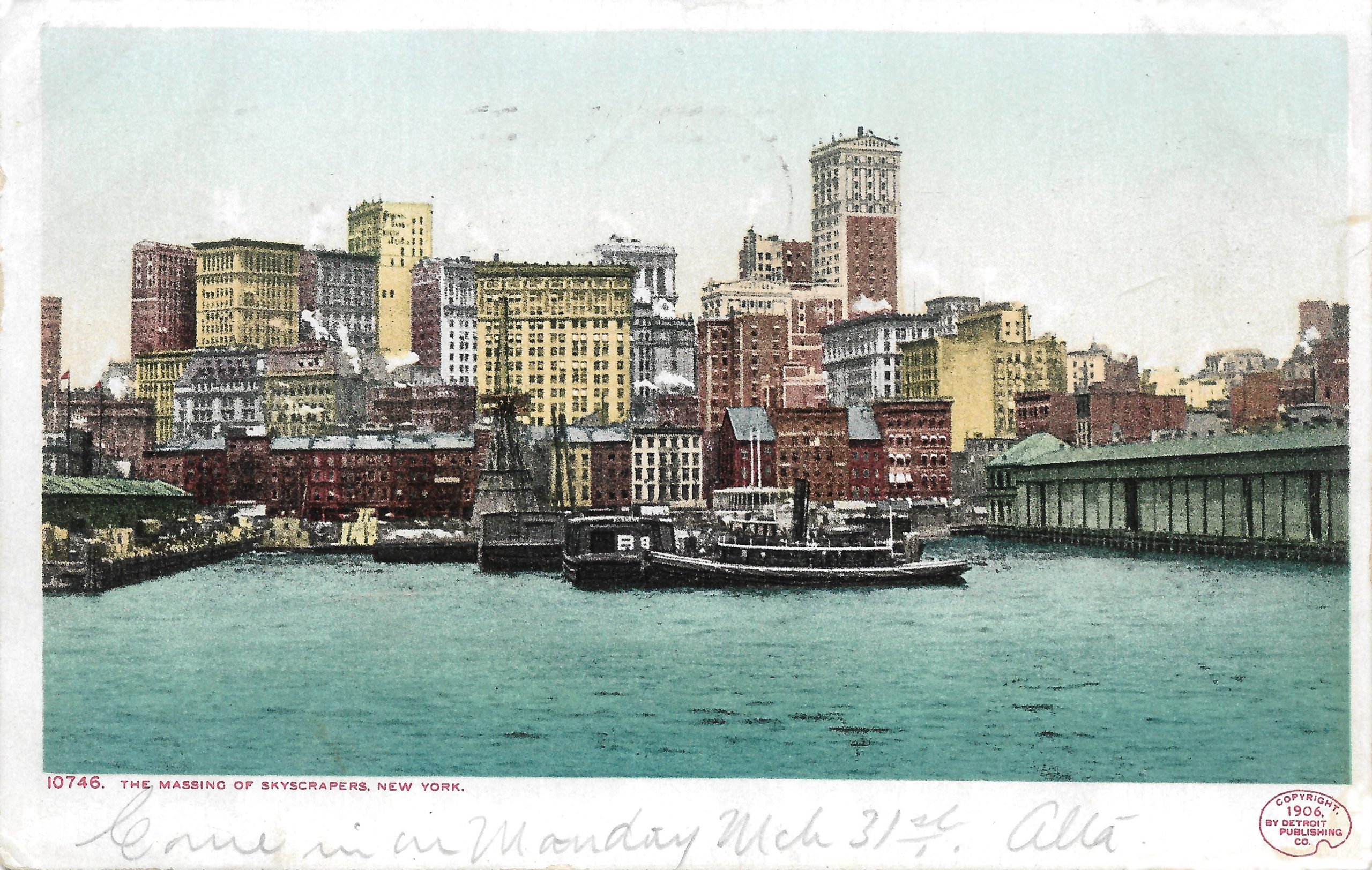 This 1906 Detroit Publishing Co. postcard looking north and west shows “the massing of skyscrapers.” The tallest building is the 346 foot tall 60 Wall Street, headquarters of the International Banking Corporation.
From The Battery
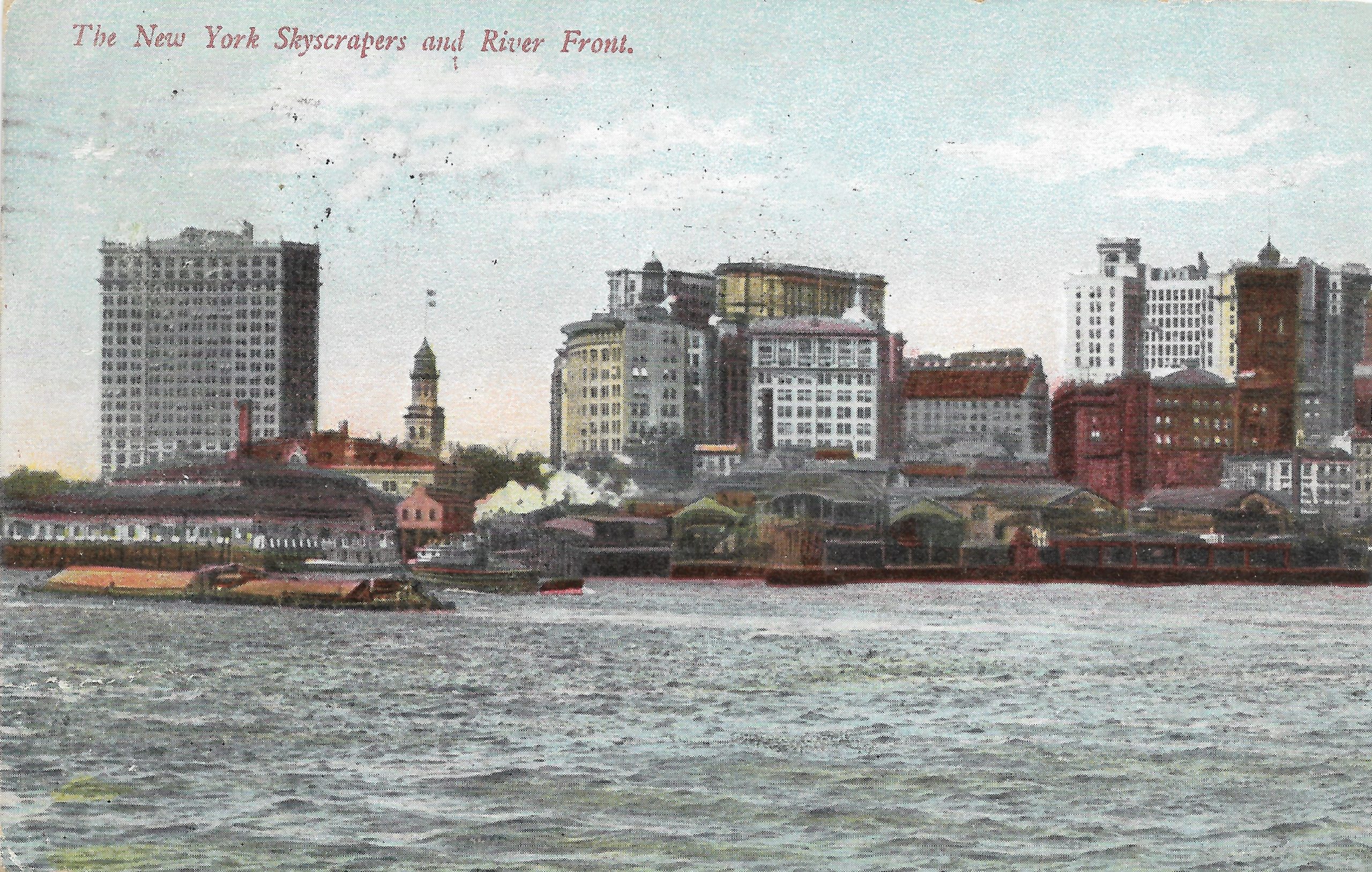 “New York Skyscraper and River Front” is by Rosin & Co. and shows a view of the Battery with the 20-story Whitehall Building (built 1902-1904) on the left. The Whitehall was designed by Henry J. Hardenbergh who also was the architect of the Dakota Apartments. In 1908 the Whitehall Building added a 31-story extension adjacent to the original building.
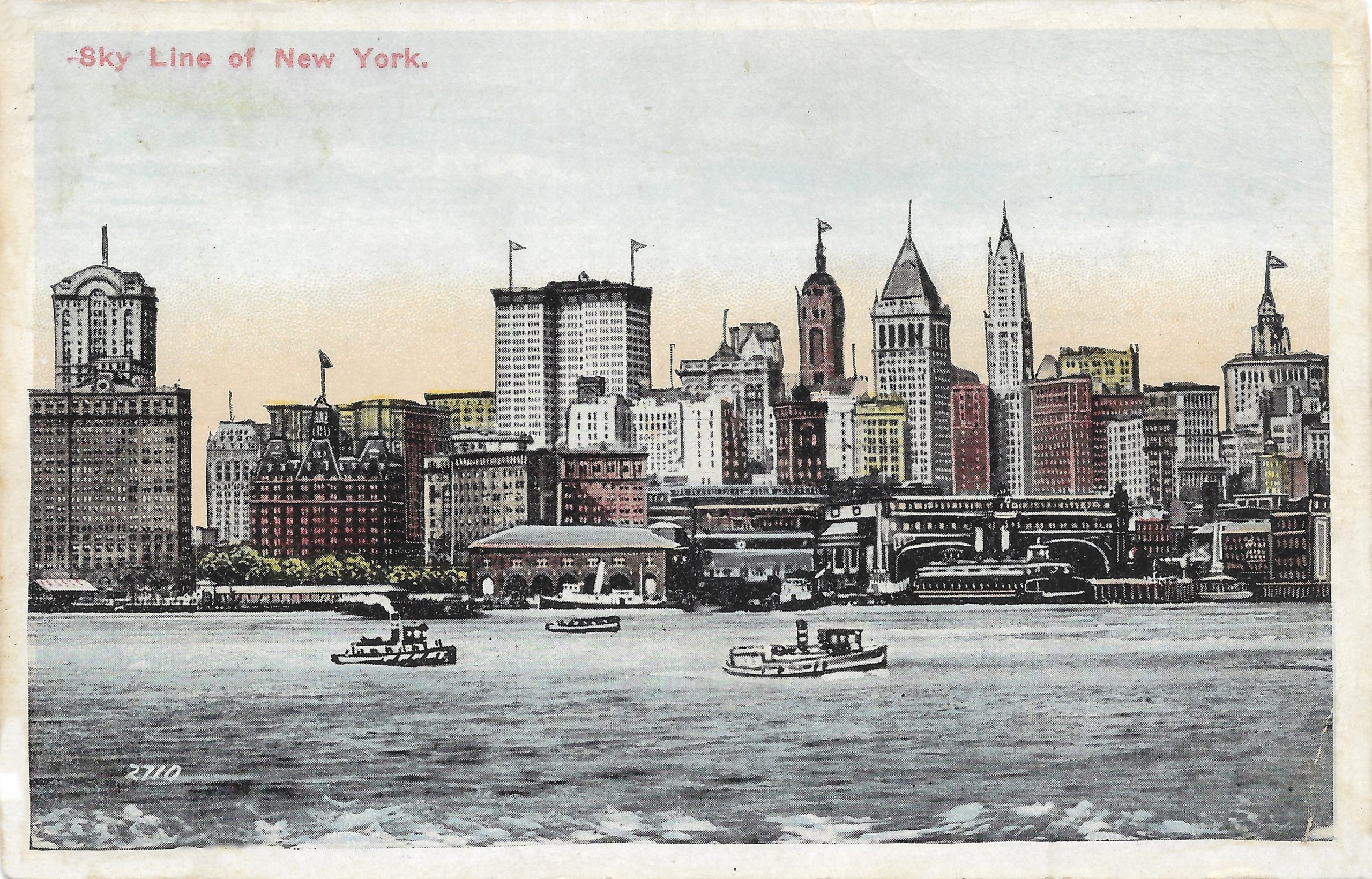 This view taken a few years later shows The Whitehall Building Extension and many more tall buildings from a similar vantage point.
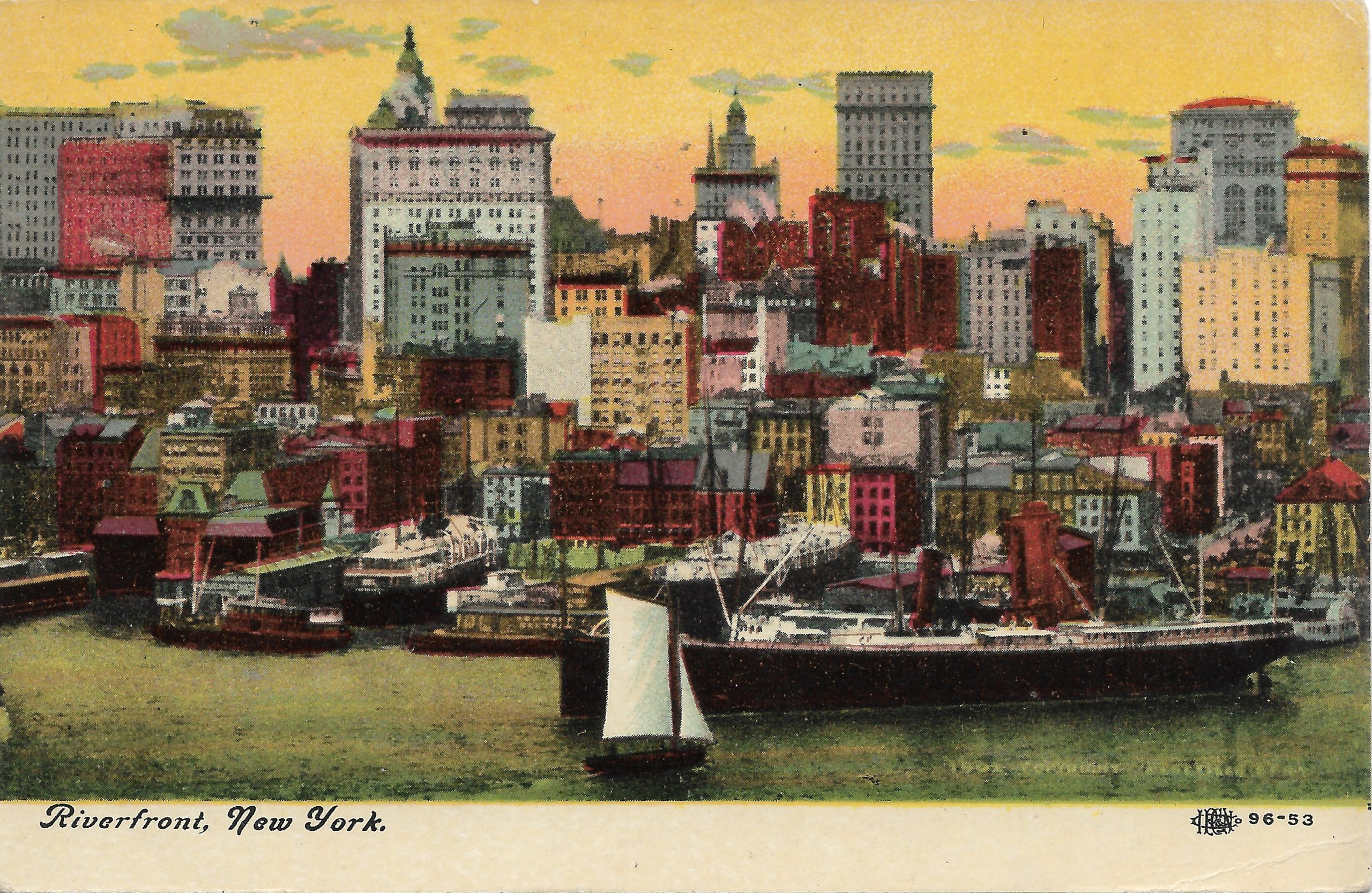 This colorful card by the Illustrated Postal Card & Novelty Co. “Riverfront, New York” shows a dreamy sky with buildings having hues and tints that exist only in the artist’s mind. The artists who hand-colored postcards from a black and white photograph usually had never been to or seen in person the subjects they were coloring in.
The Singer Building
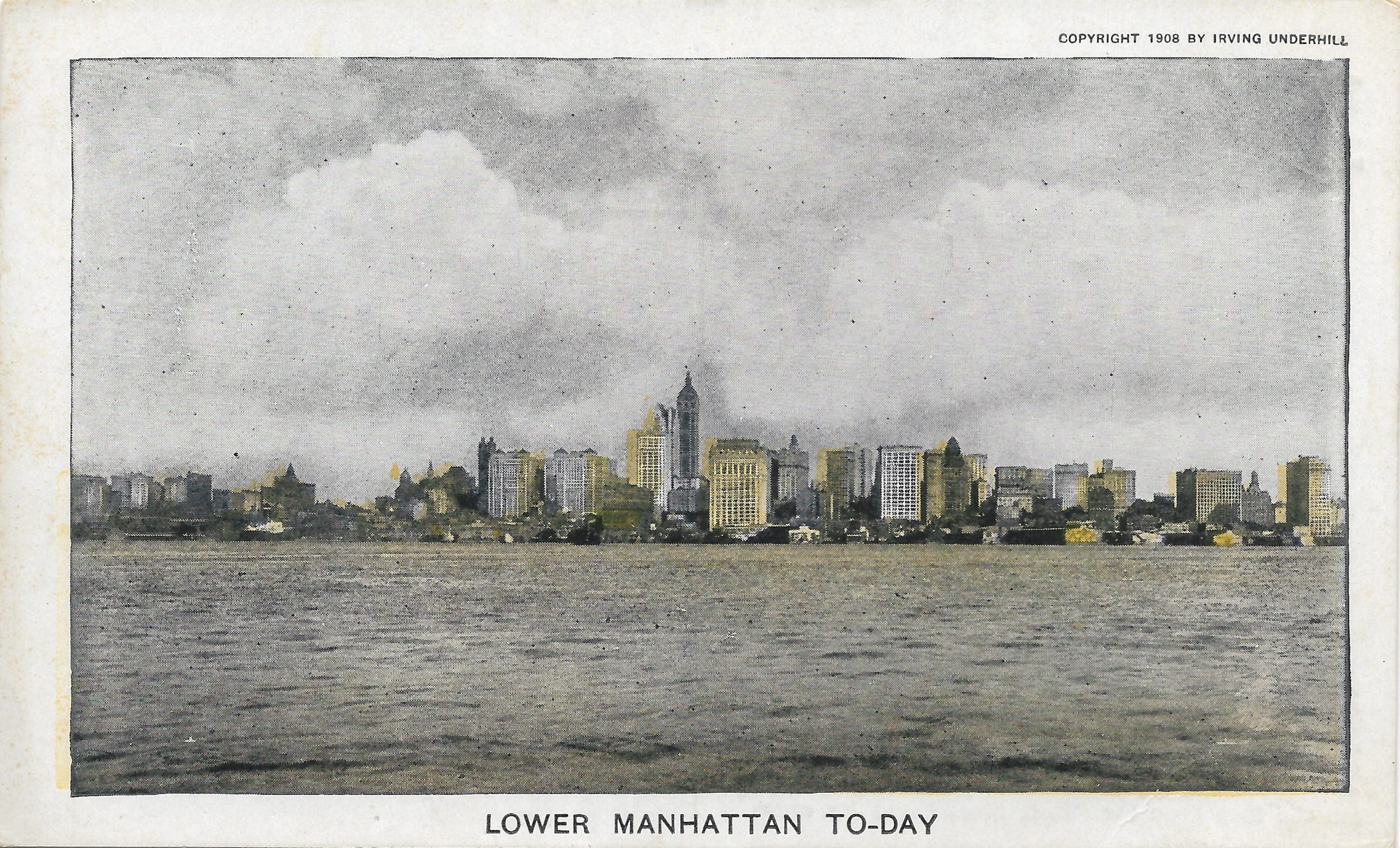
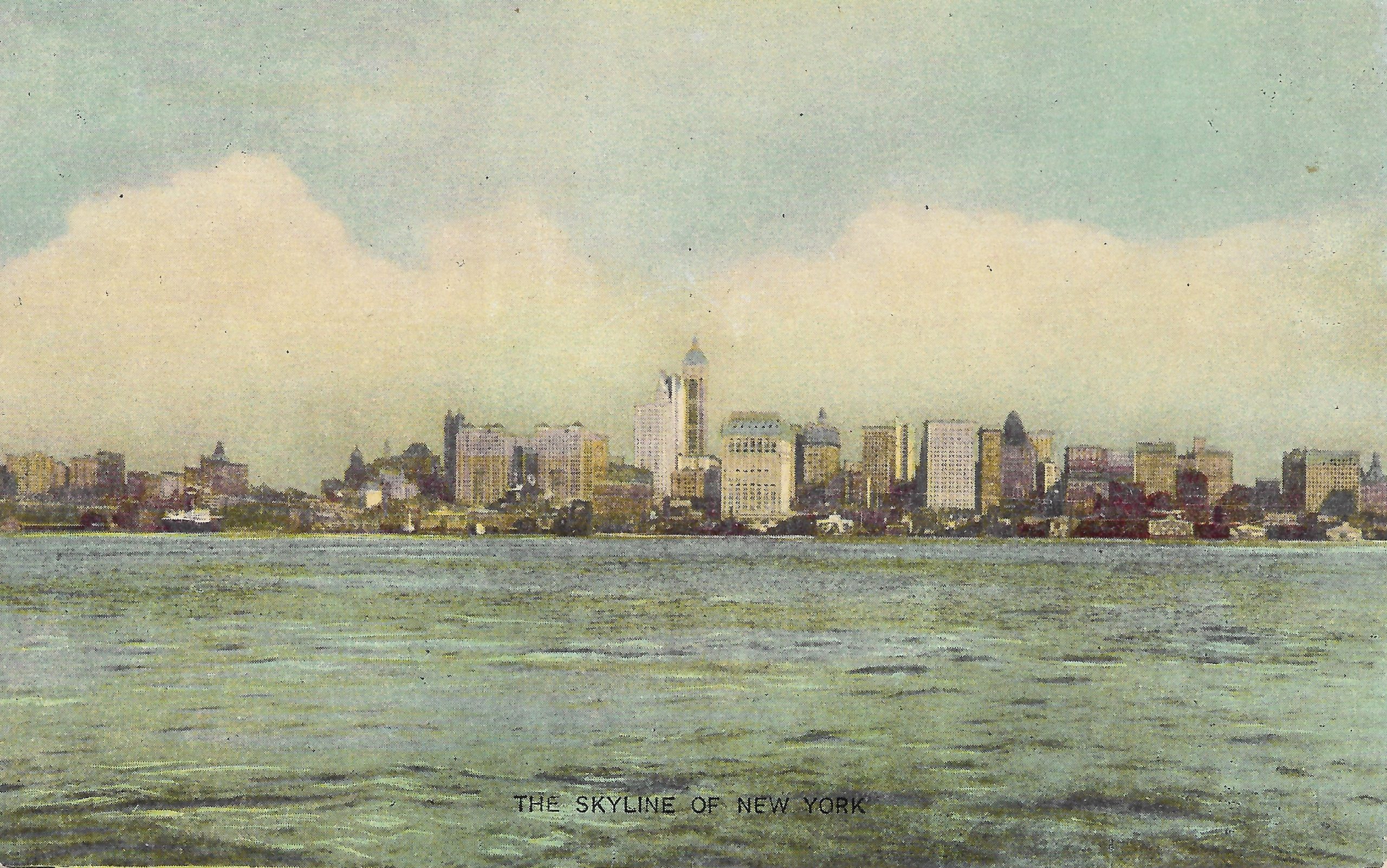
These two 1908 postcards present similar, if not the exact same view, but rendered differently. Both “Lower Manhattan To-Day” (published by The Churchman Company, photo by Irving Underhill) and “The Skyline of New York” (The American News Company) as seen from The Hudson River with The Singer Building in the center. The Singer was briefly the tallest building in the world in 1908. The Metropolitan Life Insurance Company Building on 23rd Street usurped the title in 1909.
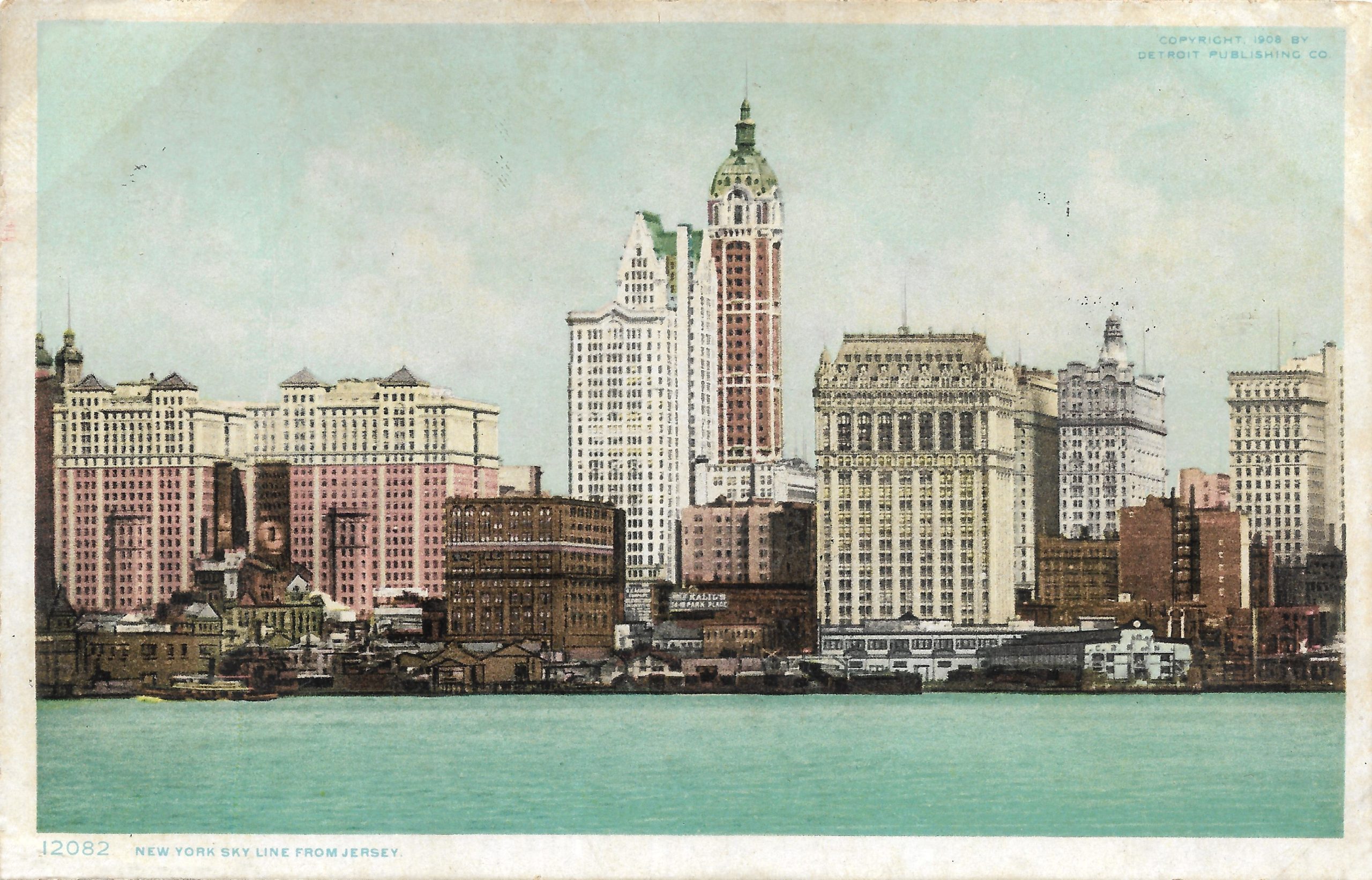 This 1908 Detroit Publishing Co. view presents a closer look at the Singer Building, City Investing building adjacent to the Singer and Hudson Terminal Buildings to the left.
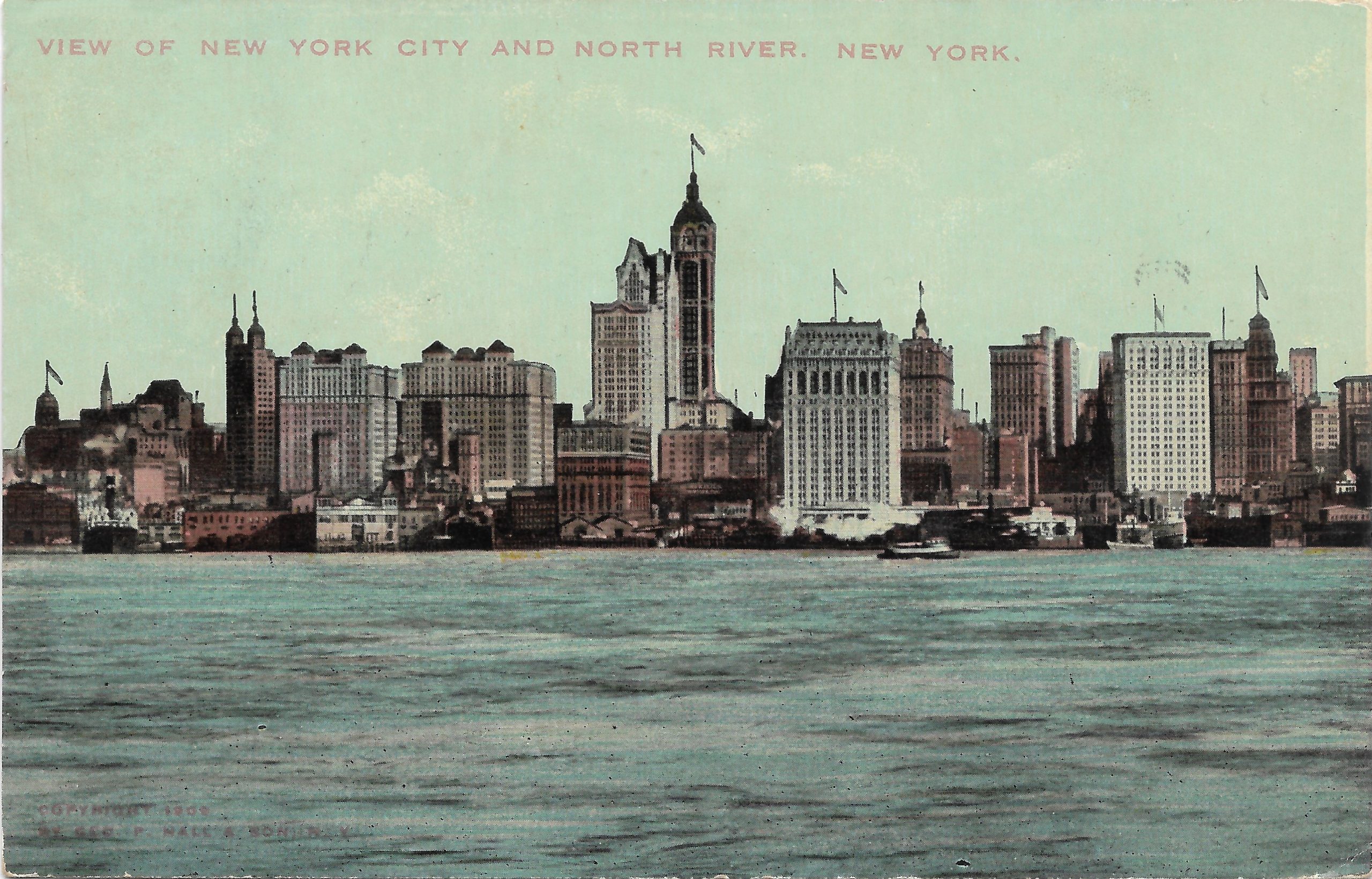 This 1909 George P. Hall photograph shows a similar view from the Hudson River produced by Theodor Eismann Company and the Theochrom process, producing sharp and lifelike colors.
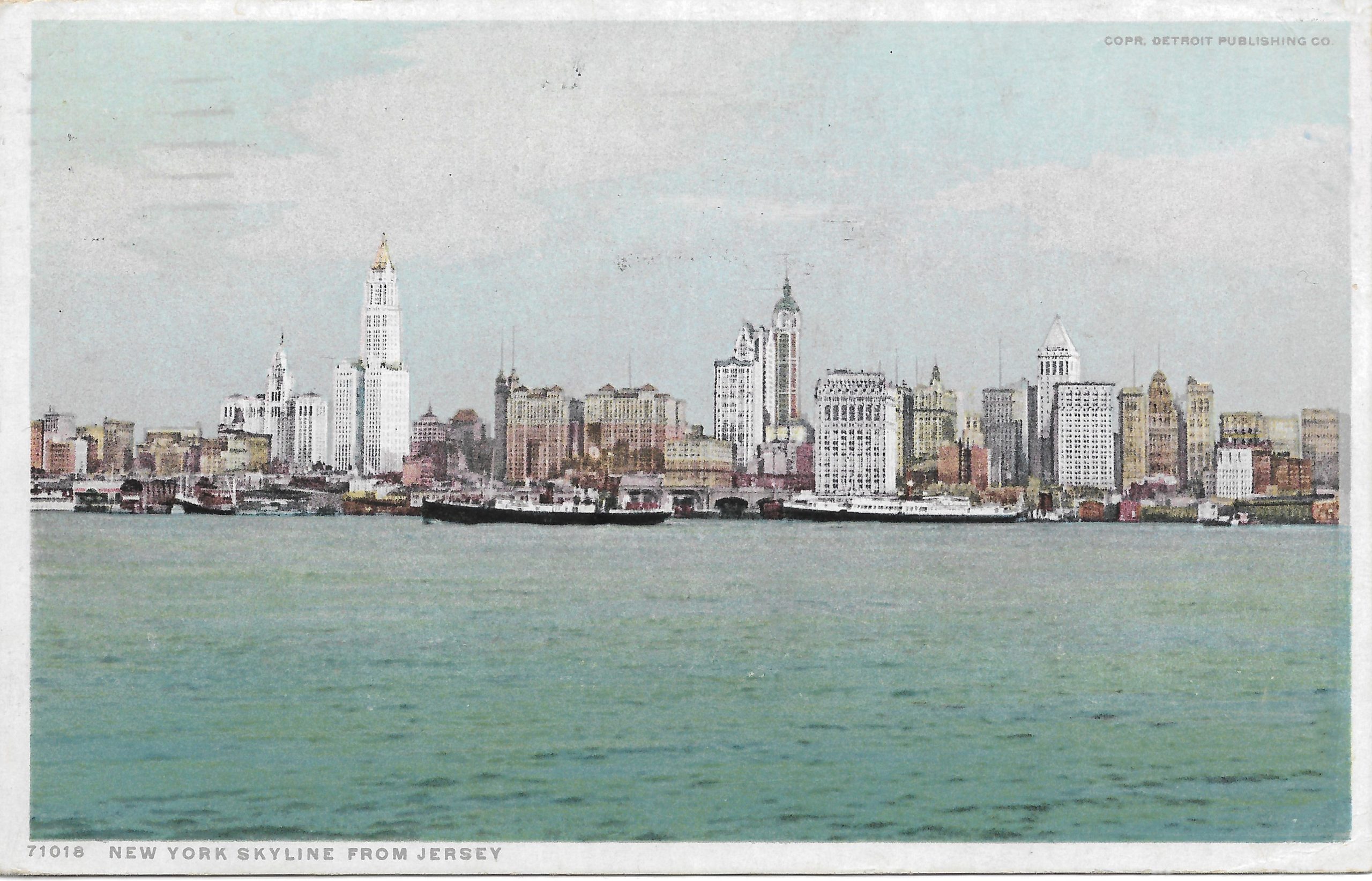 The Woolworth Building (left) would become the tallest building in the world upon its completion in 1913. This Detroit Publishing Co. view captures a wide panorama of lower Manhattan from New Jersey.
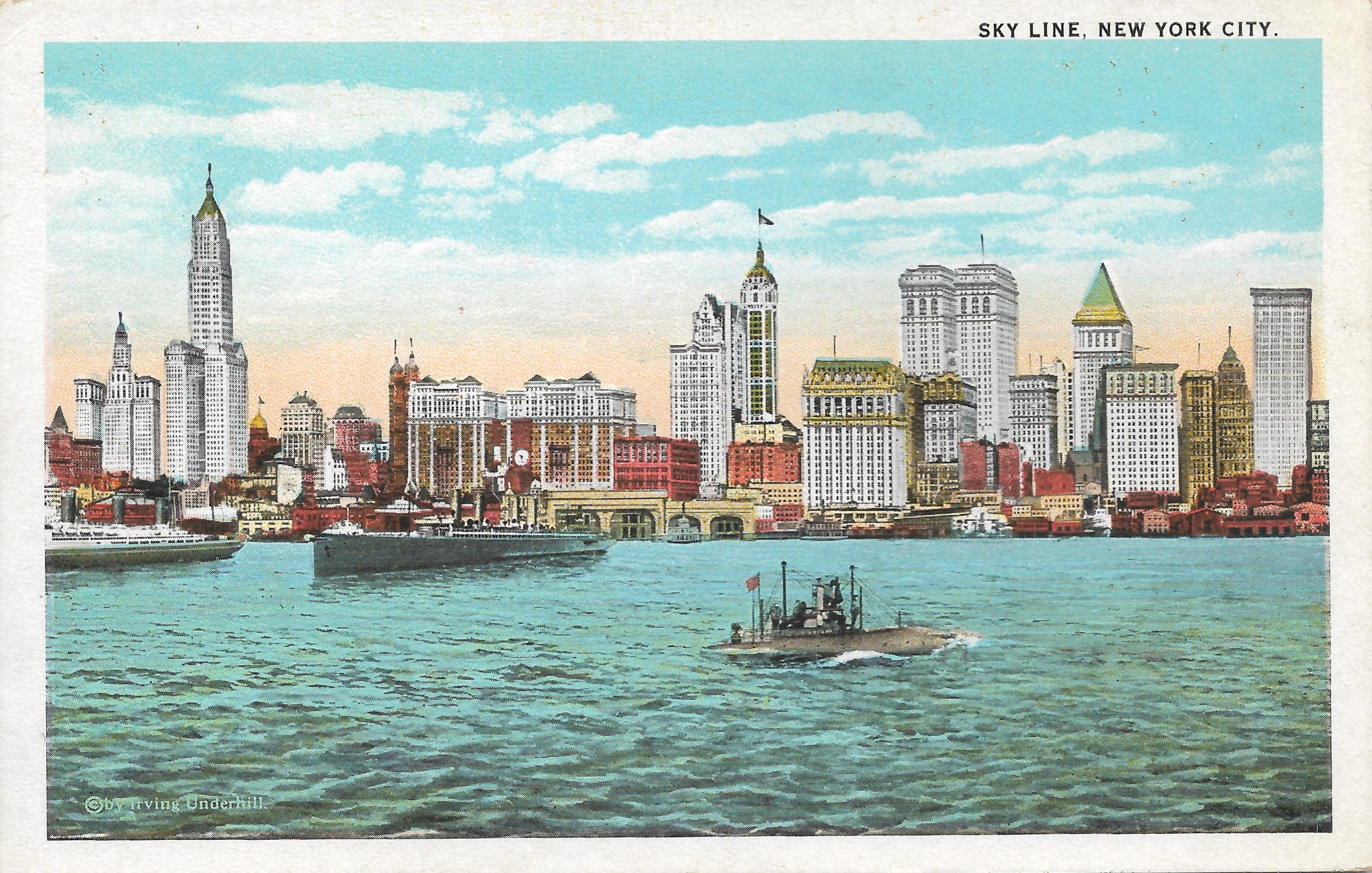 A closer look at the “Sky Line” from the Hudson by photographer Irving Underhill. To the right of The Singer Building, the skyline now contains the addition of the Equitable Building, completed in 1915. This view is circa 1917 by the presence of a military ship (foreground) protecting the harbor during World War I.
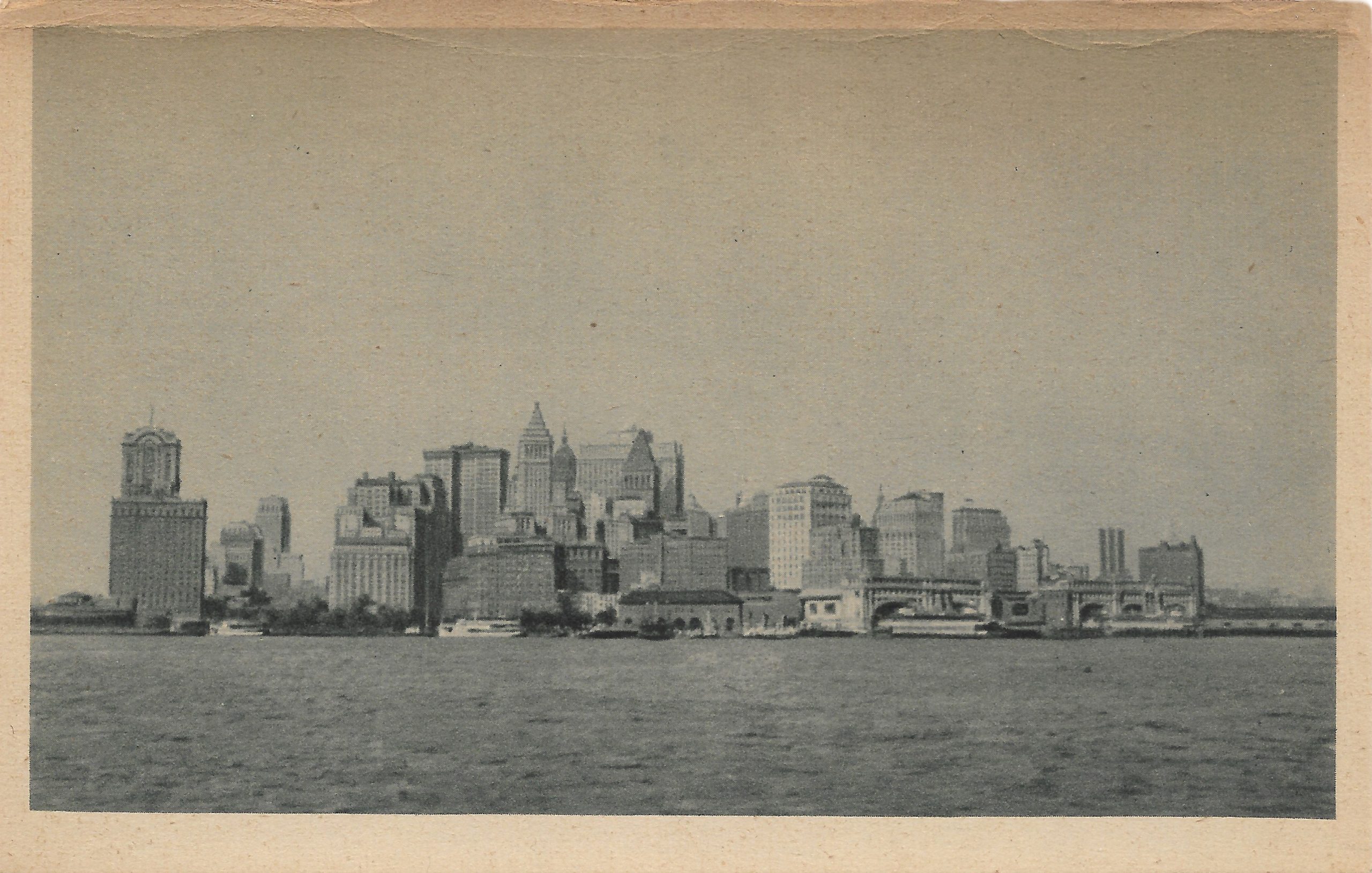 Our final postcard view by Mezzotinto Art Cards Co. simply titled “Skyline” on the rear, shows a sweeping view of Lower Manhattan circa 1920.
Today riding the Staten Island Ferry, these views have been obliterated by “progress” or as I term it – soulless glass monoliths.


