Category Archives: Baseball

An Unseen Archive Of Lou Gehrig Memorabilia Goes To Auction

Some of Lou Gehrig’s Baseball Belongings and How They Remained Hidden For 70+ Years


1927 Yankee Infield Autographed Photo from L-R Gehrig, Lazzeri, Koenig, Dugan – @ Heritage Auctions 8 4 11

Lou Gehrig’s story as told in The Pride of The Yankees, the 1942 Hollywood version of his life, made it seem like there were no other women in Lou’s life except for his mother Christina and wife Eleanor.


In the August 2, 2011  New York Times is a story of how Lou seems to have dated at least one other woman.  That relationship apparently lead to the woman, Ruth Martin, having a friendship with Lou’s mother Christina for many years, beyond her relationship with Lou.  After Christina passed away in 1954, Ruth Martin inherited some of Lou’s  possessions. It is an interesting story.

Jeffrey Quick, Ruth Martin’s son, is selling these one-of-a-kind artifacts at Heritage Auctions on August 4, 2011.

Stealing Home

The Most Exciting Play in Baseball Was Accomplished by Rod Carew Seven Times in 1969

Rod Carew’s 2nd steal of home in 1969 – April 19, 3rd inning vs. California Angels. Harmon Killebrew is #3.

It’s a play you hardly see anymore-  the pure stealing of home plate. Not part of a double steal or a failed suicide squeeze attempt.

At the urging of Minnesota Twins manager Billy Martin in 1969, second baseman Rod Carew swiped home an astonishing seven times in one season, tying the major league record of Pete Reiser of the Brooklyn Dodgers set back in 1946.

You’d think that Carew must have stolen a lot of bases that year considering his constant stealing of home. Amazingly, Carew stole a total of only 19 bases that year!

Carew, the future Hall of Famer, told the story of how he perfected the steal of home in his 1979 autobiography Carew by Rod Carew with Ira Berkow (Simon and Schuster ,1979) which is excerpted here.

Carew stole home his record tying seventh time on July 16, 1969  in the second inning against the Chicago White Sox in the first game of a double header at the Twins home park, Metropolitan Stadium. The Twins ended up winning the game 9-8. Continue reading

Baseball Theme Songs

When Baseball Teams Had Their Own Unique Songs

Dodge Dart radioWhen my Dad and I would drive places at night in the 1970’s, my father would put on the Baltimore radio station, WBAL-AM to hear the Orioles games. At night the radio signals were stronger and you could pick up most of the bigger radio station’s broadcasts within a 400 mile range, so he would listen. I vividly remember the upbeat song that used to be played to start the O’s broadcast. I searched the internet and have had no luck finding “Orioles Baseball” which is what I believe the title was. But I have collected a number of baseball theme songs and thought I would share them.

For every baseball fan who can remember…

(click on link to hear the mp3 of the song)

Yankees Theme Song

In the 1970’s when I was listening to the radio, before the start of every ball game, the New York Yankees would have their theme played. The Yankees announcers, Phil Rizutto, Frank Messer and Bill White would eventually talk over the song and it would fade out. At the end of the game they would play the theme again. The Yankees still play a truncated version of the song at the beginning and conclusion of games on the radio, but they rarely play this version with the lyrics.

Mets Theme Song

Musically well constructed and simply the best song ever written for a team with its catchy lyrics. The “Meet The Mets” song still holds up nearly 50 years after the Mets introduction to New York. This version is the original version. (ed note: strangely enough I wrote this article on June 30 and originally scheduled it to be posted on July 5. I moved it up to July 3 after seeing that the writer of the Mets theme song Ruth Roberts passed away Friday, July 1 at age 84.)

Cubs Theme Song

If you grew up in Chicago you may remember “Hey, Hey Holy Mackarel” which was the Chicago Cubs song.

White Sox Theme Song

Now, if you were a Chicago White Sox fan, the song dear to your heart would be “Let’s Go, Go, Go White Sox.”

Tigers Theme Song

In the late 1960’s this is what the Detroit Tigers were playing – “Go Get ‘Um Tigers.” Continue reading

ESPN “Improves” Baseball With Incredible Technology

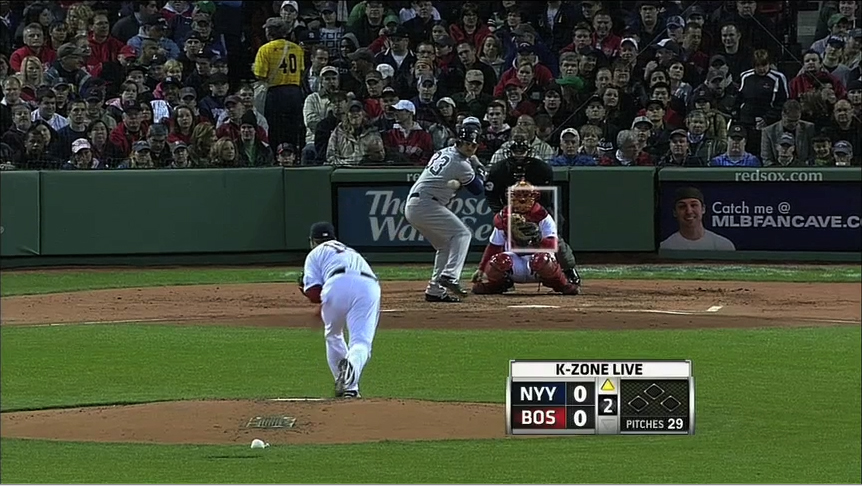
A Strike Box, Called K-Zone, So Viewers Can Have their Main Focal Point Completely Obscured

I watched ESPN’s Monday Night Baseball for the first time this season for a few minutes. The Yankees were battling the Reds in interleague play.

For those baseball fans who don’t know where the strike zone is or question the umpire’s judgment, the brilliant minds at ESPN have put a rectangle superimposed over the home plate area to point out what was a ball or a strike. It was on the viewing screen for every pitch in the bottom of the 9th inning.

I quickly turned off the game before it ended and put on the radio. It was unwatchable. Continue reading

The Original Yankee Stadium – Photographs and Memories

A Reflection on The Late, Great Yankee Stadium With Vintage Photographs

I visited the new Yankee Stadium once in 2009 when it first opened. The feeling was a bit surreal. It was like being in Yankee Stadium, but it wasn’t. The main difference for me was the surrounding neighborhood and looking out past the right-center field bleachers and not seeing the apartment buildings and the Bronx County Court House.

The new Yankee Stadium is a glorified mall.

The old Yankee Stadium that existed from 1923 – 1973 was where the storied history of the Yankees took place. Even after the renovation of Yankee Stadium from 1974-1975 which included taking out the old wooden seats and the removal of the beams that could block your view from many of those seats, the stadium still retained some of the old charm, even though it lost a bit of its character. From 1976 -2008 the Yankees played in the same spot where Lou Gehrig, Babe Ruth, Mickey Mantle, Red Ruffing, Hank Bauer, Whitey Ford Joe DiMaggio and Bill Dickey saw action.

The Yankees of the last 35 years; Thurman Munson, Bobby Murcer, Ron Guidry, Mel Stottlemyre, Paul O’Neill, Don Mattingly and Derek Jeter could look around and seep in the history of this altered palace of baseball, even if there were heavy cosmetic changes to the outside and inside of the stadium itself.

There was no more “Death Valley” Continue reading

The First Baseball Strike – May 18, 1912

An Unlikely Catalyst Causes a Baseball Strike – Other Players Rally Around the Unpopular Ty Cobb

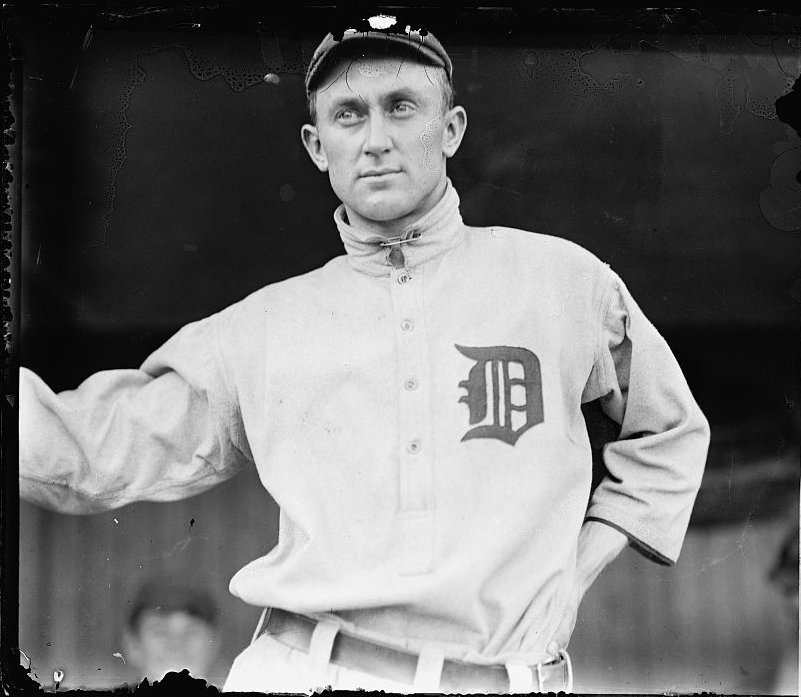
On Wednesday May 15, 1912 The Detroit Tigers were playing the New York Yankees at Hilltop Park in upper Manhattan when one of the most infamous incidents in baseball history occurred.

Ty Cobb, the star outfielder for the Tigers was incited by a fan to go into the stands and pummel him.

The fan, Claude Lucker (alternately spelled by contemporary papers as Lueker or Leuker) worked as a page in the office of Tammany boss “Big Tom” Foley.  From the onset of the game Lucker was being particularly obnoxious according to all accounts. Cobb and Lucker exchanged nasty barbs and Cobb warned Lucker to stop calling him names or he would come into the stands to take care of him personally. By the fourth inning Cobb had had enough and he jumped into the left field stands and started administering a beating and no one seemed to interfere.

Sticks and stones were probably not as harmful to Cobb as the names which could hurt him – especially when the racist outfielder was called a “half-nigger” by Lucker, which was what apparently drove him over the edge.

It should be noted that Lucker had a machine press  accident when he was younger and was missing one hand and had Continue reading

How to Win the World Series – Don’t Hit! Presenting the 1906 White Sox

Nicknamed The “Hitless Wonders”: The 1906 Chicago White Sox.

Portrait White Sox catcher Billy Sullivan 1909 Chicago Daily News negatives collection, Courtesy of Chicago History Museum

This dour looking man shared the team lead for the Chicago White Sox in home runs in 1906. His name was Billy Sullivan. He was the team’s catcher. He batted .218.

Billy Sullivan in 1910 Chicago Daily News negatives collection, Courtesy of Chicago History Museum

Billy Sullivan and Joe Sugden in 1901 Chicago Daily News negatives collection, Courtesy of Chicago History Museum

The other slugger to lead the team in home runs was outfielder / playing manager Fielder Jones. He batted .230.

fielder Jones at South Side Park 1905 Chicago Daily News negatives collection, Courtesy of Chicago History Museum

Fielder Jones & Frank Isbell 1907 Chicago Daily News negatives collection, Courtesy of Chicago History Museum

Fielder Jones Base Hit vs. Cubs Chicago Daily News negatives collection, Courtesy of Chicago History Museum

Sullivan and Jones each had two home runs.  This is the shared record with the 1907 Cubs for fewest amount of home runs for an individual team leader on a modern (post 1903) world championship team. Let’s give the 1907 Cubs some credit they walloped nearly double the number the White Sox did in 1906 by hitting 13 home runs.

The White Sox hit a total of seven home runs in 1906. Count them, seven.

The White Sox batted collectively .230. They did not have one .300 hitter who had more than ten at bats. Pitcher Frank Smith had a higher batting average  (.293)  than any other regular starter. They did finish in first place with a 93-58 record.

In the 1906 World Series against the crosstown rival Chicago Cubs the Sox  hit even lower, batting a collective .198.

1906 World Series West Side Grounds Chicago Daily News negatives collection, Courtesy of Chicago History Museum

1906 World Series fans Chicago Daily News negatives collection, Courtesy of Chicago History Museum

The Cubs had won a record 116 games, which is still the modern National League record for victories.

Yet the White Sox whipped the heavily favored Cubs four games to two and even managed to score eight runs in each of the last two games!

Babe Ruth – Lou Gehrig Film Footage – Identified

An Iowa Family Recognizes Their Family In Recently Discovered Film Footage Of Babe Ruth And Lou Gehrig In 1927.

As this story continues unfolding, the film footage of Babe Ruth and Lou Gehrig that was recently found was recognized by a family member as being their family with the two Yankee greats.  The New York Times reports the family of one of the men seen in the film has identified the little boy shown in the film. He is Phil Donohue and he was 9-years-old when the film was shot. Donohue is now 92, but he remembers that day very clearly. He is also the only person in the film that is still alive.

The Donohue family also had what they thought was the original copy of the film. But R.C. Raycraft who had purchased the film containing Ruth and Gehrig’s meeting with the Donohue family is sure he has the original.

One thing is certain parts of the film footage have been seen before in two HBO documentaries in the 1990’s.  This means one thing- this new old footage, is not so new.

Babe Ruth (Again) And Lou Gehrig – Recently Discovered Film Footage

Babe Ruth And Lou Gehrig On Film

The New York Times reports more film footage of the mighty Babe Ruth has been unearthed, this time from 1927 showing Babe Ruth and Lou Gehrig up close and personal in a barnstorming tour.  The article goes on to say that in the Major League Baseball archives there is less than an hour’s worth of film footage of Ruth!  The majority of film footage that probably still exists resides in attics across the country waiting to be discovered. This film was found in a cellar in Illinois and shows Ruth and Gehrig in or around Sioux City, Iowa on October 18, 1927.

Gehrig and Ruth were good friends, had a presumed falling out (over mysterious circumstances) and eventually made up when Gehrig was diagnosed with amyotrophic lateral sclerosis which ended up taking his life at the age of 37.

The public perception via film of Ruth and Gehrig together is not really when they are together at all.

Hollywood accomplished that trick with The Pride of the Yankees, the 1942 movie depicting the life of Lou Gehrig ,who is played by Gary Cooper. Babe Ruth plays himself in the picture.  No mean feat as Babe was already 46 years old and was significantly heavier than in his playing days.  Ruth would not be embarrassed.  Before the movie started shooting, Babe went on a diet and dropped a significant amount of pounds so he could play the part himself.

While the picture is embellished for the silver screen, it still covers a fair portion of Gehrig’s baseball accomplishments while telling more Lou’s devotion to his family and the love story between Eleanor Twitchell (the future Mrs. Gehrig) and Lou.  The movie almost never got made.  Producer Samuel Goldwyn knew nothing about baseball and knew from experience that baseball movies were never “big box office.” But Goldwyn had been shown a newsreel of Gehrig’s farewell speech at Lou Gehrig Appreciation Day by Niven Busch, a Goldwyn screenwriter. Busch was confident a movie about Gehrig would be a success. By the end of the newsreel Goldwyn was crying and had made up his mind to acquire the rights to Gehrig’s story. The end result was a success, with the picture being nominated for 11 academy awards, including best picture.

Here are some photos of The Babe and Lou together. (click to enlarge)

Gehrig and Ruth in a posed publicity photo

Ruth and Gehrig 1927

Babe Ruth Scores ahead of a Lou Gehrig Home Run

Four Greats- Lou Gehrig, Tris Speaker, Ty Cobb and Babe Ruth 1928

Babe Ruth pays his respects at Lou Gehrig’s funeral June 4, 1941

Babe Ruth As You’ve (Probably) Never Seen Him Before

Ask people to visualize Babe Ruth and some standard images of the Sultan of Swat might come to mind and look something like…

Have you ever seen Babe Ruth doing any of the following things?

The Babe practicing his bunting –

Babe Ruth practicing his right-handed hitting

The Bambino sliding into home plate-

The Babe about to field a fly ball in the outfield-

Babe Ruth Pitching for the Yankees 1933 –

Babe Ruth smokes in the dugout-