In 1921 The Annual Cost Of Living In New York For Working Men & Women Was Just Over $1,000
A Family Of Five – $2,263

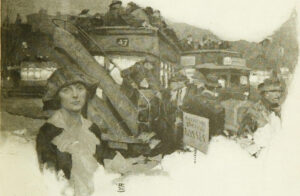
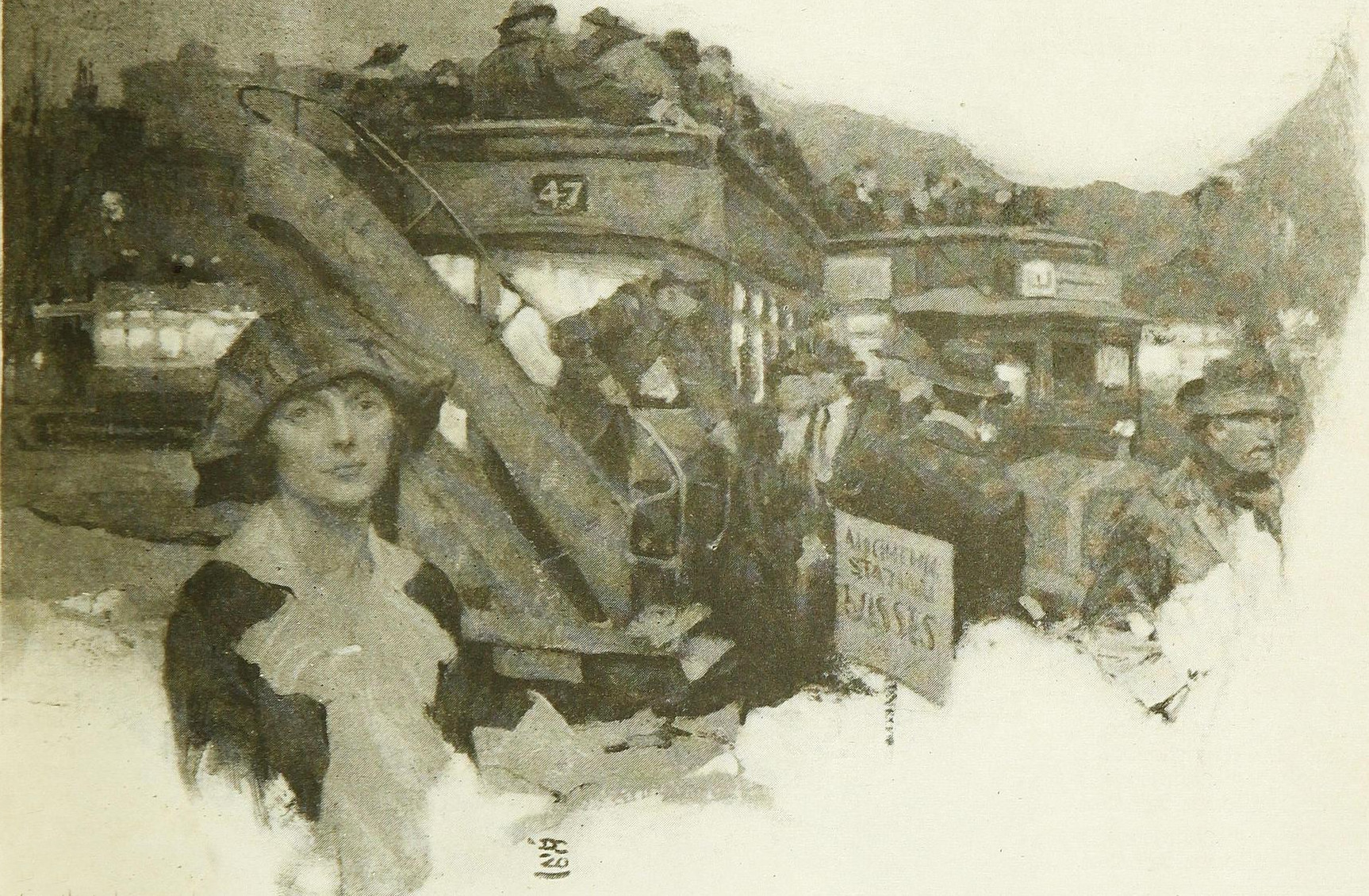
Moving and searching for a new apartment illustration Eldon Kelley, New York Herald
For several weeks The New York Times has been running a column on the weekend “Affording New York.’
The headlines show there is a wide range of what is considered affordable in order to live in New York City.
Some of the recent articles hidden behind the Times paywall are :”How a Geologist Lives on $200,000 in Bushwick, Brooklyn.” “How a Florist Lives on $23,000 a Year in Ditmas Park, Brooklyn.” And “How an Artist Lives on $36,000 a Year on the Upper West Side” These articles elaborate on how people cope with the cost of living.
105 years ago in 1921 Dr. William Mosher of the New York Bureau of Municipal Research, conducted an exhaustive study of the cost of living in New York.
What Dr. Mosher found was that a male clerk could subsist well on $1,093 Year, while a single woman would need $1,118.
The study of minimum quantity and cost budgets made by Dr. Mosher was primarily dealing with clerical workers in government service. But it also covered the field for office workers throughout the city.
The survey was undertaken as a means of examining municipal salary standardization.
The survey looked into every detail of expenditure, including the amount which is spent for rent, food, and clothing. By a careful study of prices at department stores, restaurants, chain stores and markets, the Bureau of Municipal Research discovered what these necessities cost in New York.
The numbers below are to live comfortably and is higher than the “poverty” or the “subsistence” level. Dr. Mosher noted that the amounts listed provide not only for the material needs of food, shelter and ‘bodily covering, but for education, sickness and recreation.
For families, the average annual rental was $470.
For a single man the costs of $1,093 were as follows:
Rent – $260.
Food – $359.
Clothing – $156.
other costs laundry, health, carfare, recreation, gifts – $318.
 A single woman, $1,118:
The cost for a single woman was only $25 more than a man. There were small increases in food, laundry and doctors’ bills for a woman.
A couple with three children needed $2,263.55 a year:
Food- $655.35
Clothing – $440.05
Housing – $536.
Miscellaneous items. – $632.15
Health requirements- $80.
Insurance premiums $120.
Carfare – $45.
Recreation $20,
Reading matter – $12.
Organization – $13.
Incidentals – $52.
So what does this prove?
That getting by in New York has always been a challenge for the majority of New Yorkers who live on a tight budget.
Baltimore Sun columnist M.F. Murphy wrote in a 1925 column:
“Why do people live in New York? Why does anyone of moderate means and of intelligence and sensibility expose himself to the indignities and indecencies that are inescapable in this dirty, noisy, overcrowded city? Do persons live here because they want to or they have to?”
The answer, then and now, is a combination of both; people want to and/or have to.
Back in the 1920s there was no social safety net. If you could not work or did not have savings, you would be dependent upon another person or an institution to provide for you.
The main difference between then and now is that costs were slightly more in line with working people’s salaries.
More New Yorkers in the 1920s would fall into what would be classified as middle class, lower middle class or working poor. Their neighbors were all in a similar financial bucket. So while a family was lacking any luxuries, so was practically everyone else they knew. As my grandparents who grew up in tenements in the 1920s said, “We lived in the ghetto, but we did not think of ourselves as poor.”
To put this in perspective, two thirds of New York’s 6,000,000 residents lived in apartments in 1920. And while Dr. Mosher’s report says the average annual rental for a working family of five is $470, what you got for that money was far from opulent.
When available, a brownstone on a side street possessing a three room apartment would go for $1,000 and up, not $470.
Families of moderate means were forced to take what they could get and would actually be paying rents out of proportion to their income. A post-war (World War I) housing shortage, would mean few vacancies and high prices for “nice apartments.”
Were “the good old days” really better?