
Harlem 125th Street Looking West From Seventh Avenue
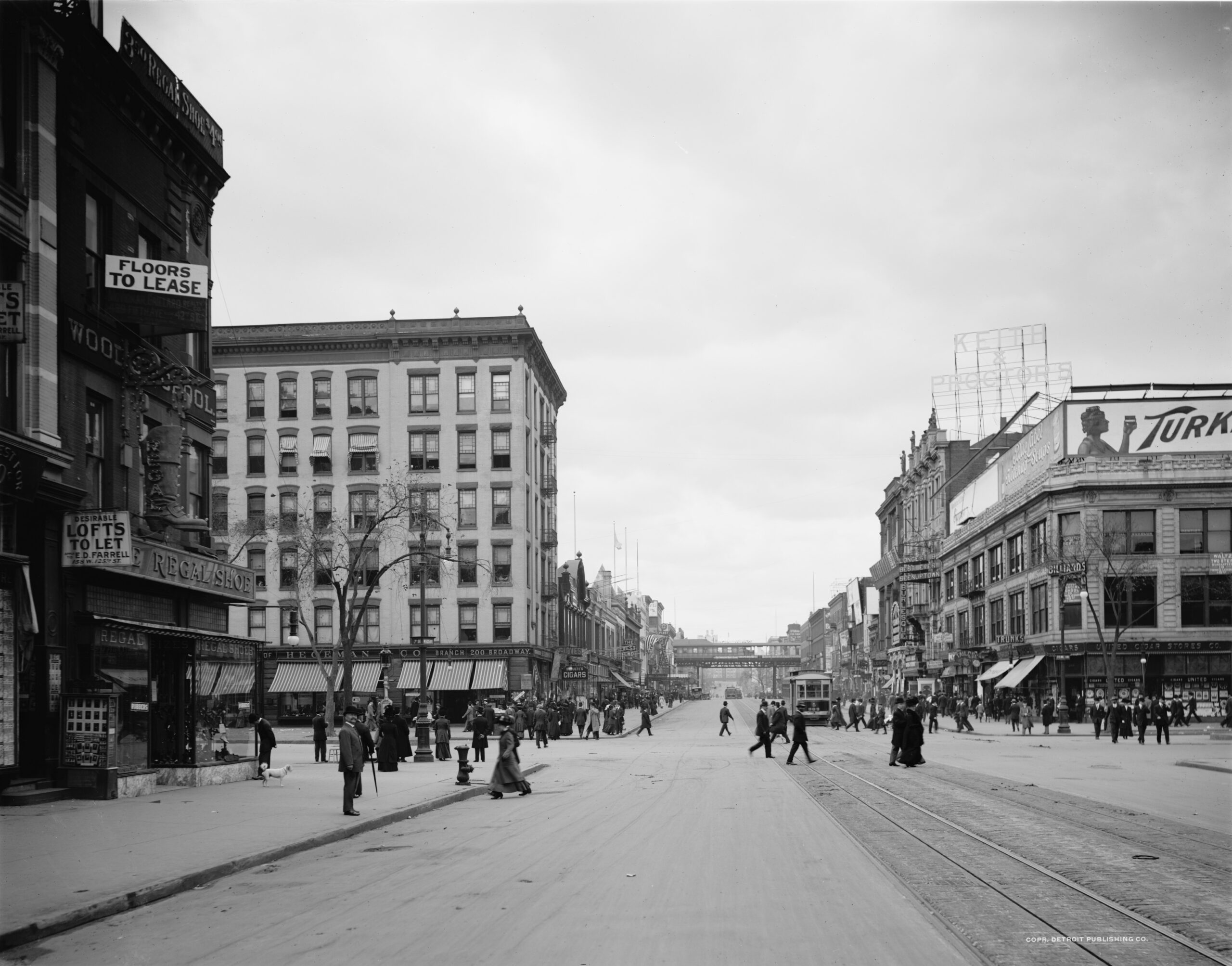 This undated, circa 1910 Detroit Publishing Co. photograph of Harlem’s main stem of 125th Street shows a flurry of activity. We are looking west from Seventh Avenue, today renamed Adam Clayton Powell Jr. Boulevard. This area of Harlem looks like a small village with most buildings being four stories or less.
It’s obviously a chilly day, and every pedestrian is well dressed and wearing a hat.
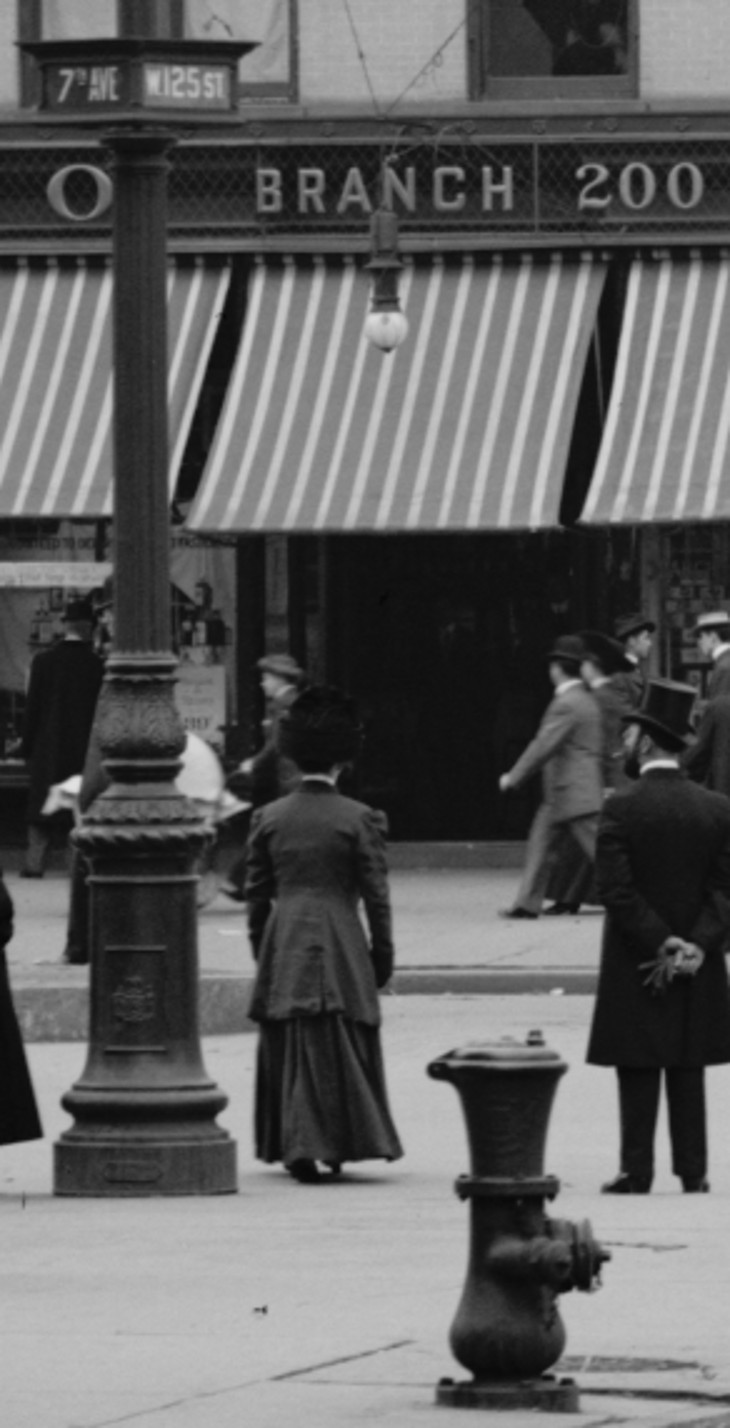 Most don a modern hat. Except for this retro, bearded man in a nineteenth century top hat. Both top hats and beards had fallen completely out of fashion in the early 20th century. He stands under the old lamppost street sign locator near an unusual type of fire hydrant.
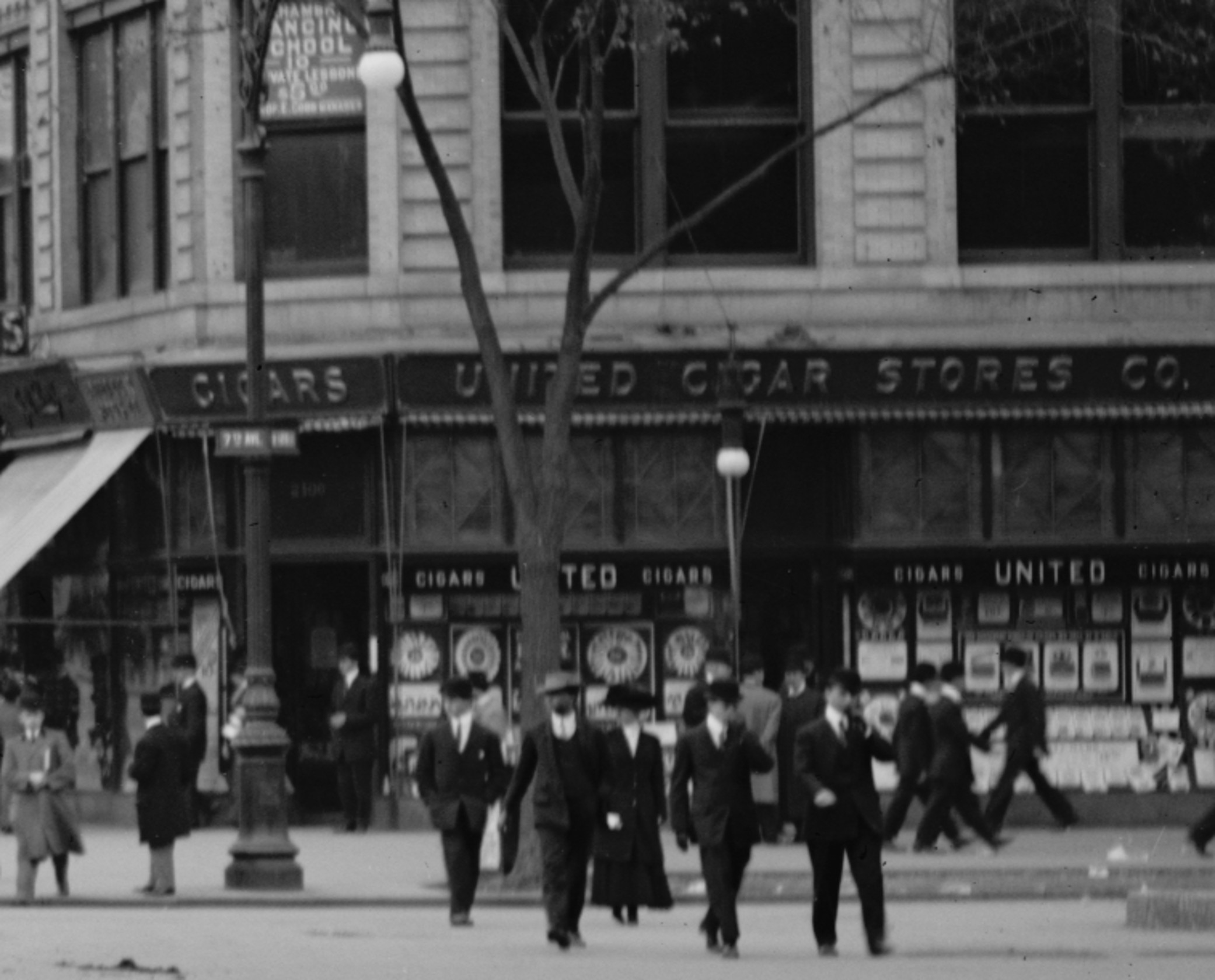 On the northwest corner (right) is a United Cigar store. Above the store is a billiards parlor and dancing school.
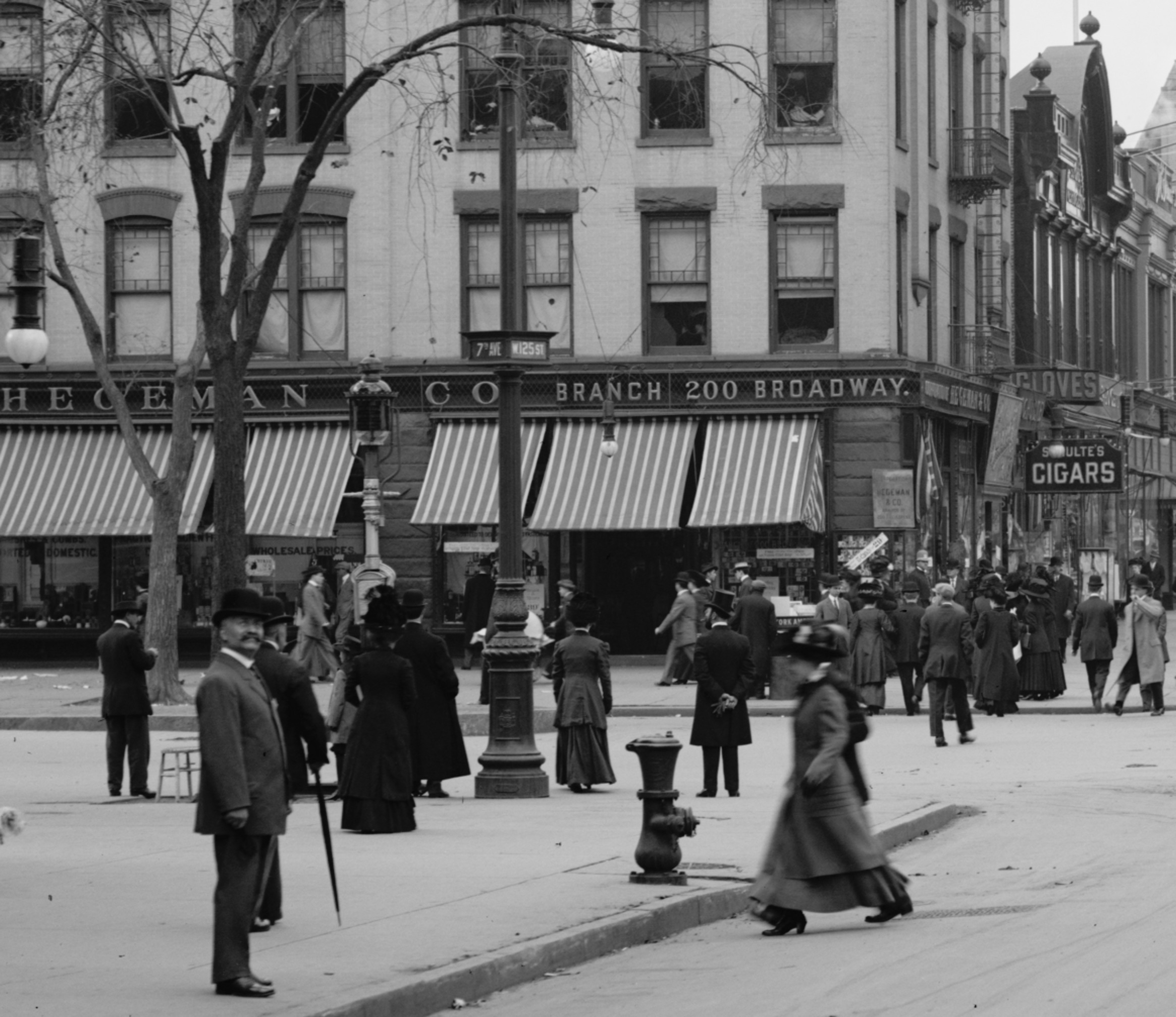 Pulling further away from our top hat man, across the street on the southwest corner is the six story Hotel Winthrop possessing a Hegemen & Co. Pharmacy on the ground floor. A bit further down the block, Schulte’s Cigars competes with United Cigars across the street. The Hotel Winthrop would soon give way for the construction of Harlem’s famous Hotel Theresa in 1913.
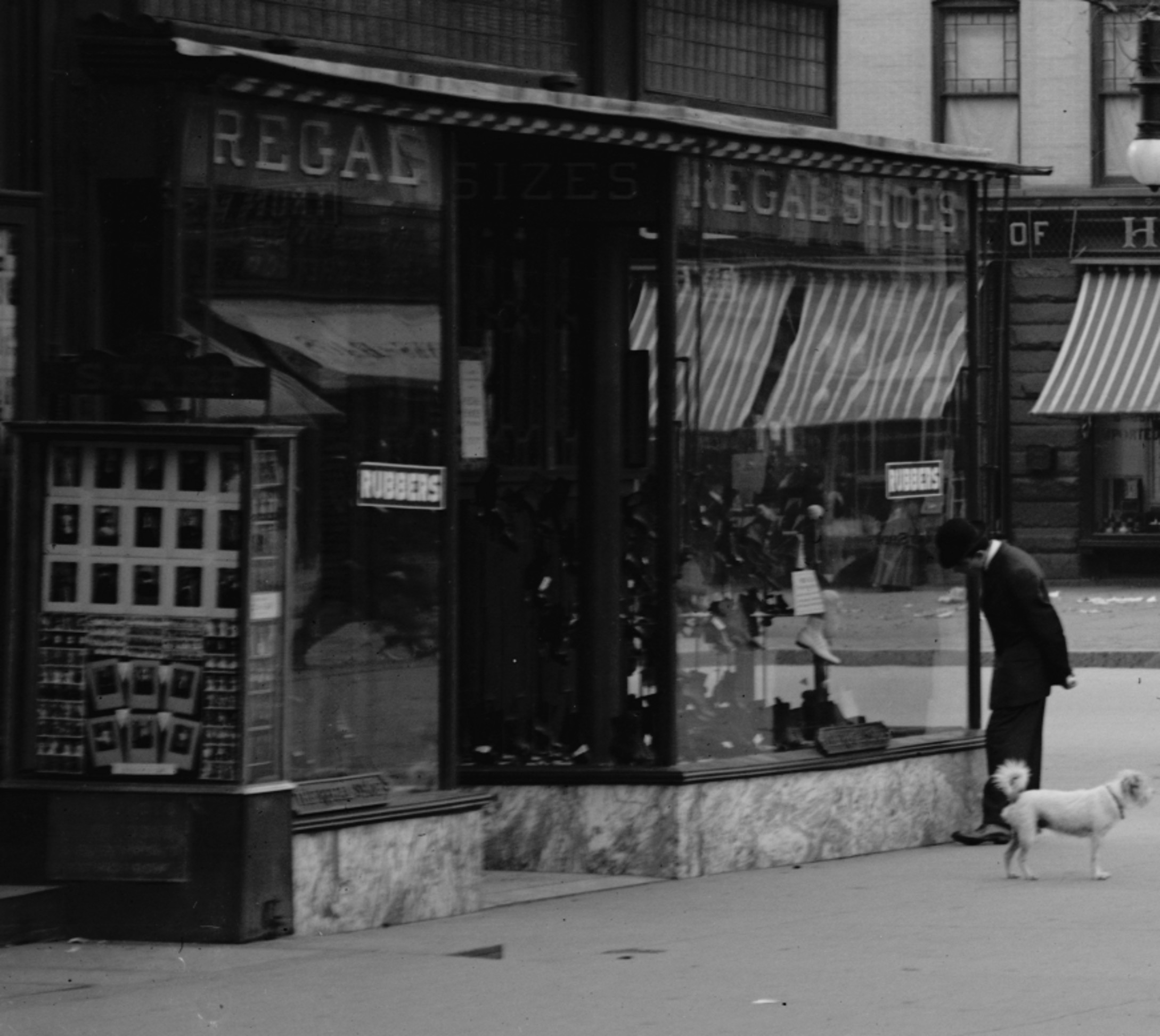 On the southwest corner a man pauses to look at the window display at Regal Shoes. At first it appears the man is with his pet dog. Pets are something you do not usually see in many turn-of- the-century city street photographs. Though the dog has a collar, there is no leash, so perhaps the dog is just a stray and does not belong to the man.
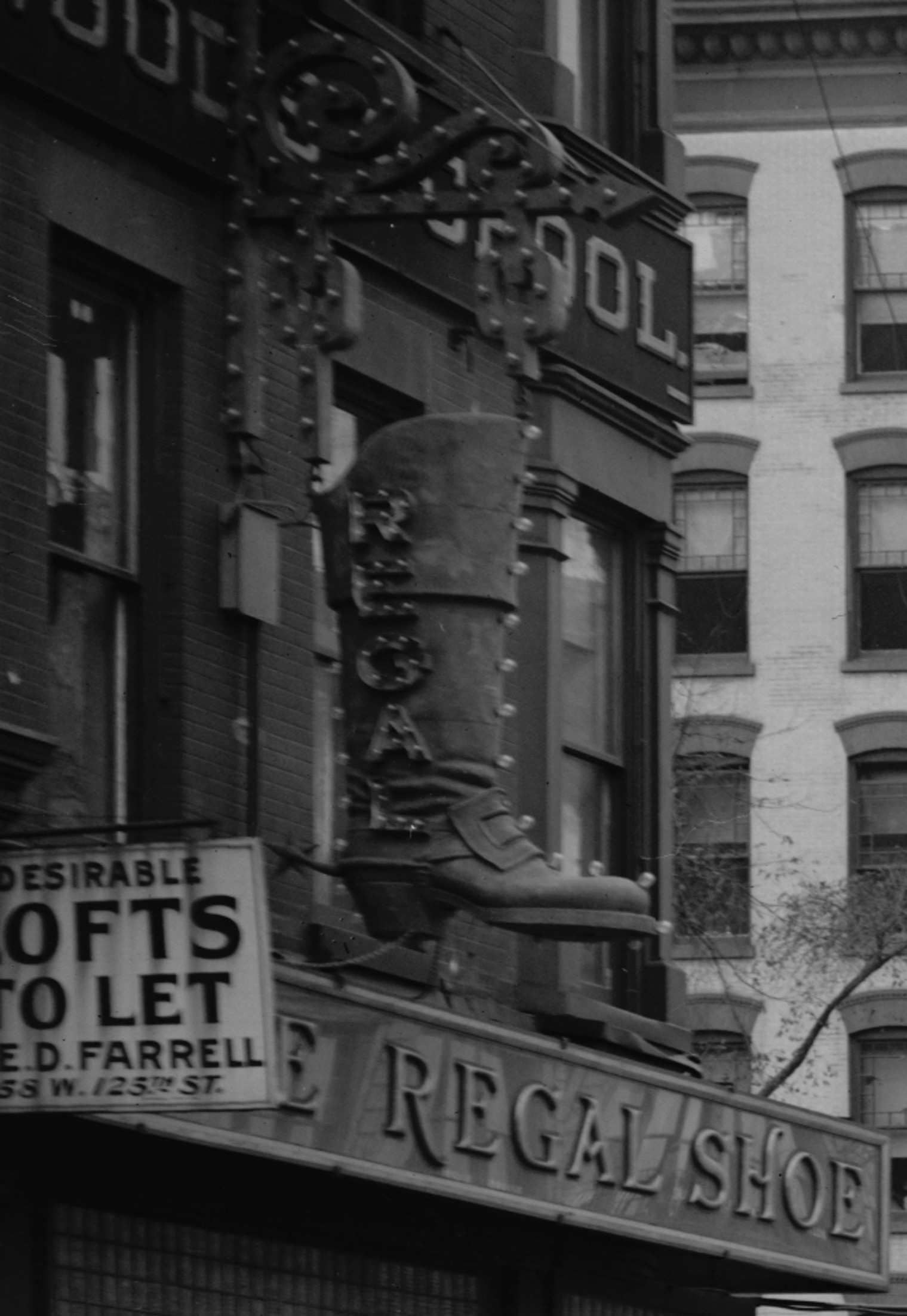
Advertising the Regal store is a phenomenal light up sign in the shape of a boot.
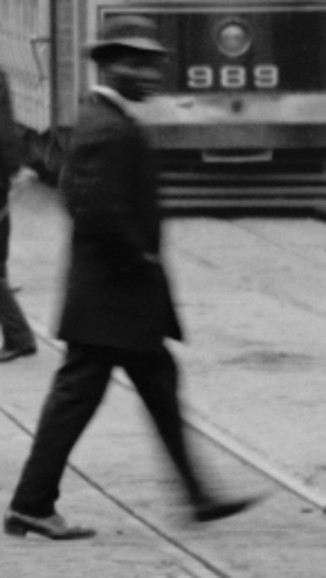
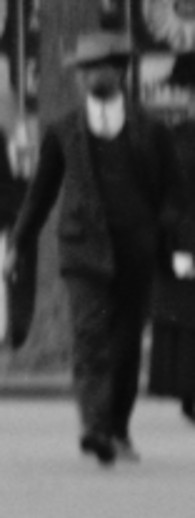
There are few African American’s visible in the photo such as these two men crossing the street. During the twentieth century people tend to associate Harlem as the capital of African American culture. But it wasn’t until after 1910 that African Americans began settling into the area in large numbers. Before that, the area was overwhelmingly populated by Irish, Italians, Germans and Jews.
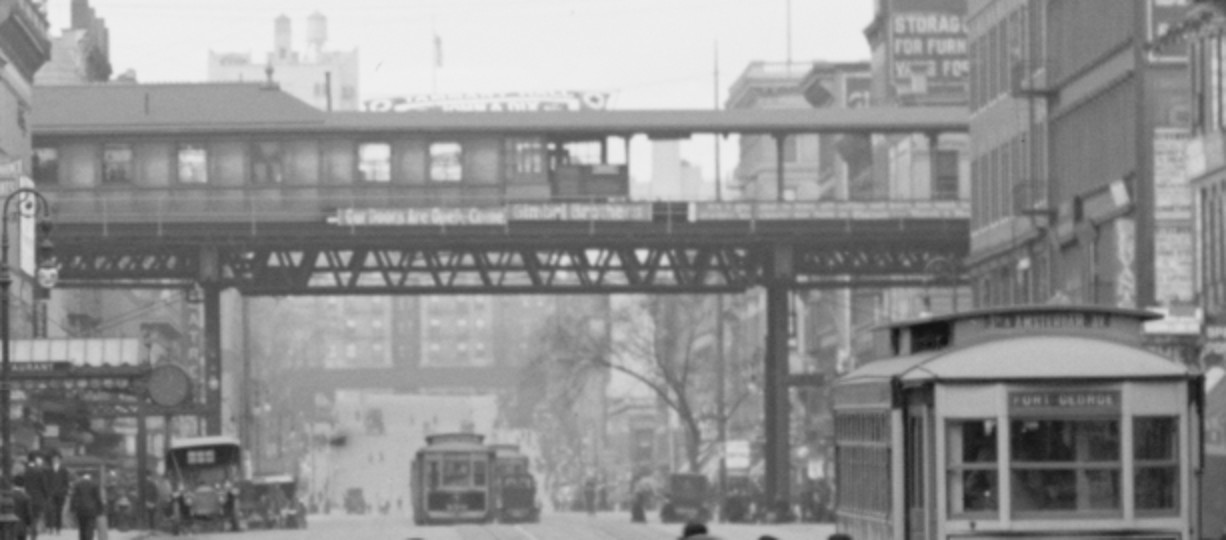 Trolleys traverse 125th Street and in the background is the station of the Ninth Avenue El, with trains running along Eighth Avenue.
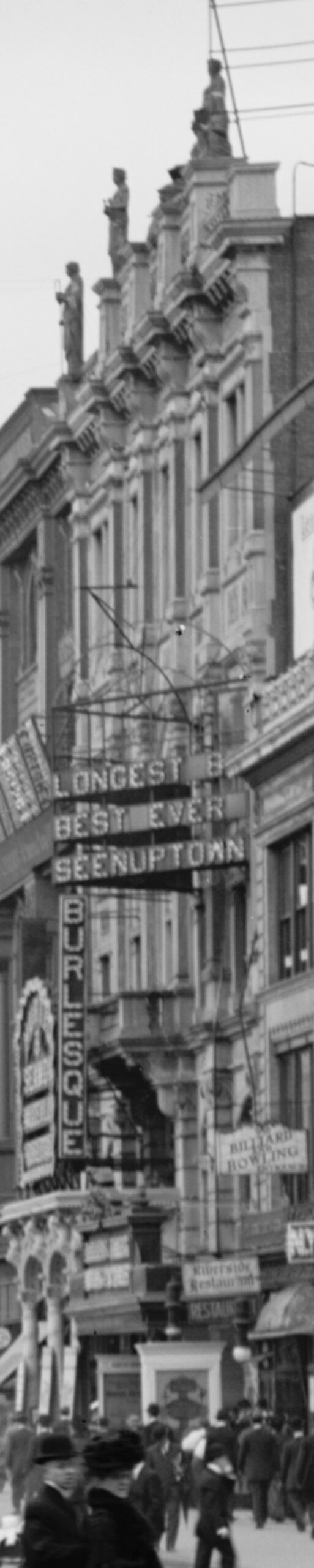 If we could read the writing on the lighted marquee, or the signs in front of Keith & Proctor’s Theater, we would know who was appearing and accurately date the photo. Unfortunately we cannot. Although we do know a theater patron could dine next door at the Riverside Restaurant and play a game of billiards or bowl before or after the show.


I don’t know how much, or even if, this will help, but I have used Photoshop to pull back the skewing and perspective distortions on the marquee of Keith&Proctor’s and tried enhancing the lettering as best I know how (I am not a pro, so I am sure someone else could do better). Perhaps from this you can now more solidly date the photo?
https://i.imgur.com/oXt1tsy.jpeg
Thank you Jonathan. The photograph does not reveal the show playing at the theater, but by checking other photographs around the same time, I was able to figure out that the marquee says” Hurtig & Seamon Vaudeville & Burlesque.”
Theater impresarios Jules Hurtig and Harry Seamon had been leasing the upper floors of Keith & Proctor’s Harlem Opera House for years, hosting vaudeville and burlesque, while the lower portion of Keith & Proctor’s was showing motion pictures in 1910. Keith and Proctor split in 1911, yet the naming of some of their theaters remained in place.
The standing billboards in front of the theater are too blurry to decipher.