
An Unlikely Catalyst Causes a Baseball Strike – Other Players Rally Around the Unpopular Ty Cobb
On Wednesday May 15, 1912 The Detroit Tigers were playing the New York Yankees at Hilltop Park in upper Manhattan when one of the most infamous incidents in baseball history occurred.
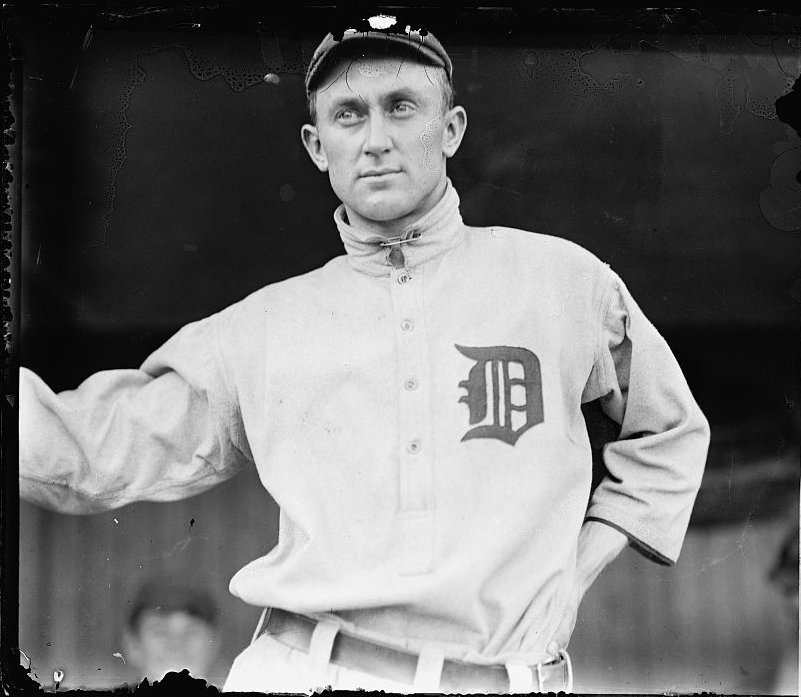 Ty Cobb, the star outfielder for the Tigers was incited by a fan to go into the stands and pummel him.
The fan, Claude Lucker (alternately spelled by contemporary papers as Lueker or Leuker) worked as a page in the office of Tammany boss “Big Tom” Foley. From the onset of the game Lucker was being particularly obnoxious according to all accounts. Cobb and Lucker exchanged nasty barbs and Cobb warned Lucker to stop calling him names or he would come into the stands to take care of him personally. By the fourth inning Cobb had had enough and he jumped into the left field stands and started administering a beating and no one seemed to interfere.
Sticks and stones were probably not as harmful to Cobb as the names which could hurt him – especially when the racist outfielder was called a “half-nigger” by Lucker, which was what apparently drove him over the edge.
It should be noted that Lucker had a machine press accident when he was younger and was missing one hand and had only two fingers remaining on the other hand. While he was beating Lucker, other fans yelled at Cobb to stop and pointed out that Lucker had no hands, Cobb replied, “I don’t care if he hasn’t any feet.”
If this exact incident were to happen today you would have a line of lawyers standing around the block to sue Cobb and public outrage demanding that he be suspended for a year or thrown out of baseball.
But this was 1912 and amazingly many players, other fans and the press thought Cobb was justified in his response to the merciless taunting. Here is the New York Tribune’s account of Cobb’s “well deserved beating” of Lucker:

NY Tribune May 16 1912 (click to enlarge, then click again on image)
When American League President Ban Johnson heard of the incident he did not think that Cobb acted appropriately and he promptly suspended Cobb indefinitely on May 16. Cobb was outraged that he was suspended without a hearing or a gathering of the facts. Cobb said “I should at least have had an opportunity to state my case.”
Lucker claimed he was not the one doing the taunting and announced he had hired a lawyer to sue Cobb. What became of that lawsuit and if it ever actually proceeded never seemed to make future news reports.
Cobb’s Tigers teammates agreed with Cobb’s reasoning of the unfair suspension and on May 17 announced they would not play until Cobb’s suspension was lifted immediately.
What resulted on May 18, 1912 was the first player’s strike in baseball history. Rather than forfeit, Hughie Jennings, the Tigers manager had recruited some amateur players just in case the team carried out their threats not to play unless Cobb played too. When Cobb walked onto the field of Shibe Park in Philadelphia at 2:30 pm with the rest of his teammates to start the game, the umpires informed him he could not play. The rest of the Tigers left the field with him and the substitute Tigers played instead and were annihilated by the Athletics 24-2.
What is less known to modern baseball fans is that the Tigers were resolute and would still not play any future games. The Tigers players had been contacting other teams players since May 17, urging their fellow players to strike as well. The Tigers players started making plans to barnstorm, in other words go on tour to play amateur teams across the country or join another baseball league called the United States League.
That this action could lead to the players organizing a union made the owners nervous. Even though Cobb was mostly despised as a person among fellow ballplayers (teammates included) almost everyone in the players ranks sympathized with his plight, and empathized with his powerlessness in fighting the suspension.
Ban Johnson was furious at the regular Tigers players for refusing to play and was forced to cancel the next day’s game of May 19 between the Tigers and the Athletics saying the Tigers had to field a competitive team and the rest of the Tigers were now automatically suspended as well and were fined $50 for each game they refused to play.
After the Tigers players were told that their owner Frank Navin would be severely punished financially and at the urging of Cobb himself, the Tigers relented and returned to the field to play against the Washington Senators on May 21.
Cobb was allowed to return to play May 26, 1912 against the Chicago White Sox. He went 1 for 4 in a 6-2 Tigers victory.
Despite this violent exchange and many other notorious on and off the field incidents, Cobb’s exemplary playing career would qualify him for the inaugural class of the baseball Hall of Fame in 1936.
Claude Lucker showed up at Boss Tom Foley’s requiem mass in 1926 and was never mentioned again in news accounts.


No one respects a White guilt/shame imbecile and no one of any dignity wants to be called a ‘half nigger’.. Its offensive and degrading to allow an asshole fan to imply Ty’s mother slept with one of them and no proud person would embrace being black tarred with the term.. Cobb was 100% right to beat the fan, should have done worse to the guy and his teammates were correct to defend him.
glad to see the first comment is some unhinged racist shit. cheers
The 1912 Detroit Tigers strike is not the the first baseball strike. The first baseball strike was in 1890 when most major leaguers refused to play for their own major league teams and, instead, formed their own “Players’ League.”
Yes Marty you are correct. I could have edited the title as “modern” era baseball strike. For those who are interested, A Clever Base-ballist The Life and Times of John Montgomery Ward by Bryan Di Salvatore (1999) Pantheon, has a very good section on how future Hall-of Famer Ward was instrumental in forming the Player’s League.
I am curious to know your source for Cobb’s unpopularity among his own team-mates. I hear it often repeated among those writing about Cobb 50+ years later, but don’t know what the contemporary source would be. He certainly seemed a leader among his team-mates – evidenced by their willingness to strike over what they saw as his unjust suspensions and their willingness to return to play when Cobb urged them to.
Several incidents illustrate this, none told in contemporary times because teammates never made negative comments or told negative stories about each other in print. So in a sense you are correct. But his teammate Hall-of-Famer Sam Crawford said, “Cobb came up with an antagonistic attitude, which in his mind turned any little razzing into a life-or-death struggle. He came up from the South, you know, and he was still fighting the Civil War. As far as he was concerned, we were all damn Yankees before he even met us.” This was told first-hand to Lawrence Ritter in “The Glory of Their Times.”
At the end of the 1910 season when Cleveland’s Napoleon Lajoie had supposedly beaten Cobb out for the batting title, eight of Cobb’s teammates sent a congratulatory telegram message to Lajoie.
In a 1938 Sporting News article teammate Ossie Vitt described how Cobb had treated him unmercifully until catcher Oscar Stanage told him to lay off or he’d hit Cobb so hard he’d drive him back to Georgia. Another time, third baseman George Moriarty handed Cobb a baseball bat to “even things up when fighting an Irishman” when Cobb challenged him to a fight. Cobb backed down. Over the course of his career there are documented incidents with teammates such as Bobby Veach and Matty McIntyre that speak of their dislike for Cobb.
Ty Cobb’s autobiography that he wrote with Al Stump has been under attack for a while now, so you have to decide for yourself how much of it you want to believe.
Overall I’m sure many of his teammates were envious of Cobb’s skills and that may have lead to their dislike of him regardless of his personality or the way Cobb treated them.
When it comes down to it, if a player, even if he is disliked or has done some wrong can help your team (see Alex Rodriguez), teammates will overlook the perceived flaws/transgression and come to the defense of their teammate. They want to win.
Pingback: Adam Greenberg & Others Who Got a Second Chance | FanGraphs Baseball