Monthly Archives: May 2011

Classic Hollywood #4 – Theda Bara

The Vamp in a Classic Role

“The Vampire,” Theodosia Goodman otherwise known to the world as Theda Bara in her 1918 starring role The Forbidden Path with (I believe) Hugh Thompson, her co-star.

Theda Bara was one of the first sex symbols of the screen. Her name was supposedly an anagram of “Arab Death.”  (that is completely fabricated along with many other “facts” of her life.)  Bara became a star in 1915 as a “vampire” (not the blood sucking kind – a notorious woman who drives men wild with desire using her wiles and charm and wreaks havoc in their lives) in A Fool There Was. She cemented immortality in 1917 with her portrayal of the title role in Cleopatra.  Bara was pretty much typecast as the vampire (later shortened to “vamp”) and her film career stalled by the end of 1919. She appeared in only three films in the 1920’s and never made any sound films, retiring in 1926. She died in Los Angeles in 1955 at the age of 69.

While some today would not necessarily consider Bara a beauty, there is definitely something very appealing about her. A naturalness that comes through. In a lot of ways she represents more real women of that age and much more than her modern Hollywood contemporaries of Angelina Jolie or Scarlett Johansson representing today’s woman.

Bara’s  heavier legs and abdomen are shown in her movies and photos. Would modern lead actresses be permitted to display extra poundage in our hyper-perfect-looks media without being skewered a la Oprah or Kirstie Alley?

Some photos of Bara when she was at the height of her career:

Paul Gauguin Painting Attacked at the National Gallery

Lunatics Among Us

This story of a woman attacking the Paul Gauguin painting “Two Tahitian Women” on April 1, 2011 got skipped over in a lot of newspapers or was a blurb in others. The 1899 painting is worth an estimated $80 million dollars.

What was even less covered, and I thought was worth commenting on, was what the suspect in the attack, Susan Burns said in her statement to the police. “I feel that Gauguin is evil. Continue reading

Old New York in Photos #4 – Park Avenue

Park Avenue – 1935

For a brief period there was a park in the middle of Park Avenue. This is not it. When road lanes were widened in the 1920’s the pedestrian plaza with benches were removed and replaced with a park like median which is surrounded by fencing and has no public access.

Looking north from around 38th street, Grand Central Terminal is in the middle of this photograph and behind it is the New York Central Building (currently called the Helmsley Building.) Continue reading

Guess What? The World Is NOT Ending May 21

People Believing In Strange Things

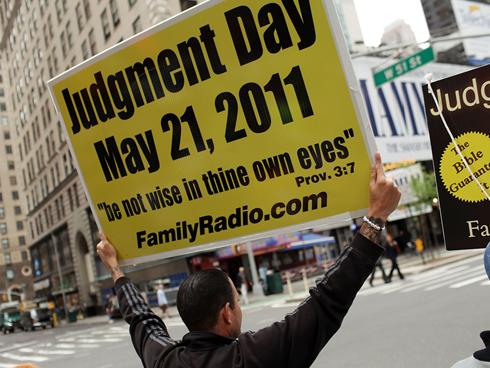
Maybe you’ve seen these people?

The New York Times front page story on the people who believe in Harold Camping’s prophecy about the return of Jesus on May 21 and the end of the world on October 21, points out that the children of these doomsayers are somewhat confused by their parent’s strange beliefs.

The idea of knowing doomsday’s arrival by interpreting or unlocking the secrets of sacred text has been around for a while.

The Times has a second story about a New Yorker who gathered about a dozen believers to prepare for the end of the world in 1925.

The United States has quite a history of biblical Doomsday prophets. A very notable occurrence happened Continue reading

The First Baseball Strike – May 18, 1912

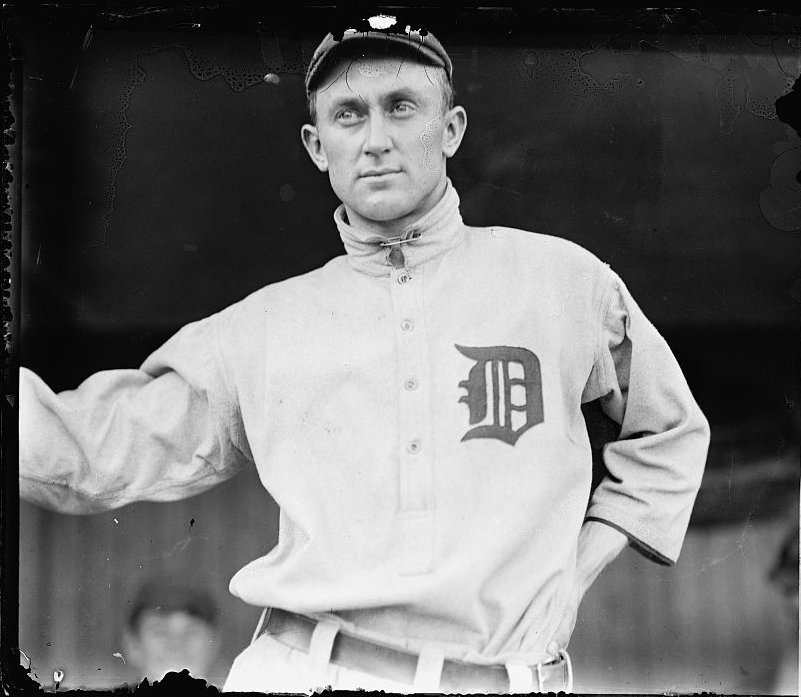
An Unlikely Catalyst Causes a Baseball Strike – Other Players Rally Around the Unpopular Ty Cobb

On Wednesday May 15, 1912 The Detroit Tigers were playing the New York Yankees at Hilltop Park in upper Manhattan when one of the most infamous incidents in baseball history occurred.

Ty Cobb, the star outfielder for the Tigers was incited by a fan to go into the stands and pummel him.

The fan, Claude Lucker (alternately spelled by contemporary papers as Lueker or Leuker) worked as a page in the office of Tammany boss “Big Tom” Foley.  From the onset of the game Lucker was being particularly obnoxious according to all accounts. Cobb and Lucker exchanged nasty barbs and Cobb warned Lucker to stop calling him names or he would come into the stands to take care of him personally. By the fourth inning Cobb had had enough and he jumped into the left field stands and started administering a beating and no one seemed to interfere.

Sticks and stones were probably not as harmful to Cobb as the names which could hurt him – especially when the racist outfielder was called a “half-nigger” by Lucker, which was what apparently drove him over the edge.

It should be noted that Lucker had a machine press  accident when he was younger and was missing one hand and had Continue reading

The Oldest Man In The World? A New Yorker Lives A Very,Very Long Time In The 19th Century

The Oldest Man In New York

I’ve always had a problem with people saying, “I read it on the internet and therefore it is true.”

I am more of a believer in the accuracy of books, but I’ll admit it- bibliophile that I am, even books are wrong sometimes. Actually, more than sometimes. How often, I’ve wondered, does a mistake appear in a book, that book becomes the “authority” or “reference” material for other books and the mistake becomes gospel?

When something strikes me as unusual, amazing or inconsistent with what I know, I try and check the facts by going to the original or earliest source material. This is just my natural curiosity. This includes lots of history that is inconsequential in the greater scheme of things. But when I get fascinated and have to know more, I’ll take the time to look into it.

In an earlier post we noted we would return to the book, “The Secrets of the Great City: A Work Descriptive of the Virtues and the Vices, the Mysteries, Miseries and Crimes of New York City” by Edward Winslow Martin (pseud. James D. McCabe) published by Jones, Brothers & Co. 1868.

One short chapter entitled The Oldest Man in New York aroused my investigative instincts, two samples from that chapter are reproduced below (the full three page text can be found here)

Strangers visiting the Church of the Ascension, in New York, cannot fail to notice the presence of an old gentleman, who occupies an arm-chair immediately in front of the chancel, in the middle aisle, and who gives the responses to the service in a very loud and distinct manner. This is, perhaps, the oldest man of the entire million of New York City inhabitants. It is Captain Lahrbush, formerly Continue reading

Classic Hollywood #2

At The Beverly Wilshire Hotel

Howard Hughes and Marian Marsh December 12, 1934 at the Beverly Wilshire Hotel for the “Mayfair Ball” (click photo to enlarge)

The Mayfair Ball was the largest social gathering in Los Angeles in the 1930’s. The dashing Howard Hughes was a Hollywood producer at the time. Marian Marsh had appeared Continue reading

Jackie Cooper, Movie Star For Over 60 Years Is Dead

Jackie Cooper Dies At 88

Jackie Cooper passed away last week at the age of 88. Cooper who rose to prominence in the Hal Roach produced Our Gang (a.k.a. the Little Rascals) movie shorts, was one of the last remaining movie stars who worked during Hollywood’s golden era of the 1930’s.

Jackie Cooper (left) Love Business 1931

The Our Gang / Little Rascals remaining cast is now down to under a dozen stars.  The other living supporting players made brief appearances, many in the later films of the late 1930’s and early 1940’s after creator Hal Roach had sold the franchise to MGM. The most notable living star of those later Our Gang comedies is Robert Blake.  I grew up watching Cooper star in Our Gang and his passing is sad, as he was a gifted actor and it is a reminder of how few of the early Hollywood stars remain. Unlike his more popular and well known successors as leads in Our Gang, George “Spanky” McFarland and Carl “Alfalfa” Switzer, Cooper was cast in several big budget Hollywood productions and was almost always very good in whatever he was in.

Jackie Cooper was a rarity, in that very few Continue reading